What Is A Life Worth In NYC? In Fatal Crashes, Sometimes Just $50

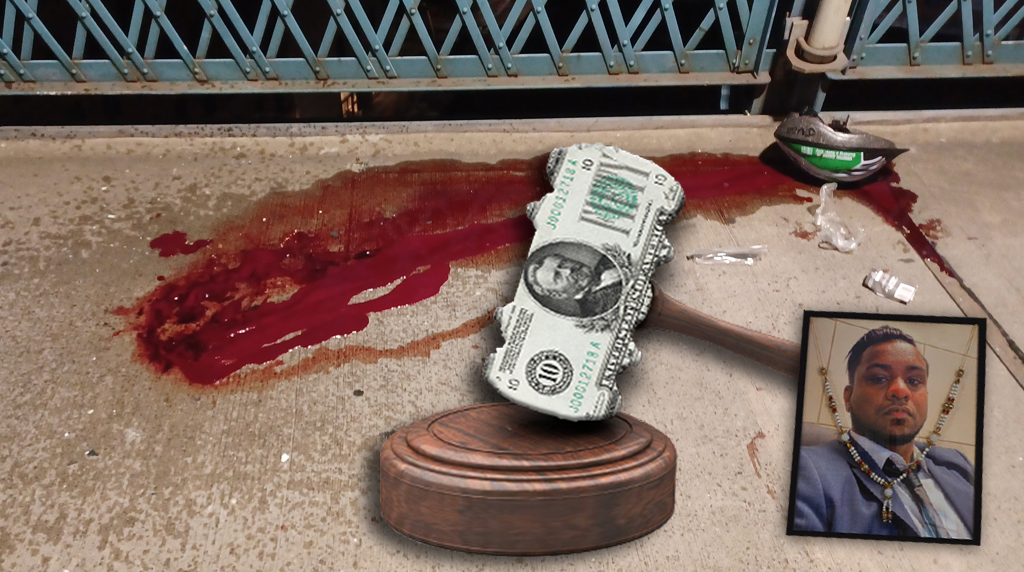
Meiying Chen lived more than 70 years on this planet, but her life ended up being worth just $50.
Kevin Thoral was just 29 when he was killed — like Chen, by a driver — but the criminal justice system valued his life at just $250.
Neither case is unique. Drivers who kill rarely face any punishment, and when they do, the resulting fine is typically so low — the same as parking in a bus lane or the cost of a monthly cable bill — that it makes a mockery of honoring victims or deterring future violence.
Streetsblog analyzed each of the 10 fatal crashes in January 2025 in which a pedestrian was killed and the driver identified by police (the month was chosen because enough time had passed for police to complete the investigations and refer the cases to prosecutors): None of the drivers faced a serious charge of vehicular homicide or criminally negligent homicide. Nor did any driver have to worry about losing his or her freedom for the crime of killing someone.
Seven drivers were charged — but six received the paltry charge of failure-to-yield. (The seventh got a failure-to-yield charge, plus one for driving without a license.) Of the three drivers who were not even charged, two were let off, in part, because cops said the victim allegedly crossed against the light or because he “entered the roadway.”
The lack of accountability is staggering.
Consider the Thoral case. On Jan. 31, freight trucker Fritz Dupresil was driving recklessly on Hillside Avenue in Queens Village when he killed Thoral, according to cops and court documents. Yet he is only facing a top count of failing to yield the right-of-way to a pedestrian causing an injury, which carries a maximum fine of $250. Prosecutors do have the option of seeking 30 days in jail, too, but that count is virtually never added.
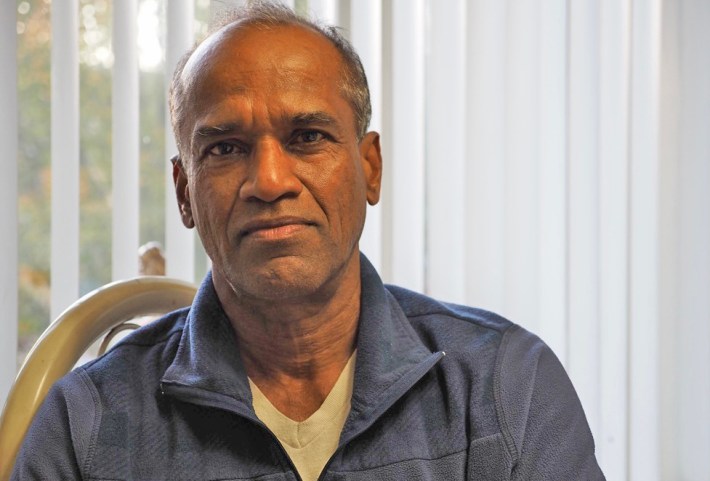
The lack of serious charges provides more grief for Thoral’s mourning dad.
“There should be a much more severe penalty,” said Narine Thoral. “You park at a hydrant, you probably get a higher fine. Driving and killing someone, the loss of life because of your recklessness, carelessness.
“This guy was just driving dangerously, recklessly,” he added. “He caused this to happen. What do you put on a price for a life? It’s $250?!”
What we found
Three of the six drivers charged with right-of-way violations have had their cases heard:
- Sun Hew got a $250 fine and community service for striking and killing a pedestrian at Forest Avenue and Raymond Place in Staten Island on Jan. 6.
- Megan Martin had to pay a $200 fine and take five days of driver’s education for hitting and killing a pedestrian at Pennsylvania and Blake avenues in Brooklyn on Jan. 24.
- Carol Shapiro, 76, paid a $50 fine and did community service and driver’s education after hitting and killing Chen at Seventh Avenue and 44th Street in Brooklyn.
Trucker Dupresil, who killed Kevin Thoral, will go to trial next month, where he’s facing a maximum fine of $250. The lawyer for Dupresil did not respond to multiple requests for comment. A spokeswoman for Queens District Attorney Melinda Katz said the office could not comment on an open case, but added that Katz “will continue to use all the tools available to us to hold dangerous drivers accountable to the maximum extent possible under the law.”
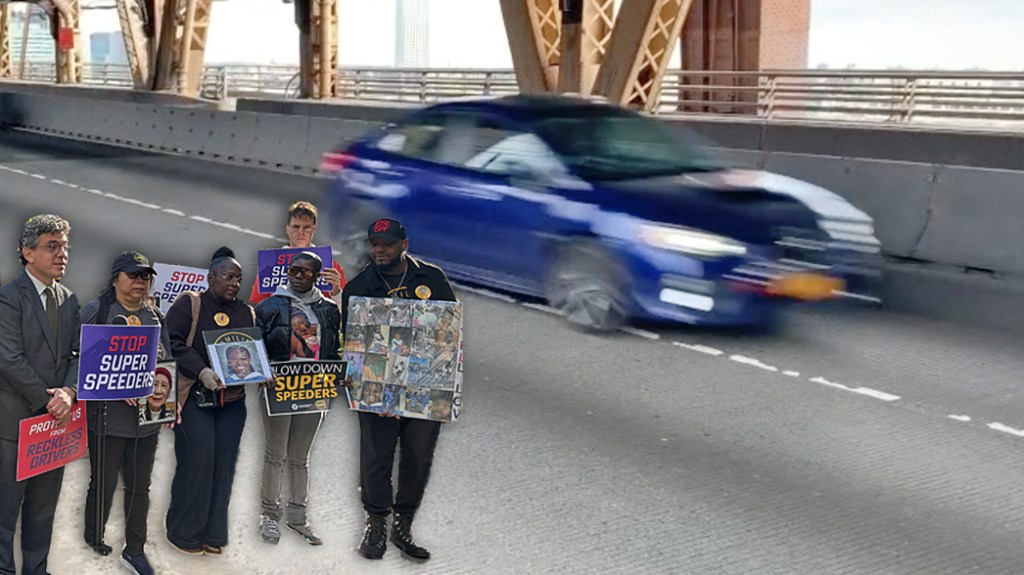
Safety advocates are frustrated.
“It’s not just a debt to society, I can’t imagine being a family member or a loved one and was killed in such a situation and knowing that the person responsible paid $250 and was on their way,” said Manhattan Borough President Brad Hoylman-Sigal, who worked on safety issues in his previous role of state Senator.
“It is a disparity in the law that needs to be addressed,” he added.
A fine is not enough
So what is the “disparity”? It’s simple: The current system leaves prosecutors with few good options to pursue these cases.
For example, the failure-to-yield charge that was used in six of the seven cases is established under New York City law, not state law. And it’s not used particularly often: in all of 2023 (the last year for which the Office of Court Administration had statistics), a city Administrative Code 19-190 violation was the top charge in just 33 crashes out of hundreds of thousands of reported crashes that year. Fourteen drivers ended up being fined (amounts vary up to $250), and just two drivers got the 30-day sentence.
At the same time, it’s exceptionally rare that a state “failure to yield” charge ends up in a criminal court rather than a traffic court — it happened just five times citywide over the past five years, according to OCA. Only one of those resulted in a jail sentence.
There are, obviously, other charges that prosecutors can levy beyond failure to yield, but each carries limitations. In New York, vehicular manslaughter only kicks in if the driver kills someone while either drunk or under the influence of drugs. A second possible charge — criminally negligent homicide — does not require prosecutors to prove intent to harm, but merely that a driver caused the death of another person through negligence — also presents challenges for prosecutors. In New York, prosecutors are bound by the so-called “rule of two” precedent, meaning that they’d have to show that a driver screwed up twice in a fatal crash, such as running a red light or speeding while also failing to yield the right of way to a person who was hit.
Simply speeding or just running a red light isn’t enough to bring the charge.
Take the case of Joseph Gentile, who killed a motorcyclist in a crash in 2006. The main facts are not in dispute: Gentile entered the Belt Parkway via an exit ramp, thinking it was an entrance ramp, only to find himself driving the wrong way on a highway. He attempted a U-turn against traffic and either struck, or was struck by, the motorcyclist. Brooklyn prosecutors got a conviction for criminally negligent homicide, but it was overturned in 2009 by New York’s highest court, the Court of Appeals on the grounds that Gentile’s “decision to make a U-turn across three lanes of traffic to extricate himself from a precarious situation was not wise, but it does not rise to the level of moral blameworthiness required to sustain a charge of criminally negligent homicide.”
Instead, the judges ruled that Gentile was merely guilty of “reckless driving,” a misdemeanor that carries a $300 fine for the first offense.
City and state politicians have slowly begun to take up the issue. In 2019, then-Manhattan District Attorney Cy Vance Jr. empaneled a grand jury and called for Albany to take action in the form of a package of reforms called the Vehicular Violence Accountability Act.
The package — co-sponsored for years by Hoylman-Sigal — would create two new serious misdemeanors: serious physical injury by vehicle, which would cover instances where the driver did not exercise due care when operating the car. Prosecutors would only have to prove that one major traffic law was violated, instead of two.
The second new crime would be “death by vehicle,” a high-level misdemeanor. It would apply to drivers who kill someone with their car while committing at least one traffic offense, again fixing the rule of two. This count could also be charged as a low-level felony in some cases.
Bills introduced in the state Senate in recent sessions have yet to make it to a full vote, never mind secure support in the second chamber, the Assembly.
“Killing someone is killing someone and we should have charges commensurate with someone’s action,” said state Sen. Andrew Gounardes (D-Brooklyn). “If you fire a gun and kill someone, you’re held accountable. If you kill someone with a vehicle, you should be held account to the level of recklessness or indifference in taking someone’s life.”
Meanwhile, advocates are pushing for prosecutors to attempt to bring cases under another existing state law, reckless endangerment, but acknowledge it would be a gamble that could be overturned on appeal.
“Charge this, and see if the Court of Appeals will allow this,” said Steve Vaccaro, a lawyer who frequently represents cyclists and pedestrians who have been maimed or killed by drivers.
Editor’s note: The January 2025 cases were pieced together from police releases, court filings and press accounts.
Streetsblog has migrated to a new comment system. New commenters can register directly in the comments section of any article. Returning commenters: your previous comments and display name have been preserved, but you'll need to reclaim your account by clicking "Forgot your password?" on the sign-in form, entering your email, and following the verification link to set a new password — this is required because passwords could not be carried over during the migration. For questions, contact tips@streetsblog.org.