Mayor Adams Let Drivers Back into Forest Park — and Mayor Mamdani Can Fix It
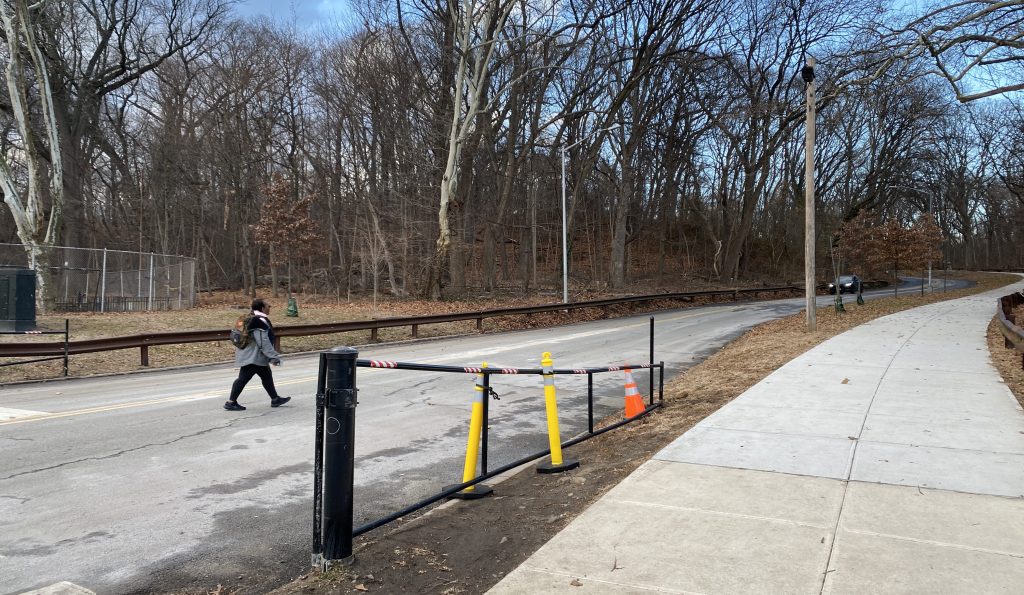
Will Mamdani take the “drive” out of Freedom Drive?
Ex-Mayor Eric Adams’s last-minute move to unleash automobiles back onto Forest Park’s Freedom Drive is putting residents in harm’s way, according to local residents who hope Mayor Mamdani will reverse the car-first policy.
City Parks officials reopened Freedom Drive to cars on Monday for the first time since 2020, a week after announcing the change in the final days of Adams’s mayoral term, in response to gripes from local politicians and drivers.
Car traffic will be allowed October through April, which Parks officials call the “off season,” even though plenty of people still use the park.
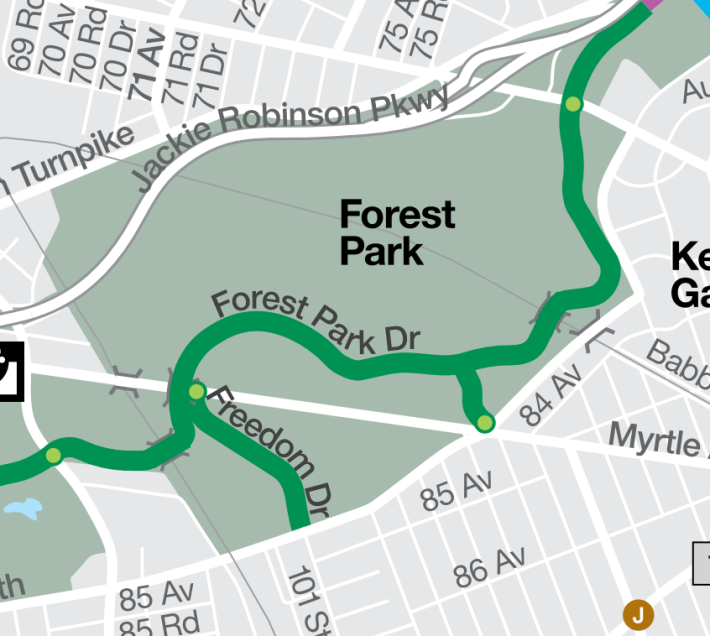
On Wednesday, the third day of the new policy, locals told Streetsblog they were unaware the city had reopened to street to cars. One local activist warned the return of speeding traffic spelled trouble.
“It’s dangerous. I’ve been here every day,” said Andy Smith, an organizer with the group Safer Streets Richmond Hill. “The majority of people crossing the street don’t know that there are vehicles crossing, so they stay on the street.”
Smith, who walks Freedom Drive daily on his way home from work, has documented people still walking in the street while drivers zoom past them:
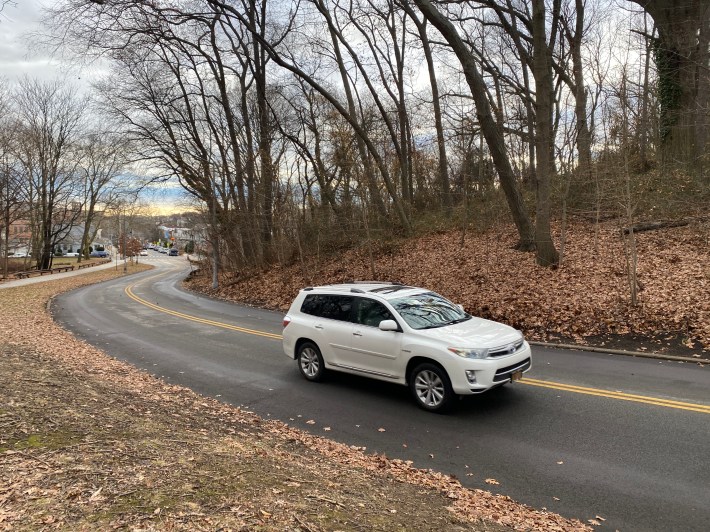
A steep and winding road
The winding 0.3-mile strip’s bends create dangerous blind spots where motorists may seemingly come out of nowhere for people still walking in the street, as they’ve been allowed to do for the past five years. Parks officials put up little signage beyond some small notices at an adjacent forest path close to the northern end of the strip to warn locals of cars.
Fewer than 20 cars passed through when Streetsblog visited Freedom Drive late in the afternoon, even as the evening rush started to fill up nearby connecting streets.
The southern end at Park Lane South is a steep hill that funnels cars out onto 102nd Street, at a corner with a playground, and two schools are just a couple of blocks away.
“I saw a car come around this curve, saw that the light is green and sped up, because he was trying to make the light – and that’s always gonna happen as long as the street’s open,” Smith said.
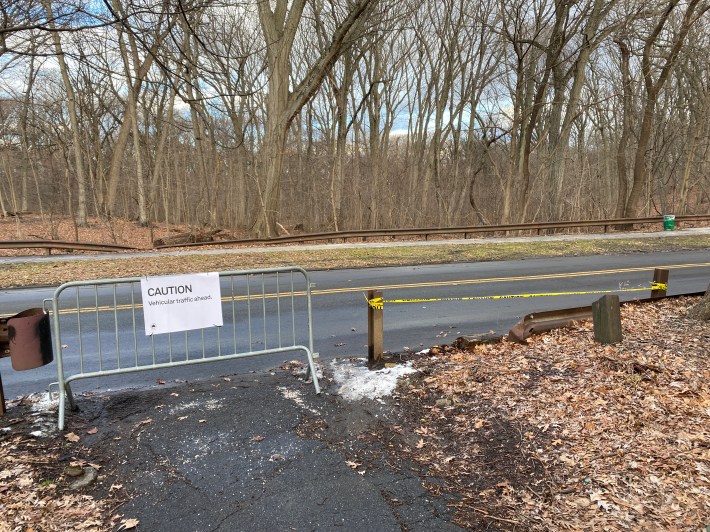
On the north side, the drive connects to Myrtle Avenue and the Victory Field sports pitches via a forest path — the only place where Parks set up signs and yellow tape warning about the return of cars. There was nothing at either formerly-gated end of the road.
Dodging drivers
Smith said he has routinely seen people walking in the roadway since it reopened to cars, as seen in this clip he shared with Streetsblog.
Or in this video of a man coming out of the forest path and paying little attention to Parks’s meager signage.
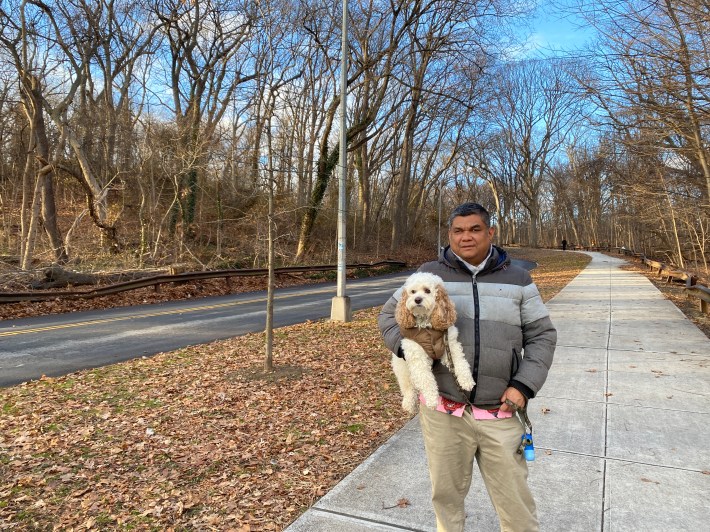
Streetsblog saw Carlos Caicedo, who regularly takes his pooch Teodoro to Freedom Drive, dodge a motorist barreling downhill. The resident told Streetsblog that the city should reinstate the car-free space before someone gets hurt.
“It’s not secure, it’s not safe. For years we had this space ” said Caicedo. “Not everybody knows [about cars being back].”
Another local out for a walk said the road was never that busy even before its closure, but worried that even the few motorists that have returned will catch walkers off guard.
“You can’t really see if cars are coming,” said Lesly Paredes said. “I really got used to walking down here.”
Years in the making
The street’s closure dated back to May 2020 and was part of the first batch of open streets then-Mayor Bill de Blasio created to carve out more outdoor space for New Yorkers to safely gather during the pandemic.
The initiative was especially popular in Forest Park, which is bisected several times over by roads, such as the Jackie Robinson Parkway, Woodhaven Boulevard, Myrtle Avenue and Metropolitan Avenue.
Taking Freedom Drive back from cars and for people was a logical project, given the successes of removing automobiles from drives in Central or Prospect parks.
But in 2024, Republican Council Member Joann Ariola, whose district includes the park, and the heads of Community Board 9, penned a letter demanding Parks restore car traffic full time. Opponents of the closure argued it was causing traffic backups and raised safety concerns due to gates obstructing emergency vehicles – even though Parks officials clarified that it’s only a matter of unlocking the swing barriers.
The real safety issue is cars, however, given that there were 31 reported crashes between 2011-2019, injuring 56 people – or seven a year – including 48 people in cars, six cyclists and two pedestrians.
Department of Transportation reps have said that the closure improved safety at both ends of the street without increasing congestion.
Parks spokesperson Judd Faulkner said the agency is working with local elected officials to “promote public awareness,” adding that safety “is our top priority.”

Read More:
Streetsblog has migrated to a new comment system. New commenters can register directly in the comments section of any article. Returning commenters: your previous comments and display name have been preserved, but you'll need to reclaim your account by clicking "Forgot your password?" on the sign-in form, entering your email, and following the verification link to set a new password — this is required because passwords could not be carried over during the migration. For questions, contact tips@streetsblog.org.