Lyft’s High Prices For Citi Bike E-Bikes May Incentivize Reckless Riding
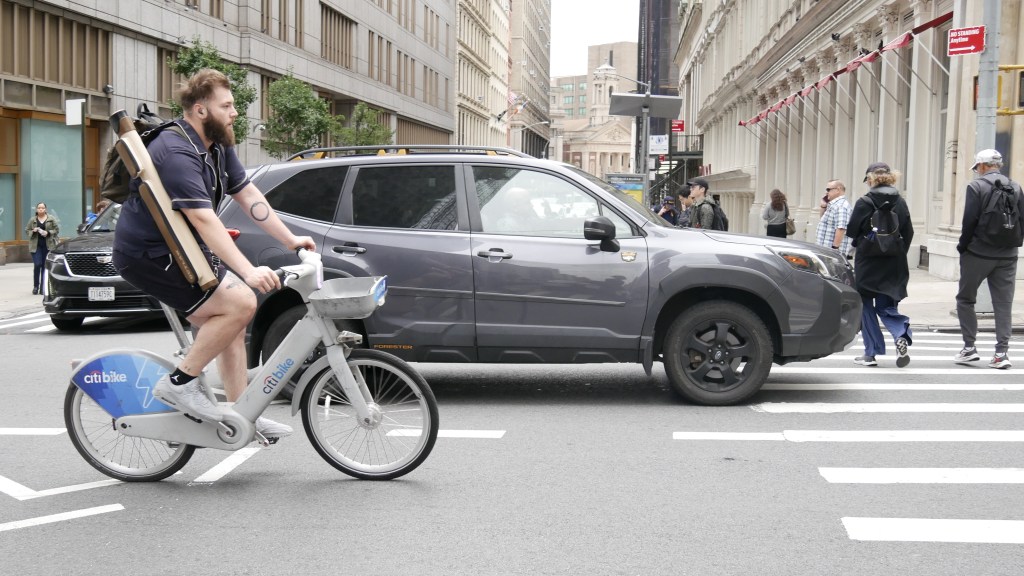
On an electric Citi Bike, time is money.
The Lyft-operated bike system’s recurring price hikes, paired with its by-the-minute fare structure for everything except “classic” bike rides by annual members, may compel riders to bike faster and run red lights in order to save money.
Lyft just raised Citi Bike fees for the fifth year in a row. Annual members can ride non-electric Citi Bikes for free, but e-bikes cost an extra 27 cents per minute for members and 41 cents per minute for everyone else — up from 25 cents per minute cents and 28 cents per minute, respectively (increases of 8 and 47 percent) compared to 2025.
That’s leading riders to try and wrap up their trips faster to save money.
“I feel that pressure,” a Citi Bike member named Burak told Streetsblog last week at a dock near Prospect Park. “I want to lock it and unlock it very quickly.”
Reddit commenters who shared their gripes about the recent fare hike agree that the per-minute pricing and regular fee hikes impact their behavior.
“The fare hikes honestly encourage me to bike more aggressively and cut through traffic to reduce my ride time/cost…,” one commenter wrote.
Logically, it makes sense that per-minute pricing might encourage some users to minimize their financial burden by going faster. To boot, a recent Hunter College survey observed that Citi Bike e-bike riders were 14 percent less likely than delivery workers and others on e-bikes to yield to pedestrians at congested intersections.
The pricing likely played a role that relative lack of safety, said Hunter Prof. Michael Owen Benediktsson, the study’s main author.
“I can absolutely see somebody looking at their watch and thinking, ‘I’m at 42 minutes and [if] I have this many blocks to go, I’m just going to run a couple lights and try to get there in time because I don’t want to be charged,'” Benediktsson said.
The percentage of riders researchers observed going over the city’s recently decreased 15 mile per hour e-bike speed limit was about equal for people on Citi Bike e-bikes vs. people on other e-bikes, most of whom were delivery workers who face pressure from app companies to make faster deliveries.
“It could be that we just have multiple classes of riders who are given incentives to go fast,” Benediktsson said.
An annual Citi Bike membership costs $239 per year (not including the 27-cents-per-minute for e-bikes, which comprise 46 percent of the total fleet).
Citi Bike imposes a price cap of $5.40 for members who ride e-bikes between Queens or Brooklyn and Manhattan. For non-members, an e-bike costs 41-cents-per-minute on top of a $4.99 undocking fee. After 30 minutes of riding, non-members pay 41-cents-per-minute on the non-electric “acoustic” bikes. Members pay 27 cents for every minute over 45 minutes on an acoustic bike.
Consider a hypothetical Citi Bike member who lives in Brooklyn and wants to use an e-bike to make two 15-minute trips a day to and from Manhattan.
On top of the annual $239 fee, that member will pay $40.50 per week. If they work 50 weeks out of the year, that’s $2,264 — just for commuting. That price is far more expensive than the equivalent commutes via public transit; a daily commuter would pay just $1,500 to go to and from work every day of the week for 50 weeks per year.
Last year Randy Mastro, the deputy mayor for operations under former Mayor Eric Adams, pressured Citi Bike to reduce its e-bike maximum speed from 18 mph to 15 mph, but did not order up commensurate decreases in pricing. As a result, a fairly normal Citi e-Bike ride from Chambers Street to W. 125th Street now costs $1.62 more (a 25-percent increase) for members and $2.46 more (a 34-percent increase) for non-members than it did before the speed cut.
At the time, Citi Bike riders complained that the speed drop cost them time and money — though bike-share data showed a mere 4-percent drop in actual Citi Bike speeds, since riders mostly travel under the max speed anyway.
Citi Bike costs more than any other major bike-share system in the United States, Canada or Europe, according to an Independent Budget Office report from last November. Unlike similar systems, however, it does not receive funding from the city budget. Lyft officials attribute fare hikes to the cost of running the business, but have never made Citi Bike’s operating expenses public.
Lyft’s “incredibly annoying” price hikes have outpaced subway fare increases, noted Dante de Blasio, the son of former Mayor Bill de Blasio, whom Streetsblog caught dropping off a bike at a Citi Bike station in Brooklyn last week.

De Blasio, who recently subscribed to Citi Bike’s annual membership, conceded that the pre-minute pricing may put pressure on him to wrap up his rides sooner.
“I try to stay alive. That’s my main goal,” he said. “I’m sure I feel more pressure, but I’m not actually going to go that much faster. But in terms of what I’ve observed, yeah, definitely, people are trying to make it more cost-effective.
“I think Lyft could be more cognizant of rising costs,” de Blasio added. “The increases in Citi Bikes are outpacing the increases in public transportation. So, it just doesn’t seem fair.”
Rather than funding Citi Bike to ensure lower prices, New York City actually gets a small percentage of excess revenue as part of its “public-private partnership” contract with Lyft. In 2024, the city received about $4 million from the company, according to State Comptroller Tom DiNapoli’s office.
But the City Council has done nothing to compel Lyft to address the ways its pricing structure incentivizes speeding — even as it has regulated apps to disincentivize speeding and other bad behavior among delivery workers.
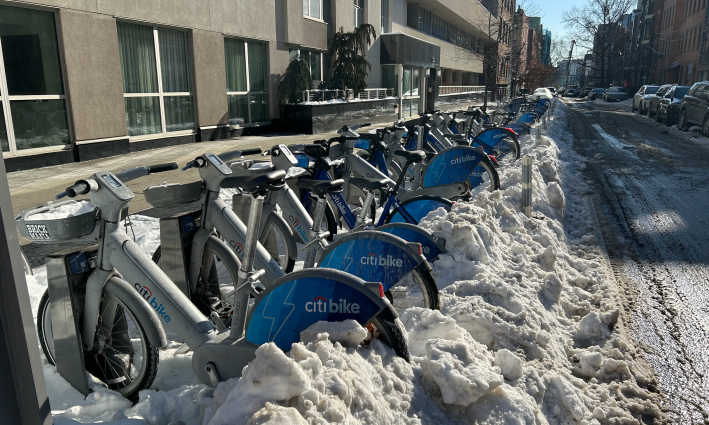
Complaints over Citi Bike’s rapidly increasing prices flooded the internet after a winter storm in January rendered the much of the system useless for weeks. Lyft committed to have more crews out clearing docks and stations ahead of this week’s blizzard, City Hall said.
The company ignored Streetsblog’s emails asking about rider claims that price hikes led them to bike less safely.
One loyal rider who carried his own shovel to dig himself out bikes after January’s winter storm said he understood the company has to charge something.
“This is not free street parking,” said Luis Calleja. “We pay for this. We expect some level of service.”
Additional reporting by Max White

Read More:
Streetsblog has migrated to a new comment system. New commenters can register directly in the comments section of any article. Returning commenters: your previous comments and display name have been preserved, but you'll need to reclaim your account by clicking "Forgot your password?" on the sign-in form, entering your email, and following the verification link to set a new password — this is required because passwords could not be carried over during the migration. For questions, contact tips@streetsblog.org.