Brooklyn Residents: Keep Historic Wood Bridge For Pedestrians And Cyclists Only!
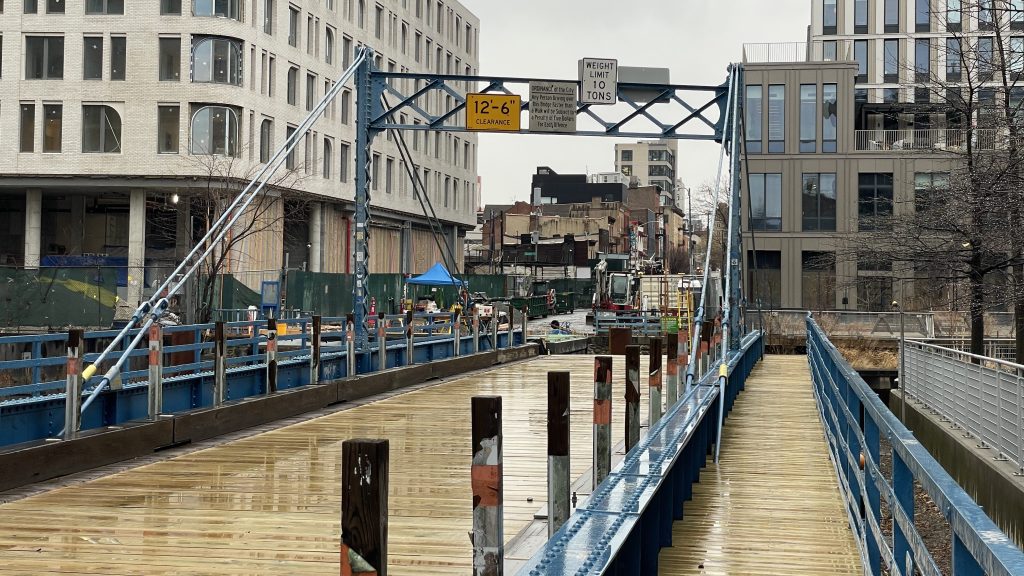
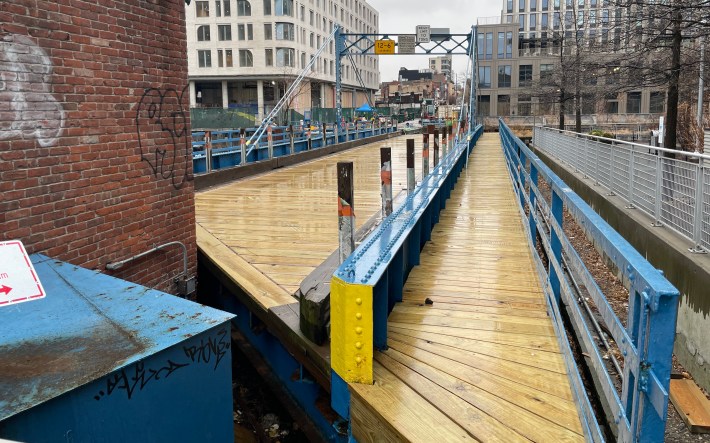
The city Department of Transportation’s repairs of the ancient Carroll Street Bridge are set to finish this spring and locals want to jump on a rare opportunity to pedestrianize a historic landmark.
Built in 1889, the bridge over the Gowanus Canal has been closed for repairs since 2021. The reopening could be a chance for locals to reclaim public space in a rapidly changing community.
“It just feels like a real opportunity to turn [the bridge] into a premier space for pedestrians and cyclists,” said Doug Gordon, a safe streets advocate and member of a local community board, about the bridge.
Gowanus was once an industrial hotbed and maritime hub in the 1800s, leading to untreated industrial waste and raw sewage emptying into the Gowanus Canal. But the neighborhood has transformed since the Environmental Protection Agency listed the canal as a national Superfund site in 2010 and the City Council rezoned blocks around the canal in 2021 to spur the development of more than 8,000 housing units of housing — de facto, a new neighborhood.
Luxury buildings are becoming increasingly common in the area. The median sale price of a home in Gowanus increased from $696,000 in 2014 to just above $1.5 million in 2024, an increase of 118 percent.
As high rises sprout up and newcomers flood the area, Gordon is worried about new residents driving all over the neighborhood.
“One of the things that we want to avoid in Gowanus with the rezoning and all of the new development is just like a traffic apocalypse where people move in, bring their cars with them, and are just using them for every trip because driving is easy,” Gordon said.
The Carroll Street Bridge is one of the oldest bridges in the city and one of four remaining retractable bridges in the U.S., rolling horizontally on wheels set on steel rails to allow boats through the canal.
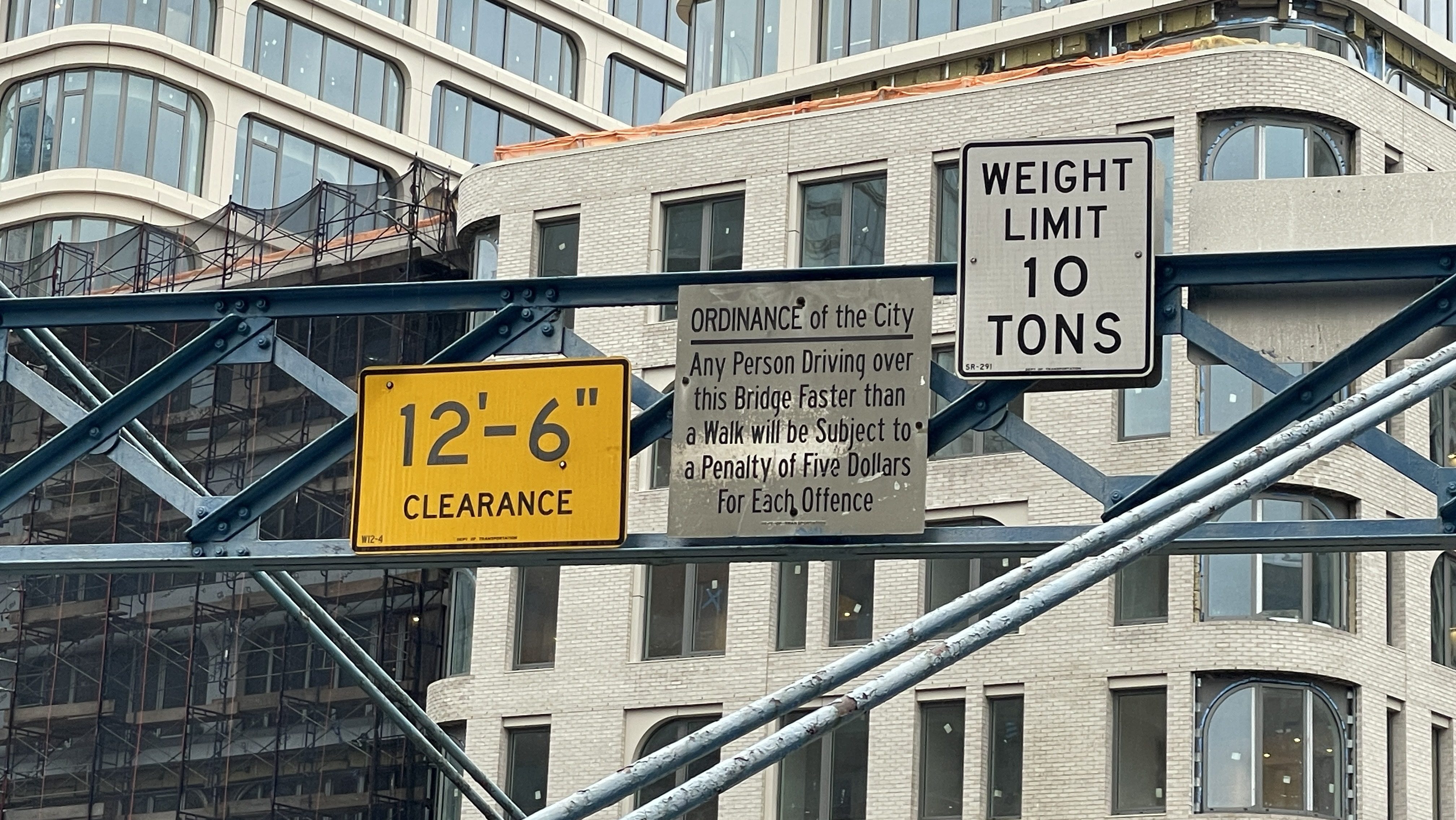
Of the bridges that DOT operates, the Carroll Street Bridge was the quietest. It supports traffic in one direction only, and the last time anyone counted, there were just 1,000 crossings per day. There are four other bridges over the Gowanus Canal, all of which support more volume. And, besides, there’s a historic sign on the Carroll Street Bridge barring drivers from exceeding the speed of “a walk.” (The fine is $5.)
Advocates for pedestrianization point out that there haven’t been any traffic hiccups for the five years that it has been closed for drivers. As such, there’s no reason for cars to return to it.
“Car drivers have gotten used to not having access [to the bridge] already,” said Katie Bishop, who owns Principles GI Coffee House, a coffee shop on Ninth Street. “So why introduce deadly vehicles back to a place where they’ve been barred from for years?”
However, some locals are worried about how pedestrianizing the bridge would impact a nearby EMS station, which sits at 347 Bond St. on the west end of the Gowanus Canal.
“As long as they make it accessible for like EMS to be able to drive over it, I don’t see the problem,” said Rain T., a Gowanus resident, about pedestrianizing the Carroll Street Bridge. (That said, Gordon said the emergency responders have not had any issues during the period when the bridge was being repaired.)
It’s not far-fetched to build bridges that carry only pedestrians and cyclists. Portland’s Tilikum Crossing is just such a people-first span.
And a pedestrianized bridge fits into the plans of Brooklyn Community Board 6. Members of the Gowanus, Park Slope, Carroll Gardens, Cobble Hill and Red Hook district passed a resolution in November 2025 supporting the idea of a “low-traffic neighborhood,” an increasingly popular configuration that keeps drivers away from quiet streets and residential communities like Gowanus.
The resolution also stated that the board supports studying keeping the bridge closed to cars and “opening the bridge to pedestrians and cyclists as a dedicated active transportation connection across the Gowanus Canal.”
Since the November letter, support has been building for keeping cars off the bridge. One community board member has been communicating with Council Member Shahana Hanif (D-Park Slope) about the bridge and the board could take more concrete action soon, asking DOT to pedestrianize the bridge.
Gordon said the board would withdraw if presented with incontrovertible evidence that closing the bridge to cars would be bad, but he said that hasn’t happened.
“We should be creating spaces where people can appreciate the beauty of the neighborhood and the history of the neighborhood,” Gordon said. “I think allowing people to just like linger on the bridge and not have a loud car rumbling over it would be a lovely addition to the neighborhood.”

Read More:
Streetsblog has migrated to a new comment system. New commenters can register directly in the comments section of any article. Returning commenters: your previous comments and display name have been preserved, but you'll need to reclaim your account by clicking "Forgot your password?" on the sign-in form, entering your email, and following the verification link to set a new password — this is required because passwords could not be carried over during the migration. For questions, contact tips@streetsblog.org.