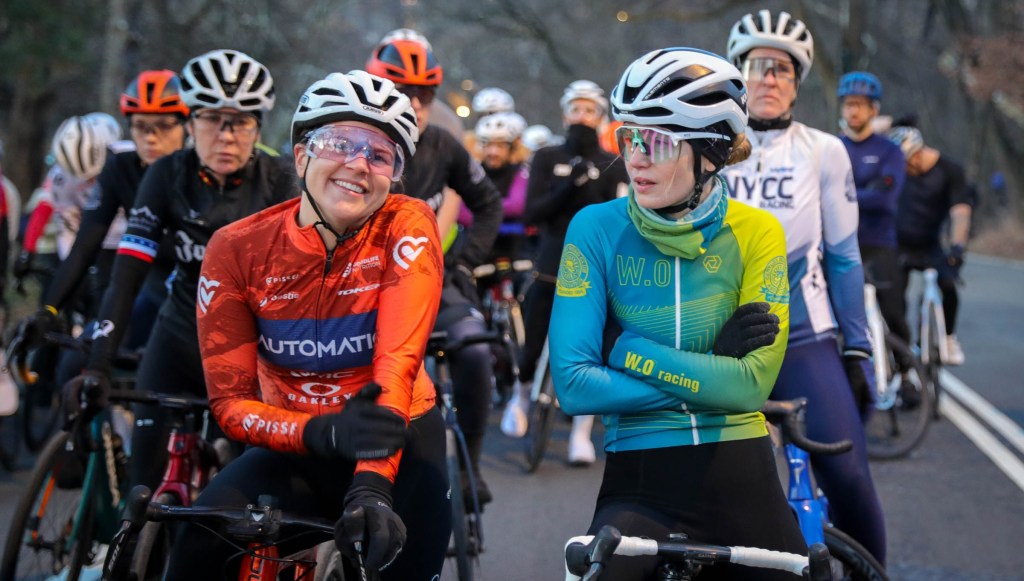
On The Road: Delivery Workers Face Scary Trips, Minimal Tips, App Tricks
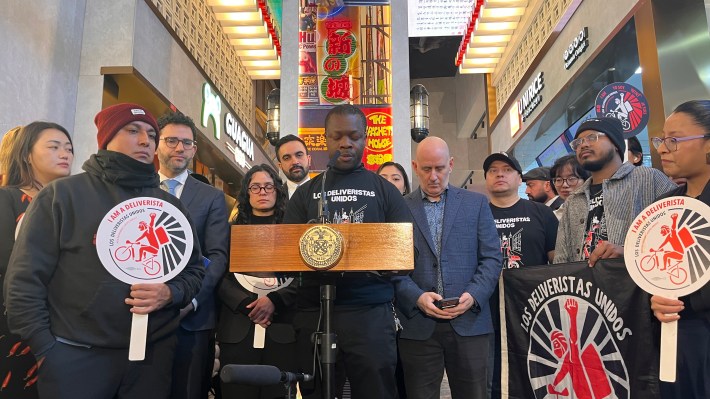
Aboubacar Ki is the public face of delivery worker abuse.
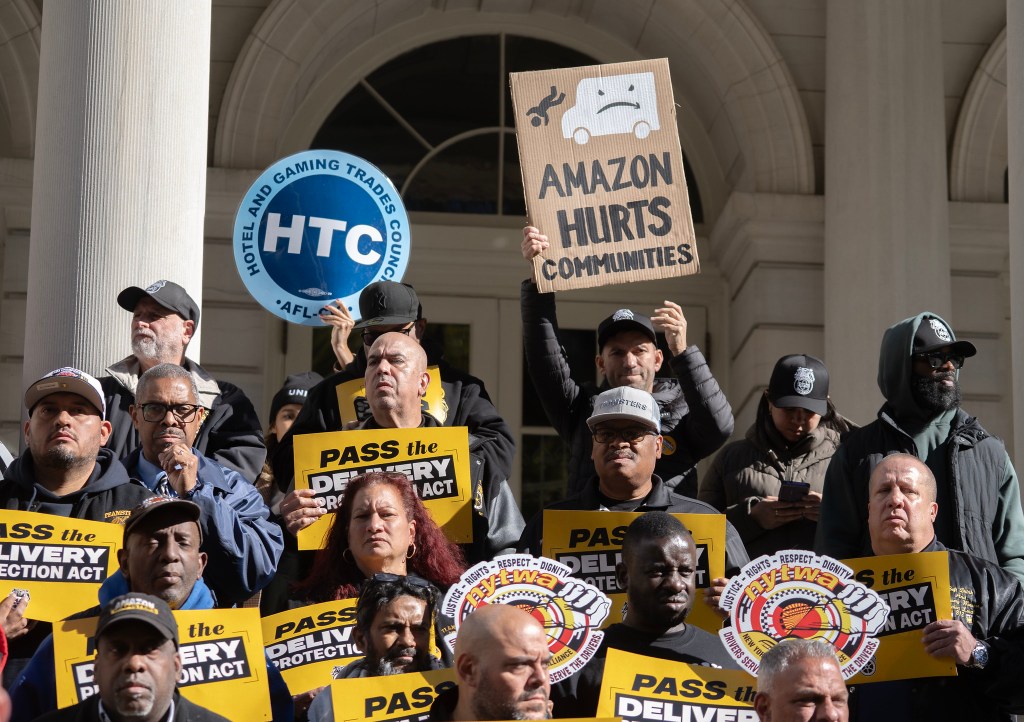
On Friday, as the Mamdani administration announced its latest effort to protect delivery workers — UberEats, HungryPanda and Fantuan have been ordered to repay $4.6 million in wages that they illegally withheld from deliveristas — Ki was on hand to humanize the algorithms, fears, exploitation and sweat that continue to prop up the billion-dollar delivery industry.
The challenges are physical, mental, technological, financial and, these days, political.
“When [some delivery workers] see messages about ICE, they just stay home, they don’t go to work,” said Ki, who came to New York from Burkina Faso. “And some people just leave everything with God, everything they have. Because when I left my home to come here, I didn’t know what would happen here. So I am just going to go to work, and whatever happens to me, this is what God says will happen.”
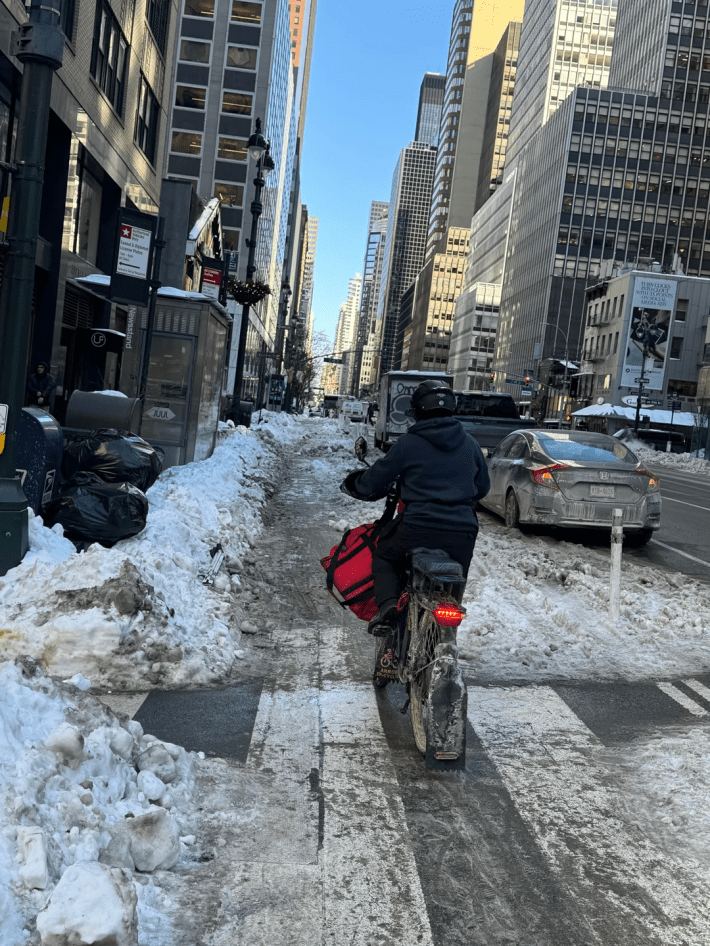
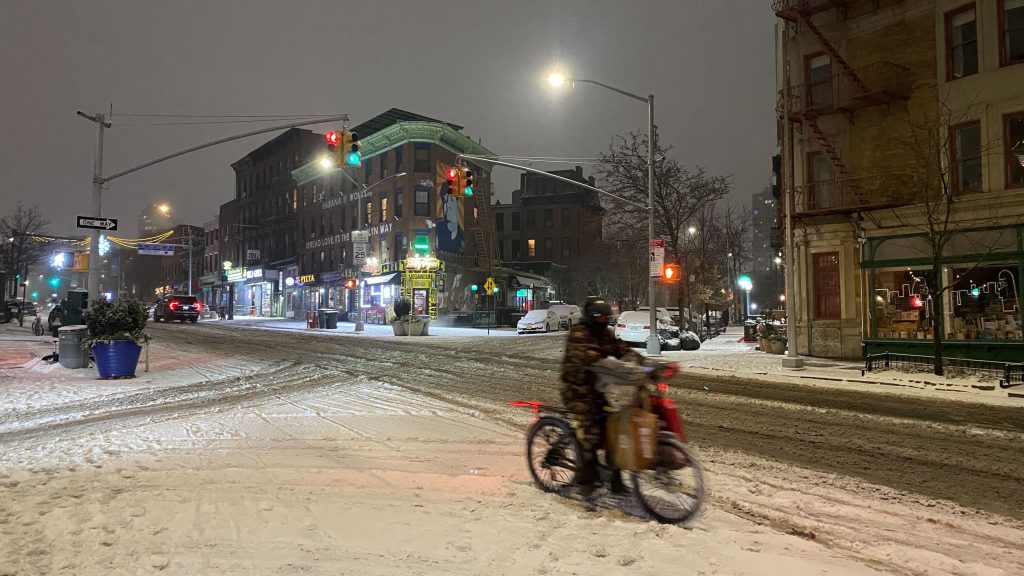
There are also meteorological challenges. When the city clears snow, it pays special attention to car travel lanes while many of the city’s bike lanes – vital infrastructure for delivery workers – remain perilous.
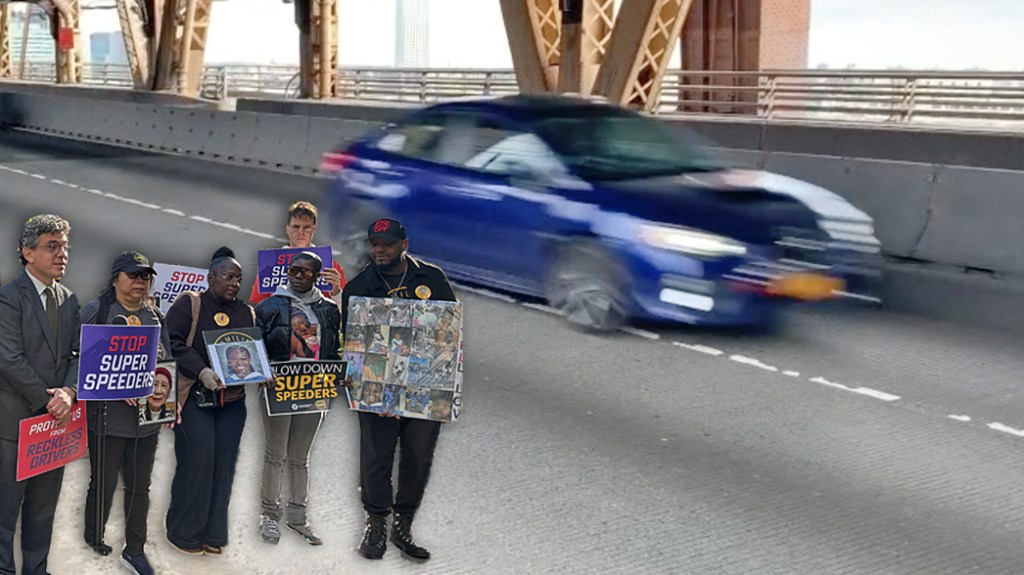
“I have to share the road with the vehicles,” Ki told Streetsblog of biking post-snowstorm. “They clear the road for the vehicle, but not for the bicycle. It’s very difficult to bike right now. It’s scary because people who drive don’t pay attention to people riding bikes.
“We have to take care of ourselves and try to [stay] away from the cars and try to go slowly,” he added. “The roads are slippery — you can fall at any time if you don’t ride carefully.”
Delivery workers like Ki are private contractors. A missed day of work is a day without pay. The app companies are not required to provide their workers with health insurance or other benefits.
The apps and their customers are both the source of income and disgust.
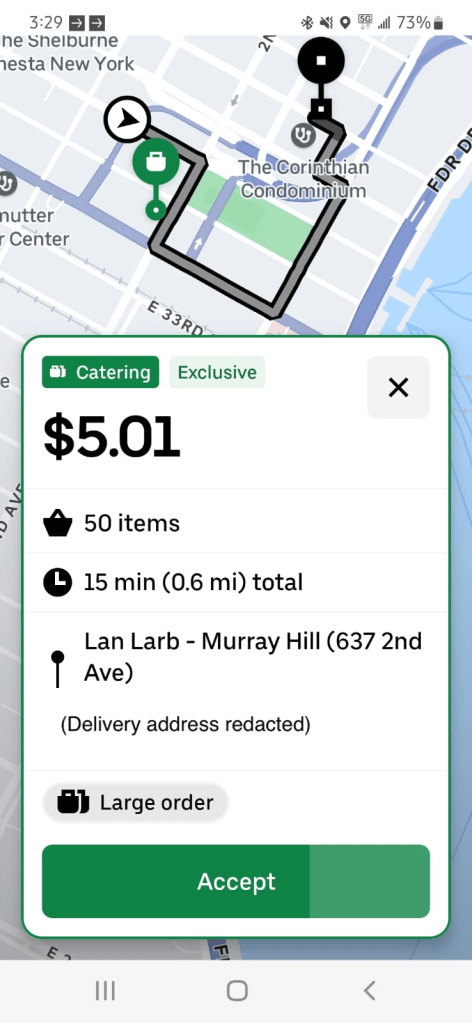
Ki told Streetsblog how he biked more than four miles for a Grubhub delivery on Friday only to have the company tack on another delivery for a paltry $3. In one case of egregious under-tipping, an UberEats customer tipped Ki just $5 for an order that totaled more than $500 for 50 items.
The city now requires that app-delivery companies provide an option to tip workers at or before checkout – a feature that UberEats and DoorDash had removed after the city’s separate minimum-pay law took effect in 2023. Another recent tipping law mandates that apps provide customers with the option to tip at least 10 percent. Regulated apps are following the law — but the 10-percent option is offered only after customers scan through several lower-tip selections.
“The [tipping] law was 10 percent,” Ki said. “We were sad that we didn’t see 10 percent as the first option. They are putting 0 percent, 2 percent, 3 percent. This is not the right thing.”
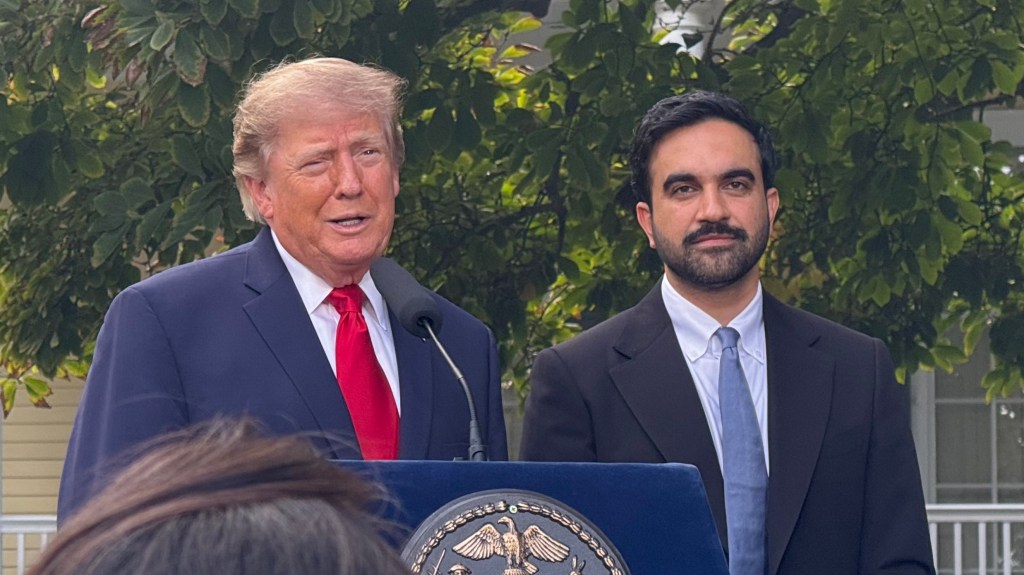
Sam Levine, the new commissioner of the Department of Consumer and Worker Protection, said he is relentlessly focused on enforcing worker-protection laws.
“[Mamdani’s] direction to me is full speed ahead, ‘Do everything you can to protect workers.’ These lobbyists from these app companies might be calling City Hall, but at the end of the day this is a mayor who always puts the interest of workers first, and I’m going to do the same,” he said.

Streetsblog has migrated to a new comment system. New commenters can register directly in the comments section of any article. Returning commenters: your previous comments and display name have been preserved, but you'll need to reclaim your account by clicking "Forgot your password?" on the sign-in form, entering your email, and following the verification link to set a new password — this is required because passwords could not be carried over during the migration. For questions, contact tips@streetsblog.org.