Cleveland Bus Riders Beat Back a Fare Hike

Cleveland is in grave danger of falling into a transit death spiral.
State funding for the Greater Cleveland RTA is shrinking, and so has the agency’s revenue from sales tax receipts. To compensate, the agency has had to raise fares and cut service. An 11 percent fare hike in 2016 brought the price of a single ride up to $2.50. This year, the RTA is running fewer buses and trains on 15 routes.
Naturally, ridership is plummeting. In 2017 alone, Cleveland transit ridership fell 10.5 percent. That doesn’t even capture the effect of this year’s service reductions.
To cap it off, RTA was planning another 25-cent fare hike in August.
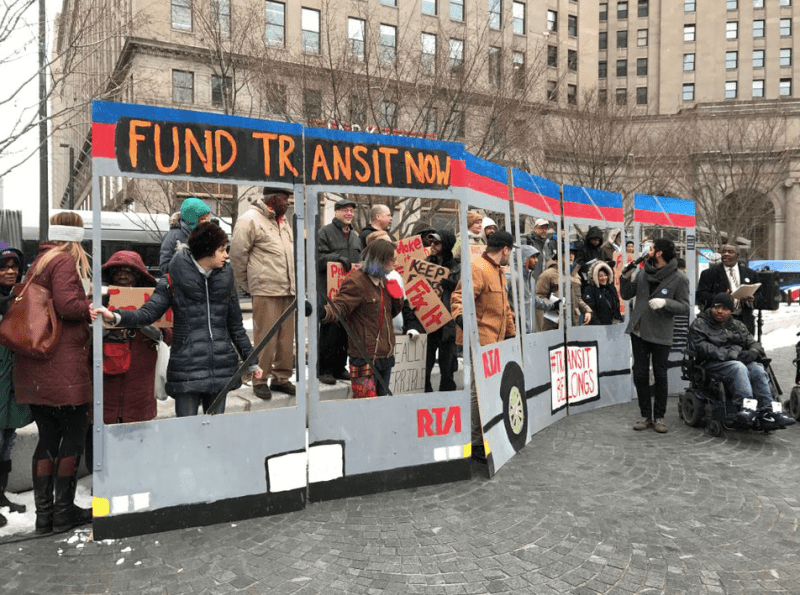
But there’s good news for Cleveland transit riders today. A group of grassroots volunteers called Clevelanders for Public Transit convinced the agency to pause the 2018 fare hike. Instead they want to put a regional transit levy up for a vote in November, which could reverse the cycle of disinvestment, deteriorating service, and falling ridership.
The RTA committed yesterday to postpone the fare increase and not cut service this year, reports Grant Segall at the Plain Dealer. The agency will look into getting a transit measure on the ballot in November. One of the board members — Trevor Elkins — even suggested reversing the previous round of fare hikes.
Marvin Ranaldson, one of CPT’s leaders, says addressing fare affordability is a top priority for riders. The organization ran the numbers and found that each 25-cent fare increase is associated with a decline of 5.3 million annual trips on RTA buses and trains.
The founding of CPT two years has given transit riders newfound influence. “Prior to us, I don’t think anyone has tried to engage the RTA board directly on such a scale,” said Ranaldson. “We have found the greatest success when riders tell their story on how important transit is to them, and how the changes would hurt them and their families.”
CPT member Lynn Solomon testified to Cuyahoga County Council in December that RTA is her sole source of transportation. But depending on RTA has become more and more difficult.
“Through the past four years, I have watched the fares increase and the services to continue to be slashed,” she told the council. “I feel that public transportation is not valued in the city of Cleveland.”
The specifics of a transit ballot measure have yet to be hashed out. RTA officials say they will review the agency’s budget and develop a set of potential solutions. The foregone revenue from the fare hike will represents $14 million of RTA’s $300 million budget, Segall reports. Recent changes to state tax laws have reduced the agency’s annual revenue by about $20 million.
Ranaldson says CPT members are excited about this week’s developments, but they’re not about to take a victory lap. “We know how temporary this victory will be if we don’t address the core issue of funding, that is driving the death spiral of service cuts and fare increases,” he said. “Those cuts are still on the table for 2019 unless the board acts to increase revenue this fall.”

Streetsblog has migrated to a new comment system. New commenters can register directly in the comments section of any article. Returning commenters: your previous comments and display name have been preserved, but you'll need to reclaim your account by clicking "Forgot your password?" on the sign-in form, entering your email, and following the verification link to set a new password — this is required because passwords could not be carried over during the migration. For questions, contact tips@streetsblog.org.