Can Bus Riders Form A Voting Bloc? We’re About To Find Out
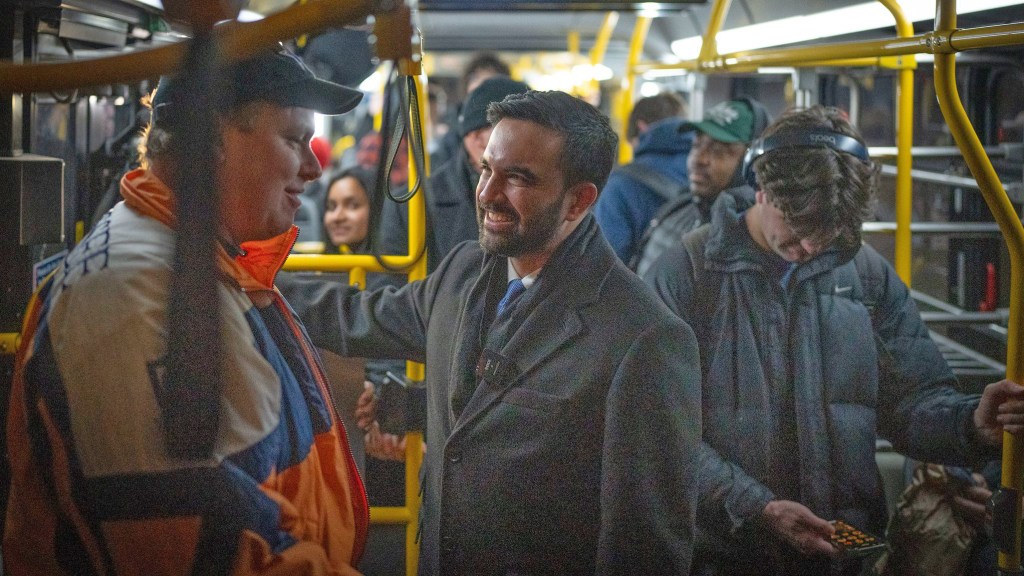
The riders on the bus say, “Fast and free.”
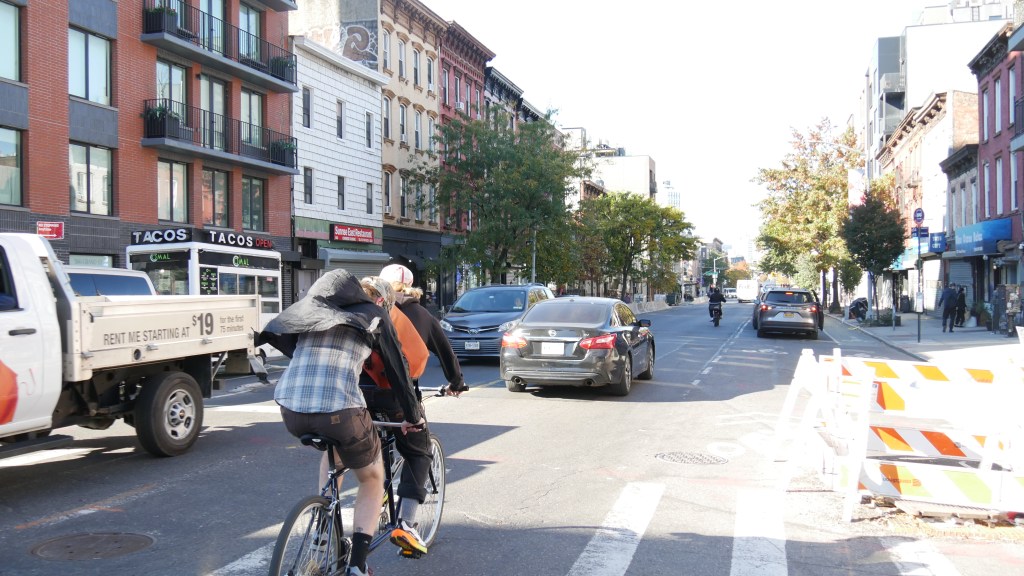
Transit activists want to turn bus riders into their own constituency and voting bloc that can support Mayor Mamdani and other elected officials who install bus lanes and fund free service — and punish politicians who favor their car-driving counterparts.
Earlier this year, Mamdani embedded his 2025 campaign vision for fast and free bus service in an official city plan that promised to dramatically change the layout of streets across the city.
To steer that vision, advocates with the Riders Alliance hope to organize bus passengers as a powerful political force.
“We’re really thinking about how to grow our organizational membership and build organizing hubs across the city that can really push bus rider organizing forward and create a more militant base of bus riders,” said Divya Sundaram, the campaign manager with the newly announced Fix the Bus campaign.
The Fix the Bus campaign represent a slight course correction for the Riders Alliance, Sundaram told reporters on Thursday.
Rather than encouraging bus riders and residents to support specific bus lane projects, the organization will instead focus on activitating riders in three key locales where the city wants to execute its ambitious bus rapid transit plans: Tremont Avenue and Fordham Road in the West Bronx; Northern Boulevard in Queens; and on Flatbush, and Church and Utica avenues in Brooklyn.
Beyond building new constituencies of bus riders to support faster buses in those neighborhoods, the campaign will also promote the mayor’s related goal of fare-free buses. That will require finding a durable funding stream that enables fare-free, frequent and reliable bus service.
The promise of better buses drove Mamdani’s electoral success, and Gov. Hochul endorsed a joint city-MTA plan to speed up city buses. Both developments signal a rare opportunity for bus riders to secure dramatically improved service.
After two previous mayors touted bus priority plans that failed to liberate buses from traffic or reverse ridership declines, organizers said they’re not assuming this one will work without a good push from the public.
“Buses are of particular importance in outer borough communities, Black and brown communities, low-income and working class communities, so there needs to be more organizing, more energy of activation than to fix something high-profile, like for example Penn Station,” said Riders Alliance Director of Policy and Communications Danny Pearlstein.
“We have a mayor who ran for office on fixing the bus, we have a governor who’s working closely with him, and they’re poised to take bus riders more seriously,” Pearlstein added. “But they still need that extra push to keep buses and bus riders at the top of the agenda. We need to make sure that we achieve the plan to the utmost because we’ve seen plans before.”
The campaign will offer operational support to bus riders who want to organize for better services, and Riders Alliance plans to hold events for riders to share their commuting frustrations and meet each other, assigning a lead organizer to each of the three geographic focus area.
The ultimate idea, Sundaram said, is to help riders find, speak with and organize each other, and begin to think of themselves as people who ride the bus and deserve world-class bus service — not as people who have no other choice. She likened the vision to that of labor unions or the tenant rights’ movement, whose members explicitly “identify as tenants.”
“We’re trying to change how bus riders themselves actually feel and think about taking the bus,” she said. “I think a lot of bus riders see the bus as, frankly, an inconvenience, something that they have to ride, not that they want to ride. It’s a real marker of class in New York City, and what we really want to do is replicate and build on some of the lessons that we’ve seen from tenant organizing or union organizing.”
Riders Alliance is not the first member-based organization to show interest in supporting the mayor’s transit goals.
Before he took office, leaders from some of Mamdani’s most prominent left-wing backers — including the Working Families Party and the New York City Democratic Socialists of America — said that supporting the mayor’s bus plans went hand-in-hand with supporting the rest of his agenda. And the NYC-DSA’s Transit Working Group recently began its own bus rider outreach efforts to marshal support for both fast and free buses.
The task of persuading the city’s bus-dependent areas to support faster buses — and streets that prioritize buses over cars — is somewhat new territory for transit organizing.
Subway-rich neighborhoods have typically presented the strongest opportunities for previous efforts to pass congestion pricing and secure dedicated MTA funding. Indeed, a neighborhood’s proximity to subway stations mechanically predicted the geography of Mamdani’s electoral success in 2025.
“The subway map maps very closely onto the places where the mayor did incredibly well in the primary last year,” said Pearlstein. “The bus map is a little bit different. Bus-dependent neighborhoods looked a little bit different, and that’s where we want to go. … It’s also places where there are a lot of people who drive, and bus riders’ invisibility is compounded by that fact.”
Skeptics in these neighborhoods have argued that bus upgrades only cater to transplants, a line of argument that has fueled reactionary backlash.
Even though bus riders largely hail from non-white, working class populations, everyone from Holocaust-minimizing media outlets and neighborhood cranks to City Council members and the previous mayor have tried to stymie faster buses by saying bus lanes are for newcomers instead of the established community.
Sundaram said the Riders Alliance won’t avoid those conversations about change, but plans to focus its messaging on the ways that the bus specifically serves working class communities.
“I think there are a lot of valid concerns around how are our communities changing and who is New York really for,” she said. “And I think we have a lot of shared commitments and focus on [keeping] New York affordable for the people who actually built and keep the city running. Bus riders are nurses and home care workers and teachers and students, and the bus is getting those people the places they need to go.”