Agenda 2026: Will Zohran Mamdani’s Left-Progressive Backers Mobilize for Faster Buses?
Get on the bus, DSA.
In order to make good on the first part of his promise to make buses “fast and free,” Mayor-elect Zohran Mamdani will need to re-energize the left-of-center coalition that sent him to City Hall, lest he end up failing commuters just like his recent predecessors did.
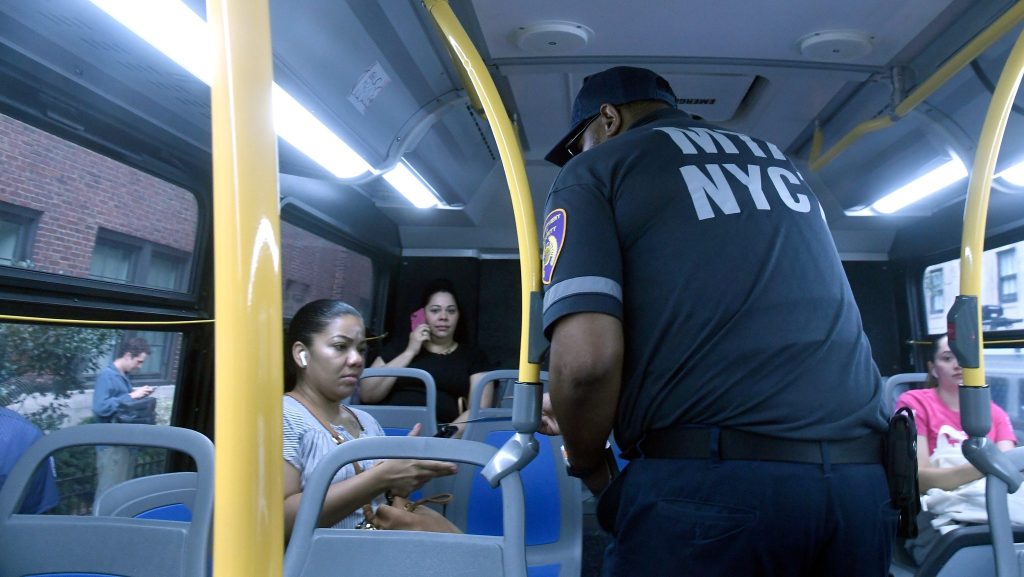
The city’s beleaguered bus riders have languished at the bottom of the political food chain for decades — forced to endure the city’s slowest-in-the-nation buses as the political elite has prioritized the needs of drivers, businesses, app companies and, frankly, itself.
Mamdani has promised to change that, but the history of transportation suggests it will be a struggle to get the people in charge to use their power to make the streets better for cyclists, pedestrians and bus riders. Advocates have suggested multiple corridors as a follow-up to the completely successful 14th Street busway, yet buses remain mired in car and truck traffic.
So what could change the equation?
The new mayor has the support of the local Democratic Socialists of America and the Working Families Party, both of which say they will help get his agenda passed.
“Our role in the ecosystem is working with the advocates and the legislature and being that bridge,” WFP Co-Director Jasmine Gripper told Streetsblog, citing 20 Council members who were endorsed by the party. “And we can do that with City Council and the mayor’s office in terms of, ‘What support do we need to get the things over the finish line?'”
The city’s DSA chapter also plans to throw its weight behind bus priority on the Council district level, where representatives don’t always come to the issue with the most open or curious mind, said Alex Morano, a DSA member and organizer with Kids Over Cars, a parent-led campaign for safer streets.
“We can have a mayor who’s a true believer on these issues, but there are a lot of [Council] members who either don’t understand the policy or they’re not bought into street treatments as things that are really beneficial for their constituents, or they just don’t hear from those constituents enough so they’re not doing anything to push these issues forward,” said Morano. “There’s there’s so much work to be done just on that piece of it alone.”
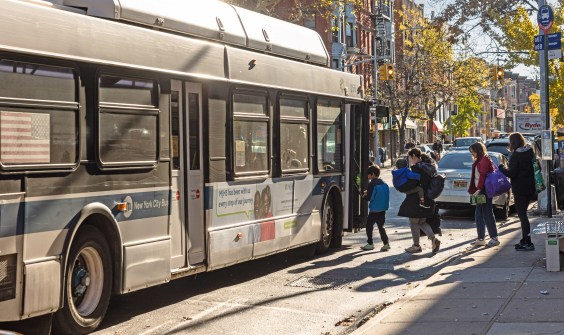
If Mamdani is serious about his commitment to install 30 miles of bus lanes per year, as required by the Streets Master Plan, he’ll need to mobilize the support of organizations created to explicitly support his agenda, such as the Mamdani-aligned Our Time and DSA-aligned People’s Majority Alliance.
Morano held up the tenants’ rights movement as one that the DSA’s transportation organizers hope to emulate in terms of making street safety and livable streets redesigns an electoral winner.
“Campaign promises like ‘Freeze the Rent’ have been so well received because of years and years of organizing to make tenants rights an electoral issue,” he explained. “We really want to create a similar kind of movement and energy for not just buses, but anything that has to do with improving the streets in a way that benefits New Yorkers.”
The Working Families Party and the DSA haven’t traditionally put bus lanes and bike lanes at the top of their agenda, but organizations that have spent years in the trenches fighting for bus lanes see the elevation of fast buses as a campaign talking point as a victory.
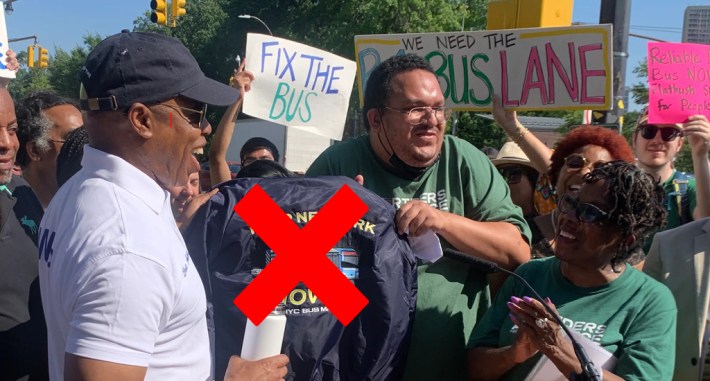
“This election put bus riders on the political map like never before,” said Riders Alliance Director of Policy and Communications Danny Pearlstein. “Now it’s time to test the theory that bus riders count and bus riders will be treated fairly in the policy process for, in a lot of ways, the first time in anyone’s memory.”
Obviously, the new mayor will have to joust with Gov. Hochul, the MTA and Albany lawmakers to realize the “free” part of his “fast and free” promise, but the mayor’s near-total control over New York City streets gives Mamdani the power to make the “fast” part happen.
Plus, Mamdani can also push the MTA to provide better service immediately, experts said.
“The mayor could look at the worst-performing bus routes in the city and see the population catchment area for those bus routes and say [to the MTA], ‘Wow, thousands of people are being impacted by less than ideal service. What are you doing to make these bus routes better?'” said Midori Valdivia, who currently serves on the MTA Board as a city representative.
“You can map out how many people are affected by this service and fight on behalf of the thousands people that are getting the underperforming bus service. That’s a great campaign to deliver for New Yorkers.”
And long overdue. Mayor Adams came in with big plans to install bus lanes, but failed to follow through. Sometimes Adams threw in the towel in the face of powerful opposition like when he canceled a plan for a bus lane on Fordham Road or his bizarre pause on a proposed 34th Street busway after some caterwauling by a handful of Murray Hill residents. Projects also moved slowly as a result of staffing shortages that were never taken care of throughout the mayor’s tenure.
And he followed then-Mayor Bill de Blasio’s failure to create a busway on Fifth Avenue by crafting a road redesign that actually cut an existing bus lane from the street.
In contrast to Adams, who didn’t mention bus riders in his 2021 victory speech, Mamdani used his Election Night address to directly connect the struggle of juggling childcare and work with the struggle to get around the city on a bus that arrives on time.
“Our greatness will be anything but abstract,” Mamdani said. “It will be felt by the single mother who is safe on her commute and whose bus runs fast enough that she doesn’t have to rush school drop-off to make it to work on time.”
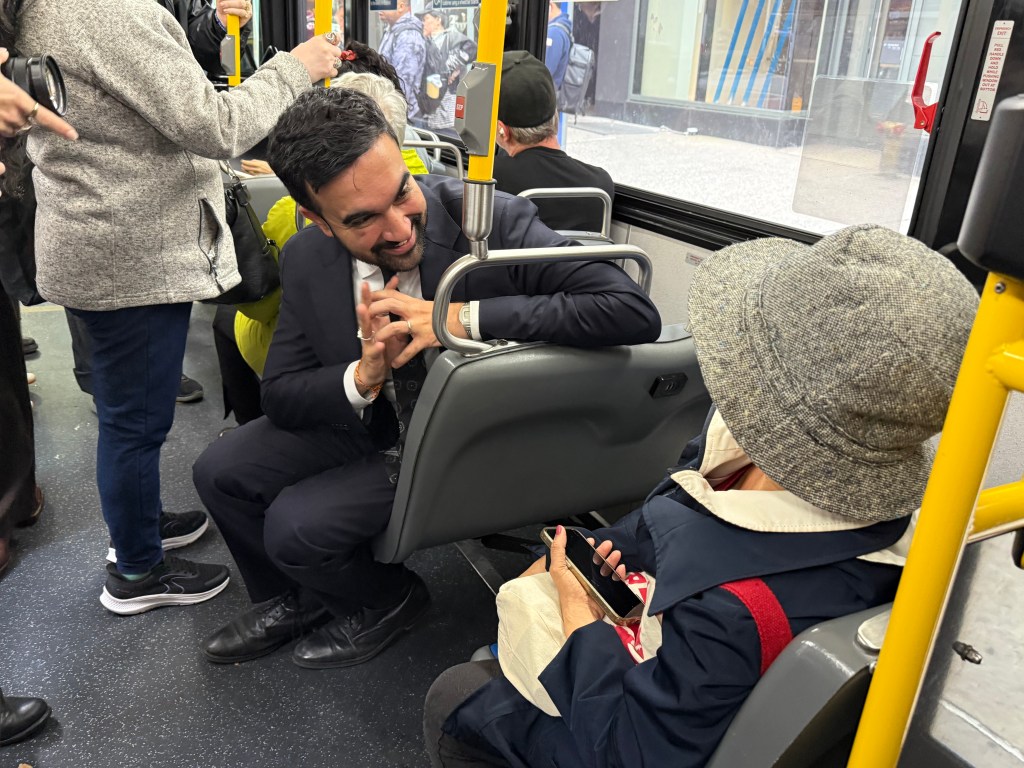
That attitude and rhetoric is why Gripper said she believes that Mamdani’s mandate explicitly includes a stepped up effort to put in bus lanes around the city — not only because the mayor-elect talked about the bus on the campaign trail, but because he has made it a central piece of his politics. During the campaign, Mamdani had press conferences on a bus and rode one to a debate. Before he ran for mayor, he had a history of championing faster buses through automated enforcement as well as funding for more bus service.
“Part of what made his campaign so compelling is that New Yorkers saw themselves in the campaign. People saw themselves reflected in the agenda, and were like, ‘Oh, actually, that’s me. My life would be easier if the buses were fast and if the buses were free.’ There’s a mandate from New Yorkers who say we rely on our public transportation, and it needs to be of quality, and it needs to be the best,” said Gripper.

Read More:
Streetsblog has migrated to a new comment system. New commenters can register directly in the comments section of any article. Returning commenters: your previous comments and display name have been preserved, but you'll need to reclaim your account by clicking "Forgot your password?" on the sign-in form, entering your email, and following the verification link to set a new password — this is required because passwords could not be carried over during the migration. For questions, contact tips@streetsblog.org.