Zone Of Interest: Upper East Side Doormen Use The Do-It-Yourself Approach To Safety
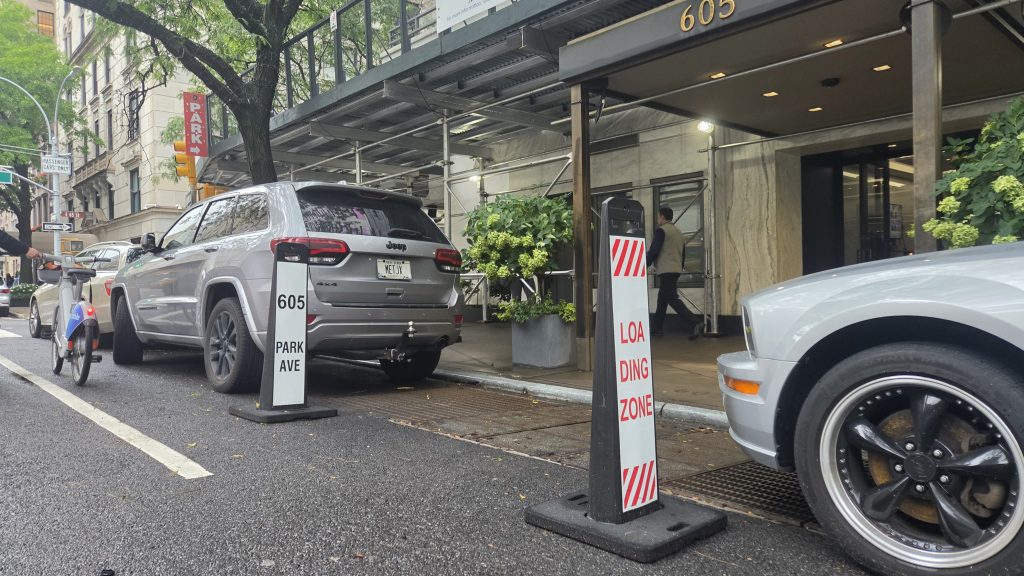
DIY, not DOT.
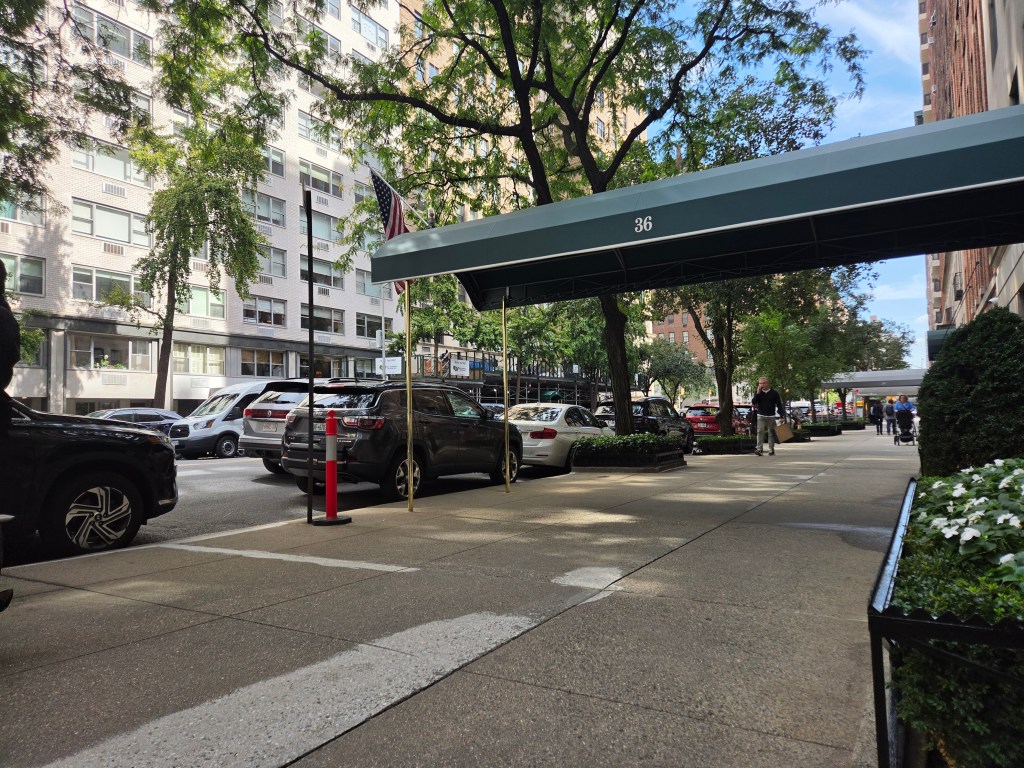
As the city Department of Transportation fails to create enough loading zones in residential areas, doormen in one of the richest neighborhoods in town are simply setting them up themselves — an ad hoc effort to make streets safer while also mitigating the unsafe road conditions and congestion that stem from the massive growth in deliveries.
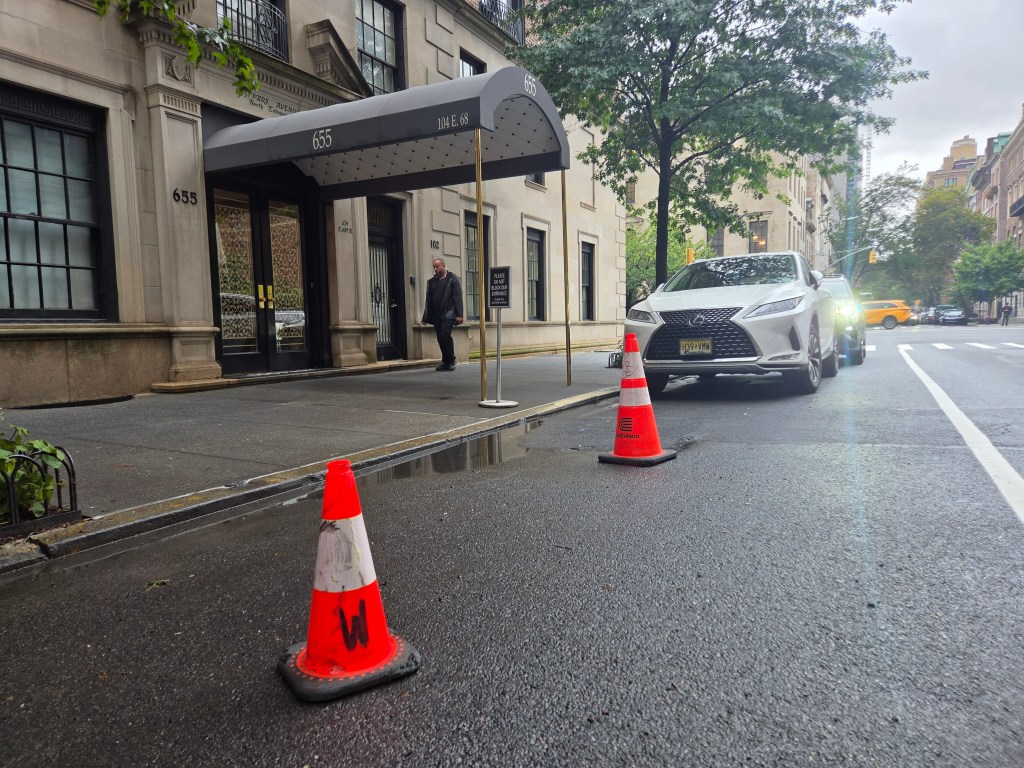
In just a few hours of walking around on the Upper East Side, Streetsblog found dozens of the makeshift no-parking zones carved out of public space that many New Yorkers think is room for them to store their private vehicles.
“It feels unsafe” without the coned-off loading zone, Nelson Vega, the doorman of a building on Park Avenue at E. 76th Street, told Streetsblog. Without his do-it-yourself space in front of the building, he added, life for residents is “harder, especially if we have to get a taxi or vehicle for one of the tenants that uses a wheelchair or a walker.”
Doormen like Vega might not know it, but they’re on the front lines of a public space war.
The post-pandemic rise in deliveries has come with a commensurate increase in double-parking, which makes roadways less safe, both for through traffic in cars or bikes, but also for residents.
Nonetheless, disputes about loading zones in on the Upper East Side and citywide have stalled their installation. Earlier this month, for example, Manhattan Community Board 8’s Transportation Committee tabled a resident’s request for a loading zone at 360 E. 88th St.
“We don’t necessarily approve these [loading zones] except under special circumstances,” said Chuck Warren, co-chair of the committee, told the resident, David Simpson, who made a safety-first argument.
Warren’s summary judgment is something you hear a lot on the Upper East Side, whose residents get a lot of deliveries of food and goods, yet whose community board doesn’t want to create space for them.
Another building, at 315 E. 77th St. provides a perfect example of this disconnect: In 2022, the Department of Transportation actually created a loading zone at the front door, but now-Council Speaker Julie Menin called for it to be restored to parking, and it was.
When access to front doors is blocked, other drivers double-park, blocking other vehicles, bike lanes and crosswalks.
Another doorman in the neighborhood, who asked not to be named, said he created his DIY loading zone to make things safer for children entering and exiting cars outside the building.
Several doormen interviewed by Streetsblog said they would prefer for the city to create the zones. So far, the agency has met the benchmarks of a 2021 law that required at least five loading zones be added a year in every neighborhood, and at least 500 total for the first three years.
But more are needed: Loading zones decrease double-parking by up to 70 percent on corridors where they’re installed, according to a 2021 presentation by DOT. There are nearly 900 zones on the Upper East Side with various loading regulations, but those cover commercial and residential needs. Only 34 are designed as “Neighborhood Loading Zones,” a DOT program that sets aside space for residential deliveries and taxi drop-offs or pickups.
Vega insisted that more loading zones would solve the problem of parked cars blocking other buildings where the doormen are not so creative.
“If the city makes it illegal to park, then they’re not going to park. If they do, then we can actually call a tow truck,” he said Vega, ever the optimist.
Want more loading zones? Propose some on DOT’s map.

Read More:
Streetsblog has migrated to a new comment system. New commenters can register directly in the comments section of any article. Returning commenters: your previous comments and display name have been preserved, but you'll need to reclaim your account by clicking "Forgot your password?" on the sign-in form, entering your email, and following the verification link to set a new password — this is required because passwords could not be carried over during the migration. For questions, contact tips@streetsblog.org.