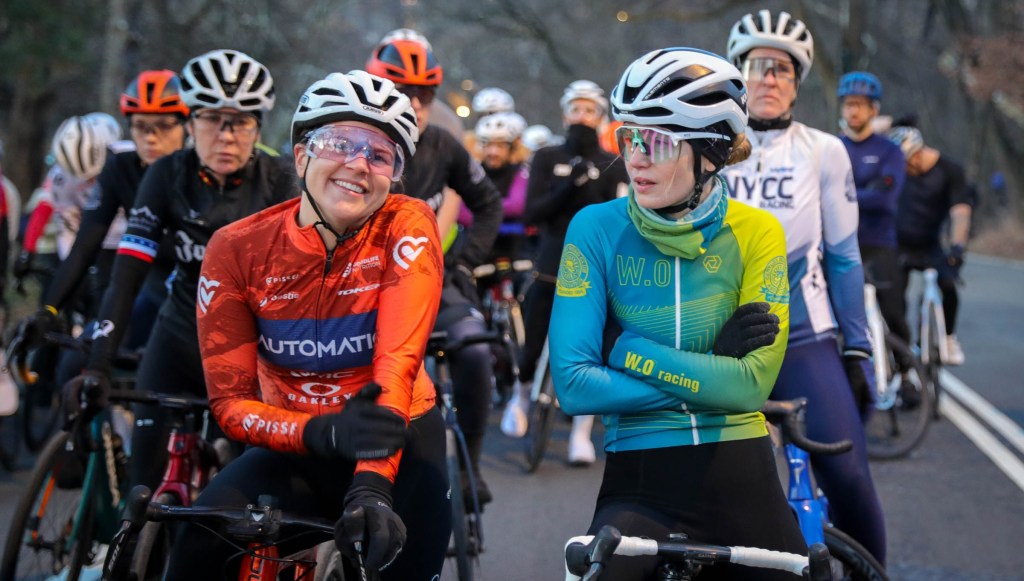
A Helmet Won’t Save Mayor Mamdani From a Car Crash
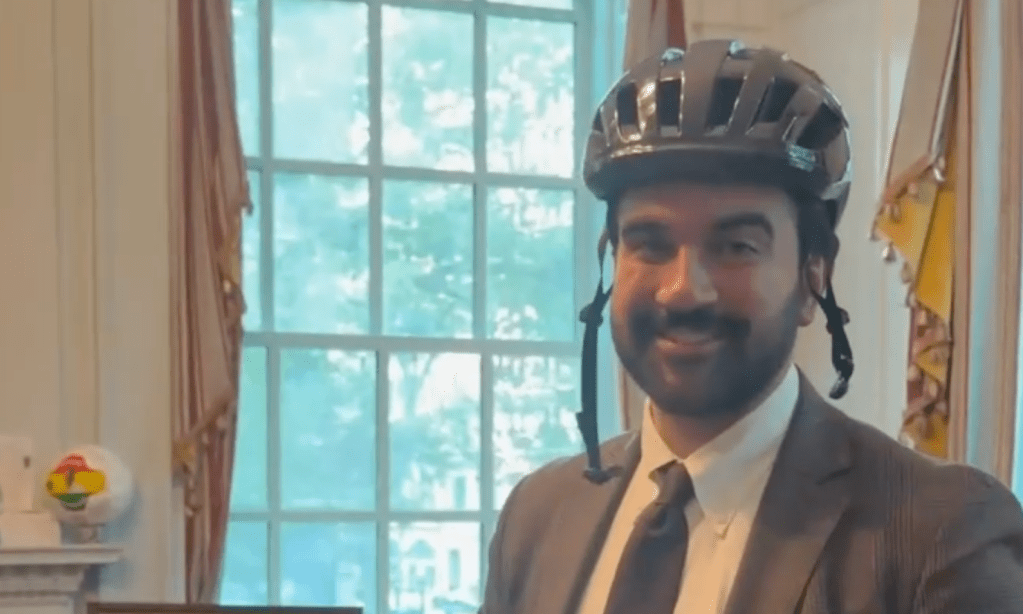
On his first day in office, Mayor Mamdani told New York City that his administration would “replace the frigidity of rugged individualism with the warmth of collectivism” and promised that City Hall would “use its power to improve New Yorkers’ lives.”
More than seven months later, Mamdani announced that would he start wearing a bike helmet on his frequent rides across the city, apparently in response to the pleas of his constituents. “You’re right, I’ve gotta do better,” he said in a video published on Aug. 18. “Safety first, New York. See you out there.”
The video garnered 26 million views on X. New Yorkers heaped praise on Hizzoner’s announcement, while reporters gushed over the mayor’s message. The New York Times lauded the mayor for “finally” donning the protective headgear, while the Department of Transportation advertised one of its routine free helmet giveaways.
The announcement combined everything that Mamdani loves about the city with everything that the city loves about Mamdani: cycling, safety, vertical video and a sense of protectiveness around their globally famous mayor.
Yet the same announcement further entrenched a persistent narrative that assigns responsibility for road safety to individual cyclists while downplaying the government’s role in designing safer streets.
That narrative is completely false. The chief culprits of traffic violence are car drivers who terrorize the city’s streets, maim and kill its residents and evade any punishment for doing so.
This became painfully clear when three drivers — none of whom Mamdani’s NYPD has arrested or even identified — slaughtered three cyclists in three separate crashes in less than a week. At least two of those cyclists were wearing a helmet. But helmets are no match for three-ton motor vehicles.
Mamdani’s video on helmets distracts from that reality. It paints deadly crashes as the failure of vulnerable road users to protect themselves, rather than as the failure of government to stop completely avoidable carnage.
“We are as a nation eternally distracted by the idea that personal responsibility can save us so that we can excuse widespread preventable death,” said Jessie Singer, who wrote the book about car crashes and has critiqued helmet campaigns in the past.
“Helmets are great,” Singer added. “Helmets serve a practical function of protecting your head if you fall off your bike and hit the asphalt — [but] even the manufacturers of helmets will tell you that they’re not made [to protect cyclists from] cars.”
Some advocates praised Mamdani for putting safe and affordable transportation at the top of his agenda and normalizing cycling as a prominent public figure.
“I thought the mayor’s video was cute and I actually see it as his mainstreaming of bicycling,” said Ben Furnas, executive director of Transportation Alternatives.
And Singer concurred, adding, “As much as I see all of the problems with the helmet discourse, I appreciate that Mamdani is willing to say, ‘I’m listening to what you all are complaining about.’”
But the mayor’s video, with its focus on individual behavior, perturbed other street safety activists. “I’d rather he’d keep the focus on institutional solutions to this public health crisis,” said Doug Gordon, who co-hosts the War on Cars podcast and co-wrote a book about building a post-car society. “There’s almost never good timing for an elected official to post a helmet video in a city where you have an average of one or two cyclists or pedestrian fatalities every other day.”
Helmets aren’t entirely useless, and they reduce the risk of head injury by up to 88 percent. People should wear them. Furnas pointed out that the gear is especially useful for electric mobility devices that can achieve much faster speeds. “In those types of crashes a head injury is a real risk,” he said. “The bottom line is it’s never a bad idea to pop on a helmet when you’re riding a bike.”
Still, some cyclists question the efficacy of helmets and wonder if other factors — like people riding more safely or better infrastructure — more accurately explain their alleged correlation with lower injury rates.
“It’s a mistake to focus your narrative on ‘wear your helmet,'” said Kevin Montgomery, who penned a provocative essay that argued helmets are useless and still believes their benefits are questionable. “It’s a bad-faith argument a lot of the time, spoken by people who don’t necessarily have any interest in cycling themselves.”
Changing the story
Helmets shift the narrative away from government’s role in protecting people on the road toward one of personal responsibility. Singer compared helmet campaigns to the signs that some cities hang near highways to instruct drivers to slow down — even though the highways encourage high speeds.
“They’re looking to comfort themselves,” Singer explained. “It’s a way of saying, ‘This couldn’t happen to me, I know better.'”
Academic research supports this line of thinking. Studies have found that more people don protective gear in countries, like the United States, where it is less safe to bike. The authors of a 2017 study argued that American cities routinely tie helmet campaigns to car-first policies that “hamper efforts to actually improve bicycle safety” and uphold a culture of “unfettered automobility.” Canadian provinces that mandate helmets do not register lower injury rates.
When governments design streets to protect everyone — such as in the Netherlands or cycling-friendly cities like Copenhagen — people rarely wear helmets and their crash and injury rates remain low.
“What distinguishes them is a really high quality street design,” said Furnas. “My sense is the Mamdani administration understands this and is really focused on having a high-quality protected bike lane network.” However, the rise of much faster e-bikes has driven an increase in injuries — even in the Netherlands, where acoustic bike crash rates have otherwise remained flat.
Here in New York City, the post-pandemic explosion of e-bikes and other battery-powered devices has brought about more emergency room visits. But cars still account for the vast majority of road deaths, and recent studies continue to reinforce that better street infrastructure is the primary means of curbing traffic injuries and deaths.
A spokesperson for Mamdani emphasized that the administration has championed both helmets and safer street design. Under the new mayor, DOT relaunched several bike and bus lane projects that were abandoned by the more car-focused predecessor Eric Adams.
“New Yorkers shouldn’t have to choose between wearing helmets that help protect against head injuries and infrastructure designs that reduce fatalities and ensure that everyone is protected when using our roads,” said Jeremy Edwards. “This administration is providing both, and we will continue to do so.”
Known dangers
On the same day Mamdani posted his video, two New York City drivers killed two cyclists and fled. Within a week, a motorist mowed down a third cyclist and fled. The three wrecks took place on streets with car-dominant infrastructure that endanger New Yorkers — a reality made clear by the many people whom car drivers injured in collisions in the same places.
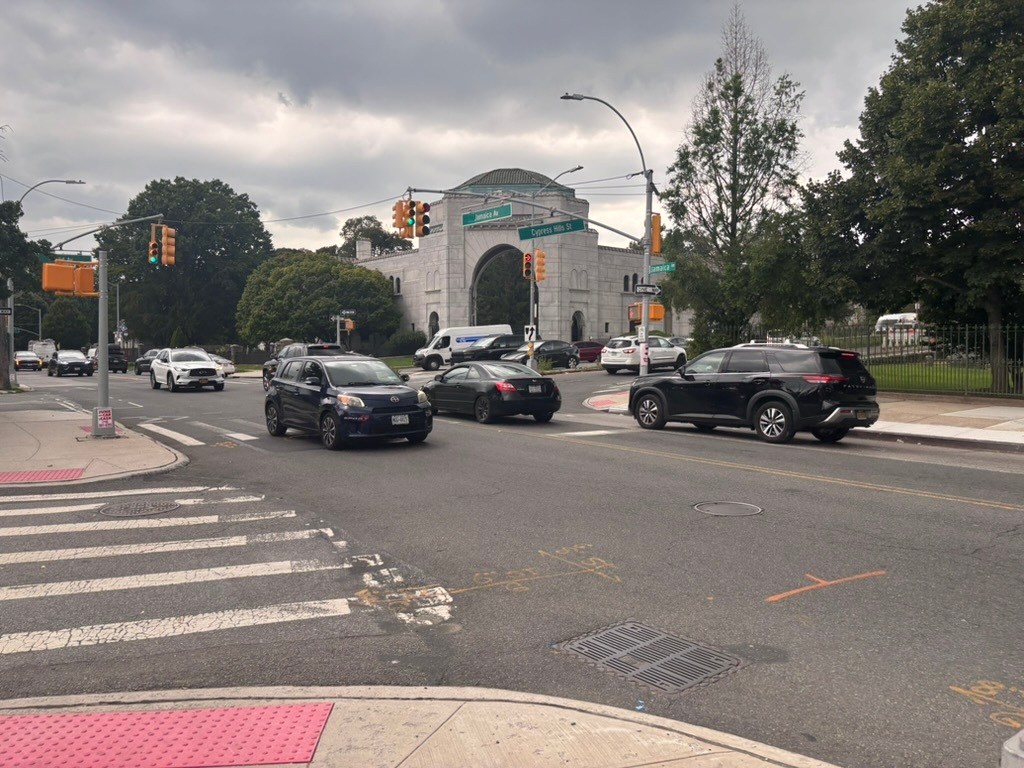
Paulina Tec Choc, 29, was waiting at the corner of Jamaica Avenue and Cypress Hills Street in Brooklyn on her e-bike around 5:50 a.m., when a motorist struck her from behind and ran her over before fleeing.
Tec Choc, who was wearing a helmet, suffered “severe trauma to the head and body” and died at a nearby hospital. “She always wore a helmet,” said her boss, Osman Cevallos. The intersection where she died recorded 57 reported crashes that injured 29 people, including three more cyclists and four pedestrians, over the last five years.
Cypress Hills Street is supposed to include a protected cycling lane, according to the Department of Transportation‘s bike map, but the path only has paint at the corner where a driver murdered Tec Choc. The remainder of the intersection is a typical New York car sewer: wide roadways with slip lanes and two-way traffic. All of these features encourage fast and dangerous driving.
The second fatal crash occured just before 9:30 p.m. at Bruckner Boulevard and Longwood Avenue in the Bronx, where a speeding motorist blew through a red light and initiated a chain-reaction crash with multiple vehicles, killing 51-year-old father-of-five Angelo Camero, who was cycling home, and injuring another 37-year-old woman in a car.
The intersection features a two-way bike path on the sidewalk, but it is completely surrounded by wide roadways that induce fast, unsafe driving. 120 people have been injured there in 139 reported collisions since 2022, including another three cyclists, a pedestrian, and 113 people in cars.
The third cyclist, 40-year-old Brooklynite Mamadou Diallo — who was also wearing a helmet — was making a left turn at East 54th Street and Avenue I when the driver of a BMW sedan slammed into him.
Although this intersection saw fewer reported crashes than the other two — five collisions, including two that injured a cyclist and a pedestrian over five years — its design still lacks safety infrastructure for people outside of cars, despite the nearby school. This pattern persists across much of Brooklyn’s southern half.
Transportation Alternatives called on Mamdani to come up with a comprehensive plan in response to the spate of deaths, and the group plans to stage a “die-in” at City Hall Park at 5:30 p.m. on Wednesday.
“Overwhelmingly, the threats for cyclists are from cars and there’s a very limited amount of things a helmet can do when you’re struck by a driver,” Furnas said.
Additional reporting by Poppy Wilkinson

Read More:
Streetsblog has migrated to a new comment system. New commenters can register directly in the comments section of any article. Returning commenters: your previous comments and display name have been preserved, but you'll need to reclaim your account by clicking "Forgot your password?" on the sign-in form, entering your email, and following the verification link to set a new password — this is required because passwords could not be carried over during the migration. For questions, contact tips@streetsblog.org.