Brooklyn’s Jay Street Busway Is Getting Spiffy New Boarding Platforms
Islands in the street, that is what they are.
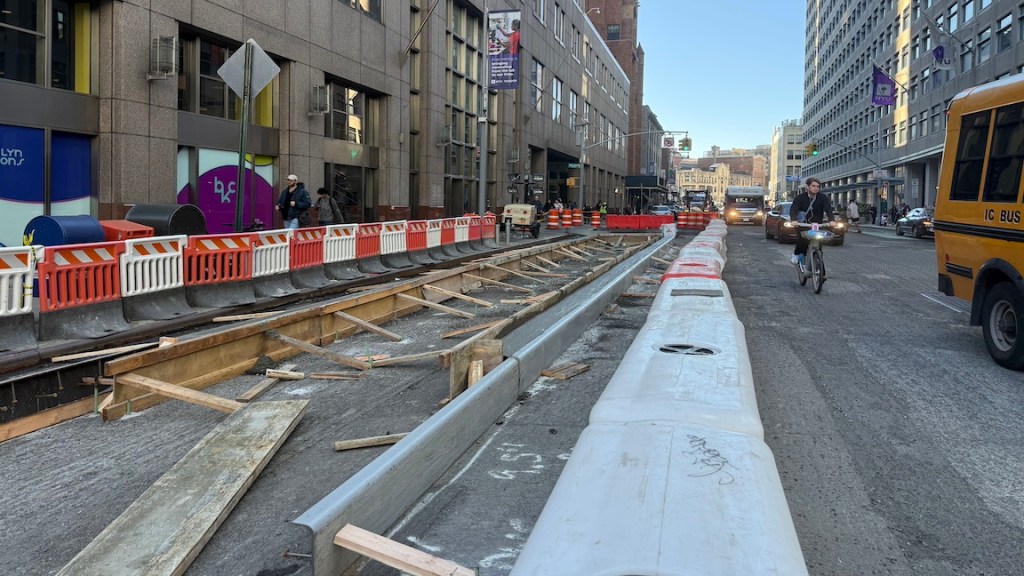
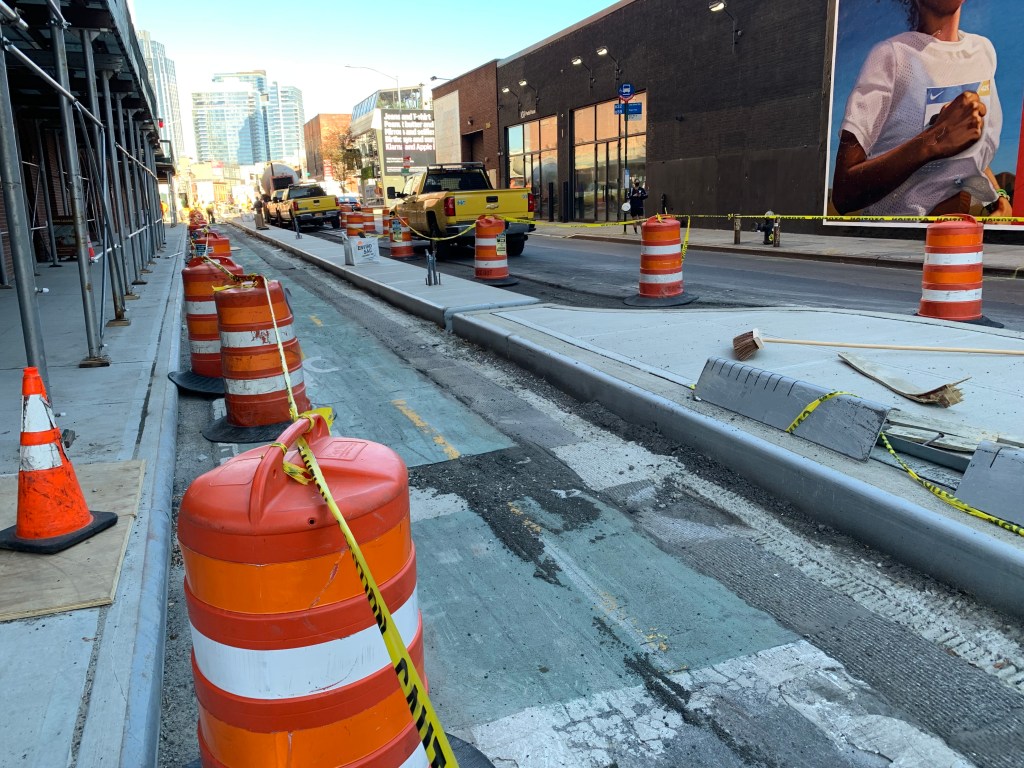
Mayor Mamdani is refining the Jay Street busway with a pair of bus boarding islands to a chaotic area of the bus-first thoroughfare where cyclists, pedestrians and buses all compete for space.
“DOT is taking advantage of scheduled street resurfacing to improve the bus-riding and biking experience on Jay Street,” said DOT spokesperson Mona Bruno. “As we deliver a smooth new roadbed, we’ll be installing bus boarding islands to eliminate the mixing of buses and bikes at these two locations, reducing bus service delays and improving safety for everyone.”
The Department of Transportation is currently — as you read this news story — building the bus boarding islands. One, just north of Metrotech Service Road, will replace a painted no-parking area decorated with planters with actual concrete, where buses can discharge passengers at the last stop of the B54. The island will also provide more protection to cyclists riding along the curb.
DOT is placing the second island slightly to the north of the first, where it will allow bus drivers to park their buses during layovers.
Currently, those drivers use a cutover next to the curb in front of the Brooklyn Commons plaza, which is so frequently blocked by taxis and police officers who use it as an illegal parking spot that a Google Street View camera captured the mishegas in 2024.
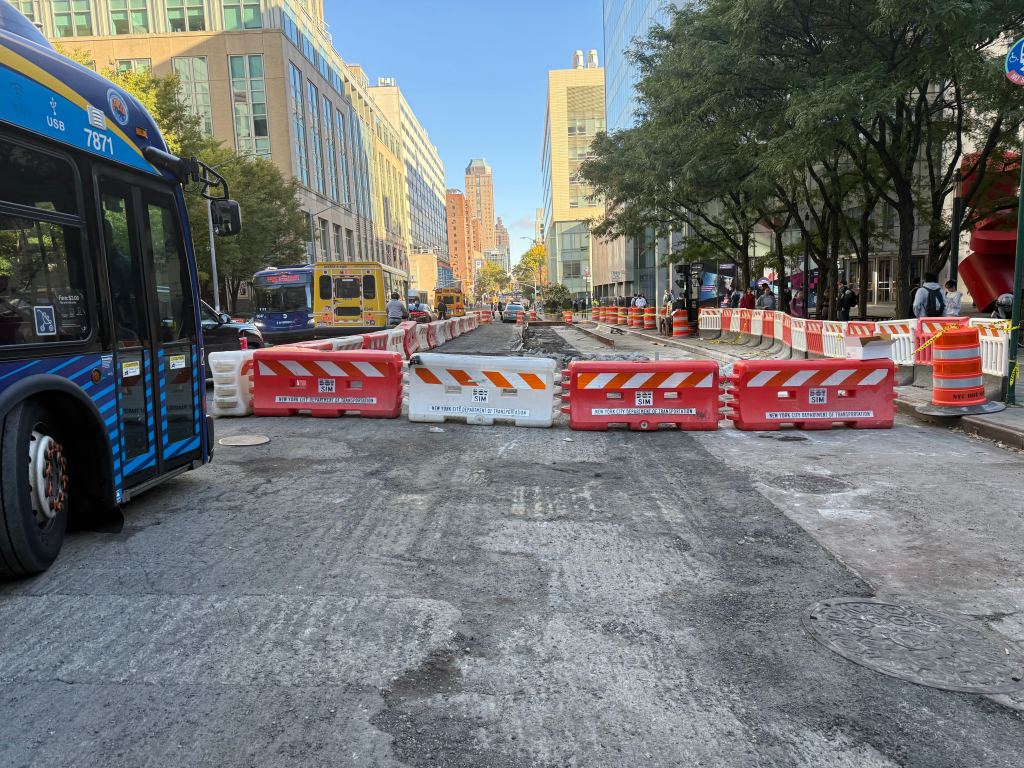
The cutover contributes to an unworkable traffic pattern in which cyclists must proceed straight through the area while bus drivers pull into the curb. By installing the new island for layovers, DOT can route cyclists along the curb next to Brooklyn Commons, thereby eliminating the conflict between cyclists and bus drivers. The curb cut will still exist in the new setup, but the agency is designing it to accommodate the curbside protected bike lane.
Work like this doesn’t always happen during routine street resurfacing, so the fact that DOT decided to combine ripping up the street with new concrete with real benefits for people is a sign the agency is starting to think about how to execute its mission more rationally.
Jon Orcutt, a former DOT official under mayors Bill de Blasio and Michael Bloomberg, said the practice of combining street resurfacing and street redesigns “absolutely has not been standard procedure, but that’s not to say the current management isn’t doing something about that.”
Such alignment “would be great, especially where you want to show off a real project with concrete, and ostensibly you’re delivering a benefit,” Orcutt added.
That kind of coordination would deliver smoother rides and cleaner streetscapes when projects are done. By contrast, Orcutt pointed out, a pedestrian island that DOT installed next to the Kent Avenue bike lane between South Second and South Third Streets didn’t include a resurfacing of the bike lane itself — an oversight that resulted in a rough-riding, construction-abused bike lane surface alongside a newly improved bike lane protection.
The Jay Street upgrade is the latest in a slew of changes that the Mamdani administration is bringing to Downtown Brooklyn. The city already closed the “Crashland” gap on Ashland Place’s protected bike lane between Lafayette Avenue and Hanson Place, and paired it with a protected bike lane on Lafayette that connects to the Schermerhorn Street protected bike lane.
This fall, DOT will finish a one-block extension of the Livingston Street busway, a Joralemon Street bus lane, the Flatbush Avenue protected bus lane and a new protected bike lane on Adams Street and Boerum Place that will give cyclists a new connection to and from the Brooklyn Bridge.
The work in the neighborhood is not only good for keeping people alive and un-maimed, it’s also a surefire way to build a more thriving neighborhood. A recent report from the Regional Plan Association on how to turn Downtown Brooklyn into a truly great “mixed-use” neighborhood suggested that the city emphasize the area’s transit connections and pedestrian and cycling-friendly street grid in order to attract more employers and residents.
The RPA study specifically suggested that DOT upgrade the Jay Street busway with a view towards fixing what the group said “is currently a major impediment to the pedestrian environment.” Even with the new boarding islands, the strip is likely to remain a bastion of illegal placard abuse, illegal double parking and, despite the busway regulations, heavy automobile traffic.
With so much new work getting done in the neighborhood, local elected officials praised DOT for taking care of the existing shortcomings in the infrastructure, and asked for even more.
“I’m grateful that DOT is separating the bike and bus lanes to bring some order to the mess on Jay Street,” said City Council Member Lincoln Restler (D-Brooklyn). “I hope we can extend those safety improvements along Jay from Livingston to Willoughby Streets in the near future.”

Read More:
Streetsblog has migrated to a new comment system. New commenters can register directly in the comments section of any article. Returning commenters: your previous comments and display name have been preserved, but you'll need to reclaim your account by clicking "Forgot your password?" on the sign-in form, entering your email, and following the verification link to set a new password — this is required because passwords could not be carried over during the migration. For questions, contact tips@streetsblog.org.