People-First Streets Will Pave The Way For The Best Version Of Downtown Brooklyn: Report
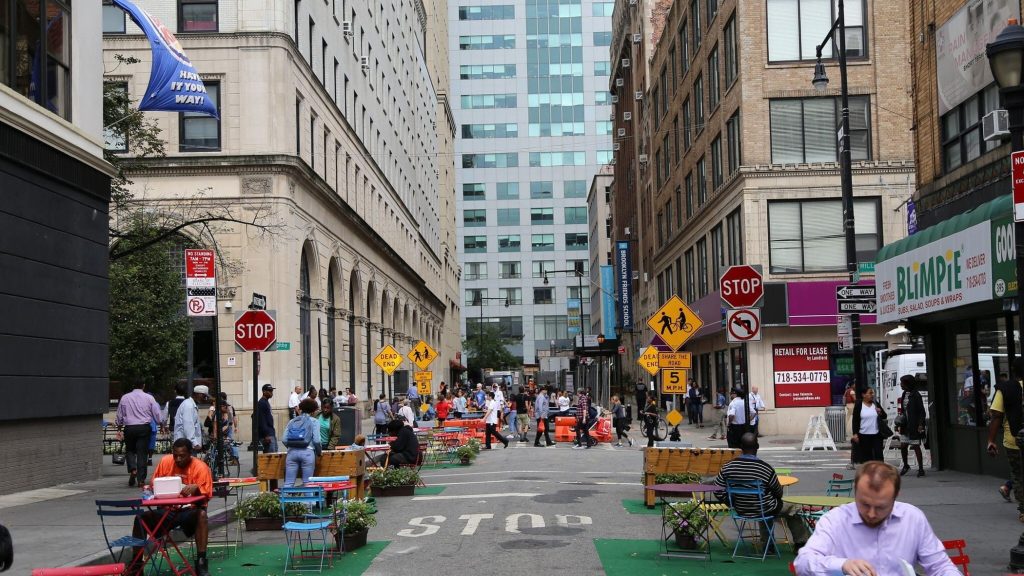
The city should aggressively redesign the streets of Downtown Brooklyn to prioritize pedestrians, cyclists and bus riders and maximize the neighborhood’s strengths as a mixed-use transit hub, according to a recent analysis commissioned by Council Member Lincoln Restler.
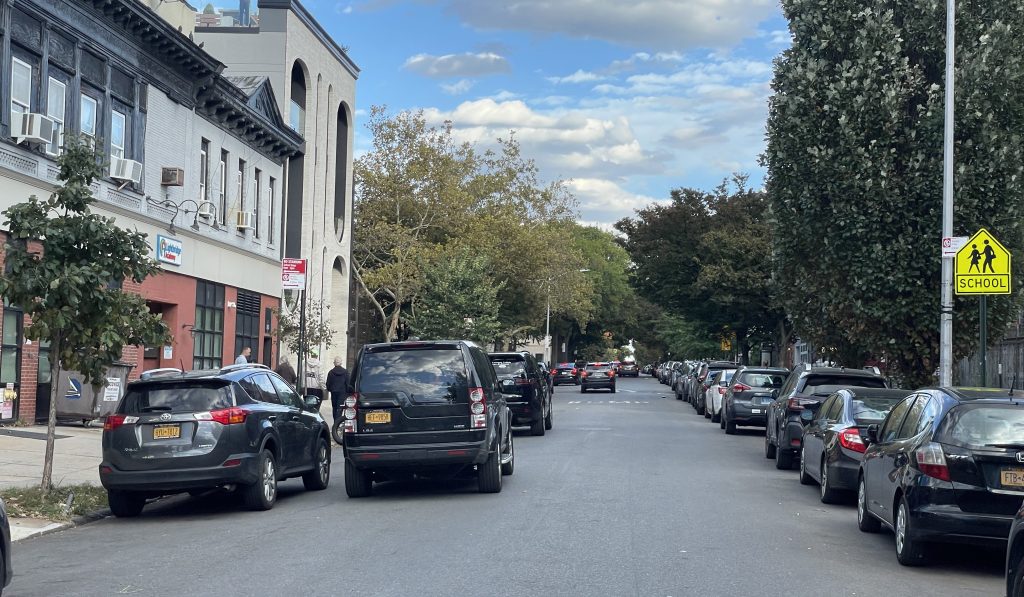
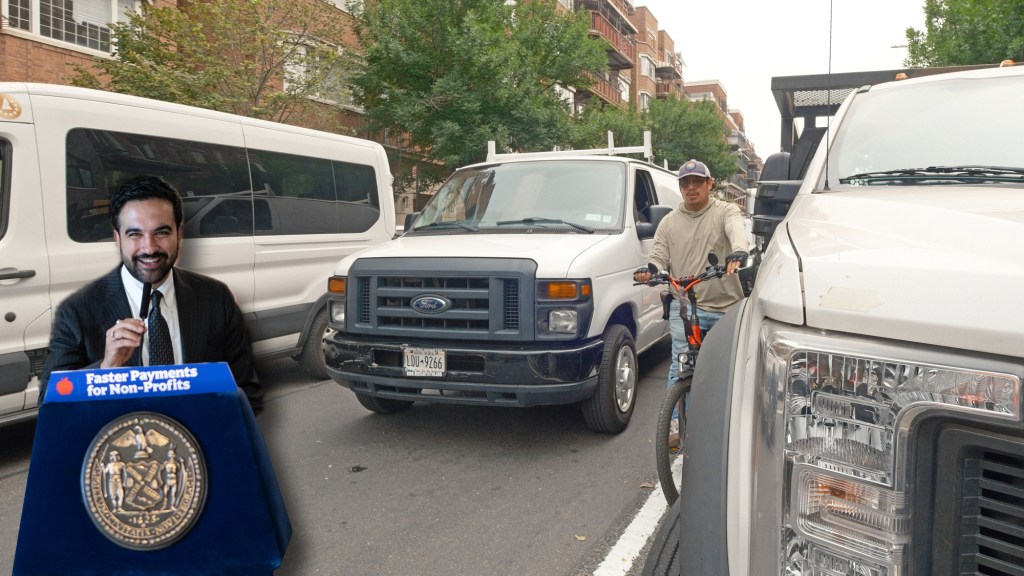
Twenty-two years after a landmark rezoning of the neighborhood sought to turn Downtown Brooklyn into New York City’s third major business district, Restler and the Regional Plan Association took stock of the results for a study on how to make the most out of an area still overrun by traffic gridlock and illegal parking by municipal employees.
“There are ways to beautify and green more streets in Downtown Brooklyn, pedestrianize more areas, dedicate more space for buses, enhance the network of protected bike lanes that all further improve the attractiveness and competitiveness of Downtown Brooklyn to be more of a jobs hub, more of a higher academic hub, and more of a housing hub and cultural hub, as a great mixed-use neighborhood in New York City,” said Restler.
Crucially, the study found that former mayor Michael Bloomberg’s 2004 rezoning, which the city primarily intended to create office buildings, actually created thousands of units of housing in the same footprint.
Today, Downtown Brooklyn has plenty of amenities that attract both employers and employees: historic performance venue in the Brooklyn Academy of Music and Brooklyn Paramount, a campus-like employment center in the Brooklyn Commons, a retail corridor in the Fulton Mall and nine hotels that attract thousands of visitors to the neighborhood every year.
Thanks to thirteen subway lines, the Long Island Rail Road and the cross-borough B41 bus, 2.3 million straphangers can reach Downtown Brooklyn in 30 minutes or less. A number of public-realm improvements have eased life for residents and visitors alike: The Livingston Street busway, the Schermerhorn Street protected bike lane, the Willoughby Street shared street, the Jay Street busway, Abolitionist Place, Columbus Park and Cadman Plaza.
To that end, the report argued that the city should adopt the recommendations of the Downtown Brooklyn Public Realm Plan, a strategy document published by the Downtown Brooklyn Partnership in 2021 to guide decision-makers who want to make streets more people-friendly. The five-year-old plan from the local BID emphasizes widening sidewalks, adding more shared streets and bike lanes, and making wholesale changes to Columbus Park so that the area in front of Brooklyn Borough Hall is more of a park and less of a “park”-ing lot for local judges.
Restler and the RPA also encouraged the city to further refine Jay Street, which divides the neighborhood and poses “a major impediment to the pedestrian environment.” Jay Street has a busway and protected bike lanes on the east and west sides of the street, but it remains a hotbed of placard abuse and automobile traffic. The segment between Fulton and Tillary Streets can be especially chaotic.
The report also implored the city to clamp down on placard abuse and illegal parking — an apparently intractable issue that successive mayoral administrations have refused to address — before the city wraps up construction of the Brooklyn Borough-Based Jail in 2029.
“Continuing to tolerate illegal parking is a severe impediment to the neighborhood’s growth and potential,” the report flatly states, and also notes that the neighborhood has been a notorious hotspot for the practice. DOT officials have expressed their own frustration with placard abuse undermining bike lanes in the neighborhood, but still no one has managed to put a stop to the practice.
RPA’s report suggested Downtown Brooklyn be a testing ground for any automated enforcement against placard abuse that could be thought of by the city and state. For his part, Restler pitched his own bill that allows citizen enforcement against placard abuse, and aggressive redesigns like the upcoming Adams Street protected bike lanes that will just eliminate areas where the placard class have routinely parked.
“We will continue to advocate for new and better designs that make illegal parking more unlikely. Ultimately, we need more aggressive enforcement. We’ve had strong partners at the NYPD Transportation Division, but I’m a believer that we need citizen enforcement to be able to have eyes on every street around the neighborhood to disincentivize illegal parking.”
“We’re looking at a number of different strategies to try to Mitigate parking challenges that will be caused by the jail, and we’re hoping to have them in place by the time the facility opens,” he said.
Downtown Brooklyn’s future depends, in part, on attracting employers who don’t necessarily require Class A office buildings in Midtown or the Financial District. These employers include culture-focused businesses, smaller retail outfits and young startups that need cheaper space but still want convenient access to transit.
But persuading employers to set up shop in Downtown Brooklyn also requires persuading their future employees. “In order to have a thriving business district, you need people and workers to go to your thriving business district,” RPA vice-president and report author Moses Gates said.
“In order to have people and workers go to your thriving business district, they have to want to work there,” he continued. “In order to have them want to work there, you need enough density that you have office district amenities like lunch places, after-work places, a little retail. You need to be able to get there on transit. You need to be able to get off of transit and cross the street without getting hit by a car. You need to be able to bike there. You need a good streetscape environment.”
Much of the report aligns with the city’s plans for the neighborhood. Mayor Mamdani recently finished the missing block of the protected bike lane on Ashland Place between Lafayette Avenue and Hanson Place, and paired it with a protected bike lane on Lafayette that connects to Schermerhorn Street. The Department Of Transportation will soon finish installing center-running bus lanes on Flatbush Avenue that will connect to the Livingston Street busway. And later this fall, the agency will begin work on the Adams Street bike lanes that will create a new direct bike connection to and from the Brooklyn Bridge.
Restler said he hopes the study will inspire more collaboration between the city and the local business leaders, who have been largely amenable to making Downtown Brooklyn a bikeable and walkable neighborhood in the last few years.
“We want to work with DOT and the Downtown Brooklyn Partnership and other stakeholders on a plan for the neighborhood to … generally enhance the public realm,” said Restler. “We have a lot going for us. But there are opportunities for us to do something really special in Downtown Brooklyn, and I hope that this administration and the large property owners and developers in the community will be partners in that effort to make it happen.”

Read More:
Streetsblog has migrated to a new comment system. New commenters can register directly in the comments section of any article. Returning commenters: your previous comments and display name have been preserved, but you'll need to reclaim your account by clicking "Forgot your password?" on the sign-in form, entering your email, and following the verification link to set a new password — this is required because passwords could not be carried over during the migration. For questions, contact tips@streetsblog.org.