U.N. General Assembly Season Should Be ‘World’s Fair,’ Not A Gridlock Grind
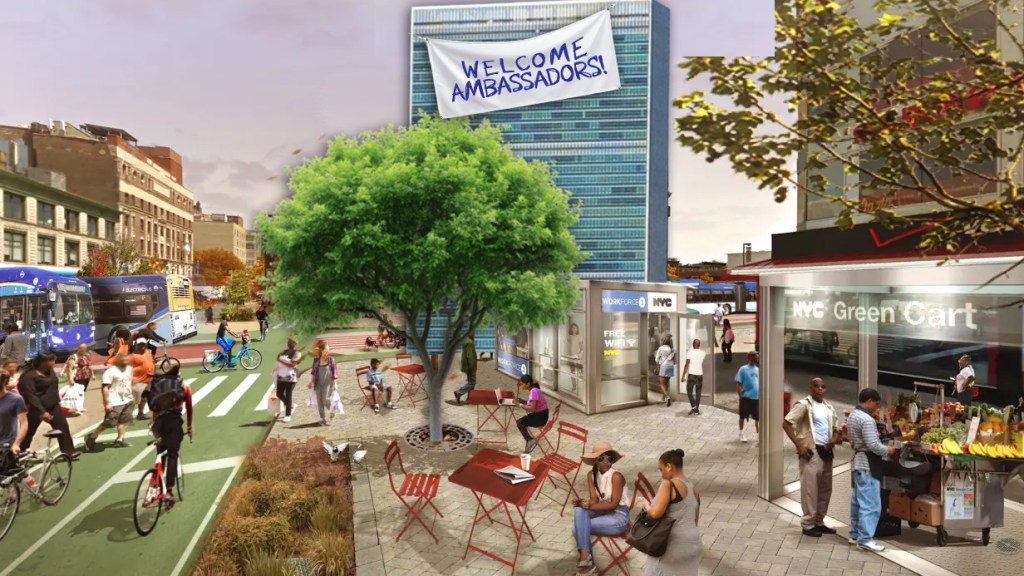
We’re the Capital of the World. Let’s act like it, and even enjoy it.
Locally, next week’s United Nations General Assembly is greeted not with pride, anticipation or some kind of proper welcome to the world, but with cynical groans at the annual ritual of the Department of Transportation’s “Gridlock Alert Day” announcements.
But we’re going about it all wrong; we can turn the General Assembly’s need to curtail East Side vehicle traffic into a good, or even great thing.
Diplomatic and head-of-state security concerns lead the city, feds and UN to limit typical motor traffic and parking in the area comprising the United Nations buildings and the cluster of missions and consulates on Midtown’s East Side during each fall’s General Assembly, especially during the “high level” sessions toward the end of September.
So let’s do traffic restrictions for real, by pedestrianizing a big piece of the East Side. We can invite our diplomatic guests to throw mini World’s Fairs in the freed-up space and figure out other ways to throw the world and ourselves a great set of street parties alongside the global gathering.
Just step out your door to remind yourself that September is one of the truly glorious seasons in our city.
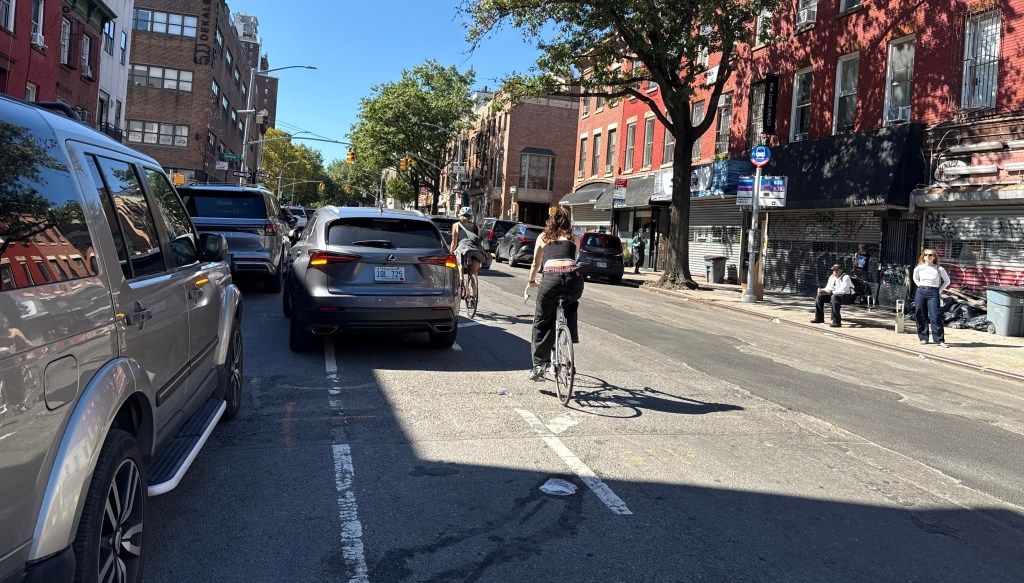
Recent history suggests we’re capable of overcoming a pure lockdown approach to UN security issues. In 2019, the city stopped its nonsensical policy of closing down the East Side’s bike lanes at the same time it urged everyone not to drive. It even enhanced the First Avenue route by adding a bike lane to the UN-bypass tunnel (42nd to 47th streets). DOT had to work with the NYPD, FBI and others to make this change.
But let’s go beyond a basic operational approach and pedestrianize cross streets in at least the core General Assembly security zone in the 40s east of Second Avenue, as well as the lanes of the avenues not needed for motorcades or bike traffic. UN-related motorcades or shuttles needed for security could continue to run effortlessly and last a matter of minutes in most cases.
Doing something creative, beneficial and fun with pedestrian streets around the General Assembly would fit Mayor Mamdani’s aggressive campaign trail talk about the public realm and street safety. At a public forum, Mamdani said he would transform “our relic of a streetscape” within the congestion prizing zone (Manhattan south of 60th Street). He repeated this in responses to Streetsblog’s candidate questionnaire, saying he would transform “large amounts of public space” within and around the congestion pricing area. The Mamdani administration again promised “pedestrian zones” this month in its Vision Zero policy refresh.
So far, Mamdani supporters and transportation reformers await transformative or signature projects, while 2026 has started with DOT chugging along with well-known street redesign projects, with an accent on bus lanes (that car and truck drivers are still free to block).
Seasonal pedestrianization on the East Side could indeed lead to more permanent changes. It would create space to experiment with pedestrian streets at the edge of the Manhattan grid, perhaps reviving DOT’s out-of-steam Public Plaza Program in the process. And note that something similar to this overall thought could be applied to a set of “Winter Streets” in any busy commercial district in town (last year, the city managed one Sunday on Fifth Avenue). December is another gridlock season that New York treats as a curse rather than blessing. But done right, holiday pedestrianizations can be gangbusters for retailers, and fun for their customers.
Seeing the arrival of United Nations diplomats to our world-class city as a burden rather than asset is at odds with experience elsewhere, and shows up the relative poverty of quality public space in New York. International sectors in Vienna and Geneva are bordered by large public parks that remain open, while European capitals Brussels and Strasbourg are notable success stories in their citywide efforts to reduce car use and add public space.
A lot of the fight for safe and livable streets in New York is simply trying to get the city to exploit and live up to its natural advantages: high density, high capacity subways and the walk- and bike-ability the two provide. As a world capital, we must flip the script and start treating the United Nations as an opportunity for a fun, engaging diplomacy street fair rather than a traffic problem for the gnashing of teeth.
We don’t owe it to the world; we owe it to ourselves.

Read More:
Streetsblog has migrated to a new comment system. New commenters can register directly in the comments section of any article. Returning commenters: your previous comments and display name have been preserved, but you'll need to reclaim your account by clicking "Forgot your password?" on the sign-in form, entering your email, and following the verification link to set a new password — this is required because passwords could not be carried over during the migration. For questions, contact tips@streetsblog.org.