DOT Commissioner Floats ‘Capital-Light’ Projects to Speed Up Permanent Street Changes
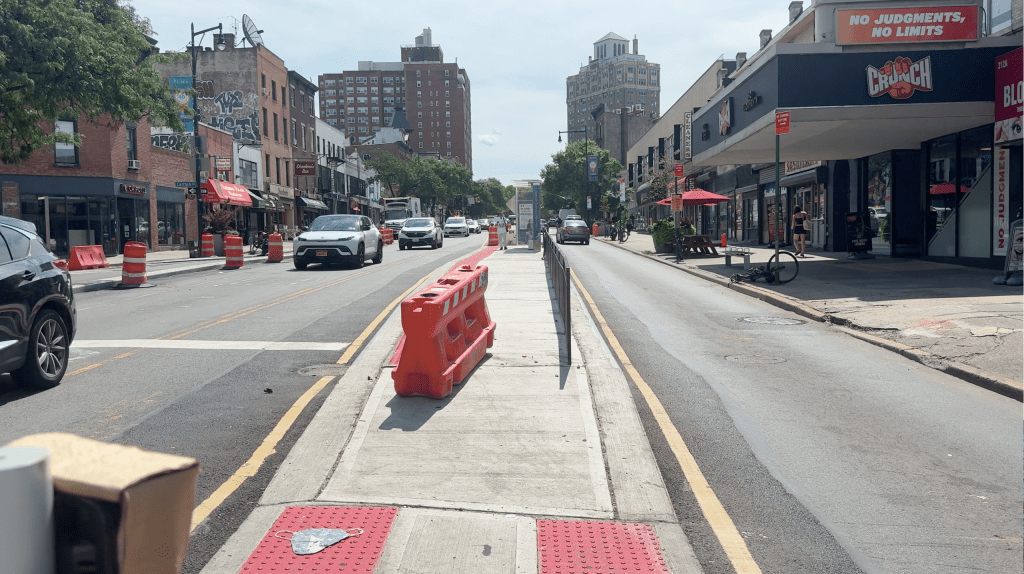
The Mamdani administration wants to accelerate the installation of bike and bus infrastructure with “capital-light” projects that include more solid materials than just paint and plastic, Department of Transportation Commissioner Mike Flynn said on Thursday.
The agency is looking for a middle ground between its quick paint work, also known as Street Improvement Projects, and lengthy capital projects that routinely require more than a decade to finish and involve ripping up entire streets, the DOT leader said.
“How can we do something that gets us even closer towards what a capital improvement might look like, but that we can deliver much quicker and cheaper?” Flynn said during a panel discussion at the 2026 NYC Greenways Summit in Manhattan. “Is there a way to do what we might call capital-light? Can we do streetscape improvements that don’t need to involve massive work every time?”
Flynn’s agency hopes to expand its in-house capacity to build more concrete infrastructure without getting bogged down in multi-agency and decades-long projects. “Can we shave two years off a four-year timeline?” Flynn asked. “That would be huge. That’s going to be really key to making our streets the envy of the world.”
In an interview with Streetsblog, the agency chief emphasized that the new Mamdani administration is still finding its footing and that its officials have not yet fleshed out a full plan for their new approach yet. But he cited the recent bus boarding islands on Flatbush Avenue in Brooklyn, and a highway on-ramp reconfiguration for the Bronx Harlem River Greenway on Bailey Avenue, as examples to model.
“Some of [DOT’s strategy will be] building [out] our capacity resources, because these things take more resources,” Flynn told Streetsblog in an interview. “Do we need new types of skill sets? If you’re going to build higher boarding islands for buses, do you need to be able to do retaining walls or other like more sophisticated construction?”
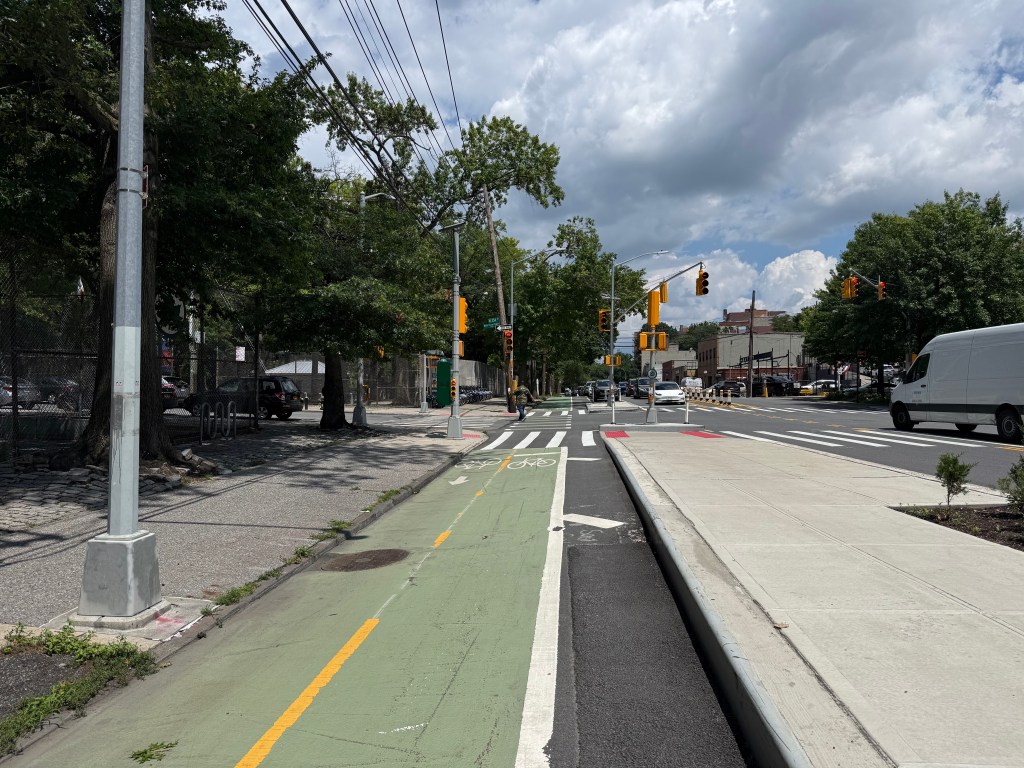
The city could also trim timelines for capital projects by not digging up utilities every time it implements more substantial redesigns. City planners tend to tie concrete road redesigns to larger underground work in order to not have to rip up the same street twice — but that process prolongs projects, and raises their prices, because officials must confer with third-party entities like Con Edison and National Grid.
Flynn said the city could tweak its street safety work to interfere less with below-ground infrastructure.
“Oftentimes what happens is something becomes a capital project and the scope expands dramatically to include a lot of subsurface work,” the DOT leader said. “Is there a way to do that in a capital light kind of way, where you can determine early on that, you know what, it doesn’t need the soup to nuts.”
The Department of Design and Construction, which has has long struggled to quickly turn around street redesign buildouts, is also eager to reduce its timelines, Flynn said.
Advocates cheered Mamdani’s top transportation official taking on the challenge for faster and better buildouts.
“It’s music to my ears,” said Jon Orcutt, who directed policy at DOT under former mayors Bloomberg and de Blasio. “We need it badly,” he added. “We needed it 10 years ago.”
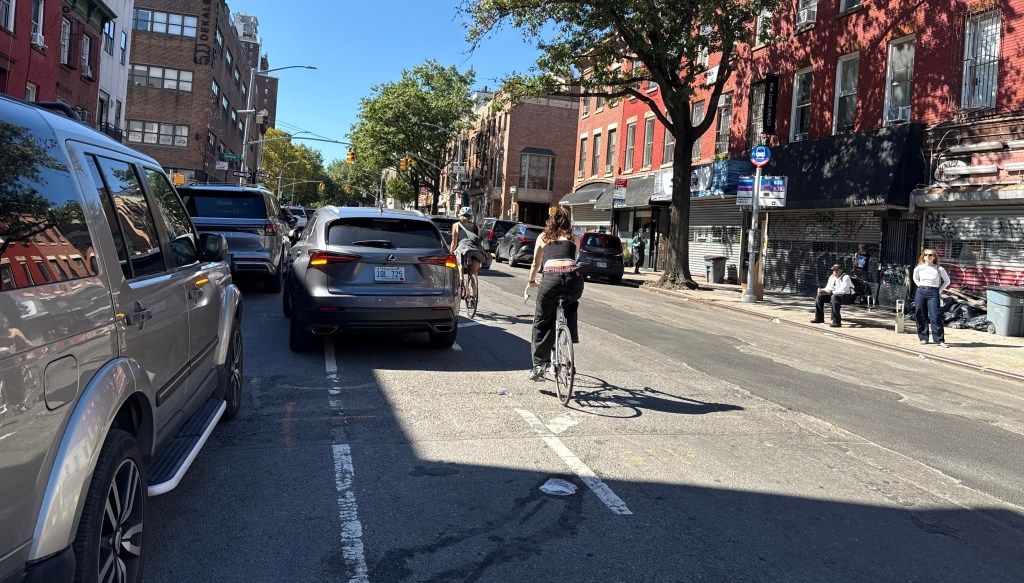
The agency has become more efficient at implementing bike lanes with paint and light-touch hardware like plastic bollards, a strategy first pioneered by former DOT commissioner Janette Sadik-Khan with the Ninth Avenue protected bike lane in 2007.
Motorists can easily park in or drive over quick-build bike and bus lanes, and adding even just some more hard infrastructure without an extensive project will keep most drivers out, Orcutt said.
“An enterprising truck driver will occasionally drive over it, but a lot less often,” Orcutt said. “It makes the infrastructure more robust but the promise that Flynn is talking about is that it’s not a next-lifetime thing.”
If Flynn gets it right, capital-light could mark the beginning of a new era in New York City’s street design, updating the two-decade-old Sadik-Khan model, said Annie Weinstock, director of programs at the group People-Oriented Cities.
“What can we do 20 years on to make it better, and I think making it permanent is the thing to do,” Weinstock told Streetsblog. “This will be a big step for the city to actually have street infrastructure that’s permanent, that looks nice, and isn’t easy to run over by a car and flattened.”
Advocates have pushed Mamdani to expand government’s capacity beyond that nearly 20-year-old model to build more solid infrastructure quickly.
A greenway on Brooklyn’s Third Avenue took 14 years to finish – as much time as it took to construct the Brooklyn Bridge in the 19th century. A plaza on Pearl Street in Dumbo took 17 years to wrap up.
Having worked at Bloomberg’s DOT for nearly a decade, Flynn knows these issues first hand. Orcutt noted that previous mayors have tried to expand DOT’s street redesign capacity, but have struggled to get their efforts off the ground.
In 2019, then-Mayor Bill de Blasio promised he would expand DOT’s concrete construction capacity as part of his “Green Wave” plan — but it took years for the new crews to come on board.
“The challenge for him is to get it done quickly, because it costs money,” Orcutt said. “Urgency is the watch word if this is going to make a difference.”

Read More:
Streetsblog has migrated to a new comment system. New commenters can register directly in the comments section of any article. Returning commenters: your previous comments and display name have been preserved, but you'll need to reclaim your account by clicking "Forgot your password?" on the sign-in form, entering your email, and following the verification link to set a new password — this is required because passwords could not be carried over during the migration. For questions, contact tips@streetsblog.org.