Community Boards Push Mamdani’s DOT to Use ‘Sammy’s Law’ To Lower Speed Limits
The momentum to lower New York City’s speed limits is accelerating — just not at City Hall.
As the City Council and Mayor Mamdani pass the hot potato of implementing a 2024 state law that allows the city to impose reduced speed limits, local civic panels are taking matters into their own hands.
In recent weeks, several community boards have passed resolutions that ask the city Department of Transportation to designate their districts as “slow zones” that officially limit vehicular speeds to 20 mph.
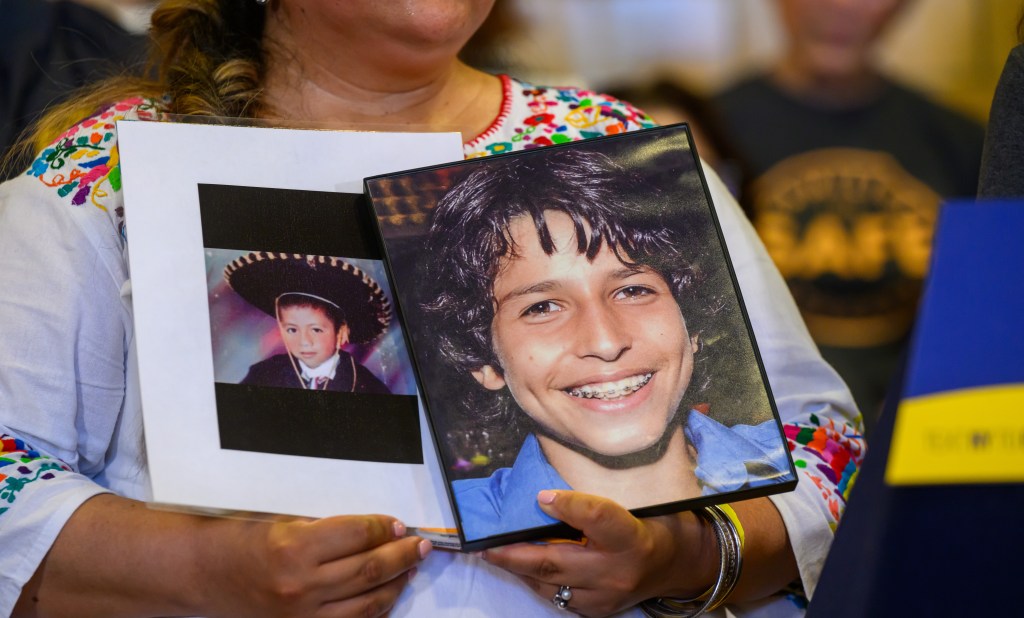
The resolutions represent a loosely coordinated effort to overcome the city’s persistent reluctance to fully implement the speed limit bill known as Sammy’s Law. Albany named the law after 12-year-old Sammy Cohen Eckstein, whom a driver killed on Prospect Park West in 2013. But the administration of former Mayor Eric Adams implemented the law only sparingly, while both Mamdani and the new Council have blamed each other for the lack of progress.
As the elected officials bicker over who is responsible for the law’s execution, community boards across the city have made it clear to DOT that they want to reduce speed limits in their respective districts.
“We were really thrilled when [Sammy’s Law] was passed,” said Corey Hannigan, a member of Queens Community Board 2. “But then we were disappointed to see it rolled out so slowly, if at all, because a lot of parents in the neighborhood were really hoping it would turn into slower streets for them and their families.”
The community board — which comprises parts of Long Island City, Woodside and Sunnyside — passed a resolution in early February requesting that the district become a slow zone. Hannigan said DOT acknowledged the board’s request but didn’t say what it would do about it.
DOT said it would review all community board requests for slow zones, said spokesperson Vin Barone.
Requests for slow zones have already passed the transportation committees of Manhattan CB2 and CB5, Queens CB6 and Brooklyn CB6. The full boards of Brooklyn CB1, Manhattan CB4, and Queens CB2 have all passed requests. Manhattan CB3 passed a slow zone request before Sammy’s Law passed in 2024, but only for some of the district, not all of it. Families for Safe Streets has tracked the requests since the passage of Sammy’s Law.
The board-by-board strategy isn’t ideal. Advocates point out that implementing Sammy’s Law only where community boards request it is problematic because those boards tend to rely less on cars anyway. Car-heavy districts that would benefit the most from speed reductions are unlikely to benefit from this fractured approach, since their local representatives are less likely to push for the law’s implementation.
DOT can already lower speed limits in large zones, provided it notifies affected community boards and gives them 60 days to review and provide an advisory opinion. The Council could go even further, by passing a bill that lowers the speed limit on all applicable city streets.
Under Adams, DOT created slow zones using Sammy’s Law in a limited number of locations: Manhattan south of Canal Street, Broad Channel in Queens, DUMBO in Brooklyn, St. George on Staten Island and on City Island in the Bronx.
Advocates say this was a good start but hardly sufficient. “I would really like Sammy’s Law to be implemented equitably,” said Alexis Sfikas, an organizer for Families for Safe Streets. “I do think that that was one good thing that the Adams administration did with their very teeny tiny implementation.”
More controversially, Adams invoked the same law to reduce the speed limit for cyclists in Central Park from 20 to 15 miles per hour — a decision that Mamdani recently endorsed. Opponents call this a misuse of the law and have sued to stop it.
While campaigning, both Council Speaker Julie Menin and Mamdani showed strong support for reducing the car speed limit to 20 miles per hour. But now the Mamdani administration has said it needs the City Council to pass a law to lower the speed limit city-wide, while Menin has said the mayor already has the authority to lower the speed limit in specific locations to 20 miles per hour.
Mamdani continues to insist that he can only reduce the speed limit on select corridors. Sam Raskin, a spokesperson for the mayor, previously told Streetsblog that DOT is “continuing to identify more corridors where safer speeds can save lives.”
“The administration has been preparing to use Sammy’s Law to reduce speed limits at dozens of priority locations across the city,” he added.

Read More:
Streetsblog has migrated to a new comment system. New commenters can register directly in the comments section of any article. Returning commenters: your previous comments and display name have been preserved, but you'll need to reclaim your account by clicking "Forgot your password?" on the sign-in form, entering your email, and following the verification link to set a new password — this is required because passwords could not be carried over during the migration. For questions, contact tips@streetsblog.org.