HungryPanda Pressured Delivery Workers in Dangerous Blizzard, Workers Say
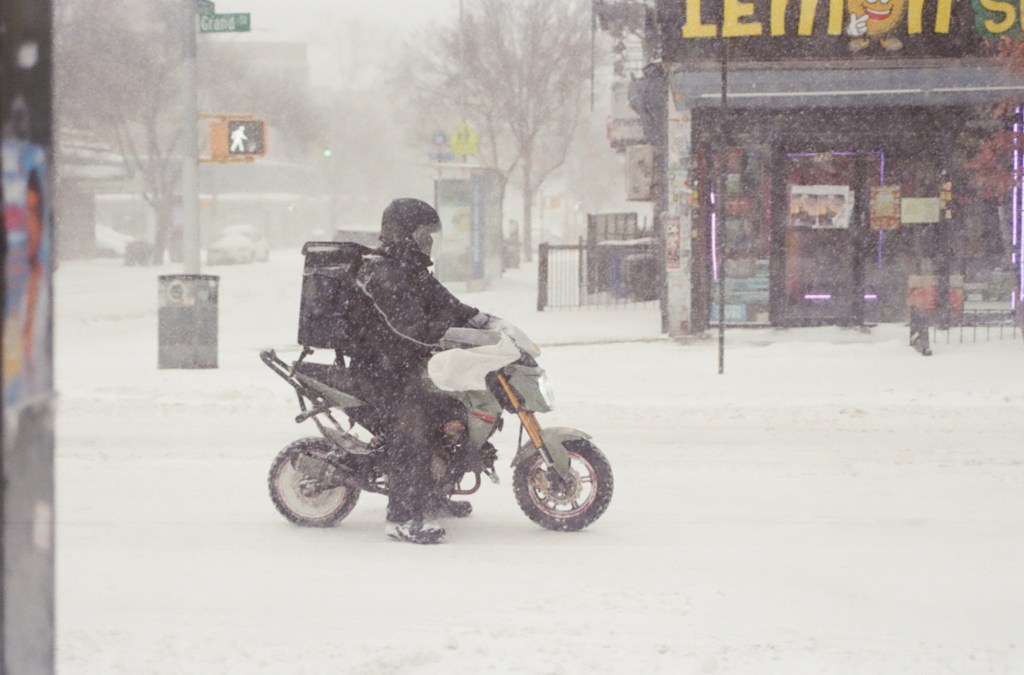
When New Yorkers see snow, the app delivery industry sees dollar signs.
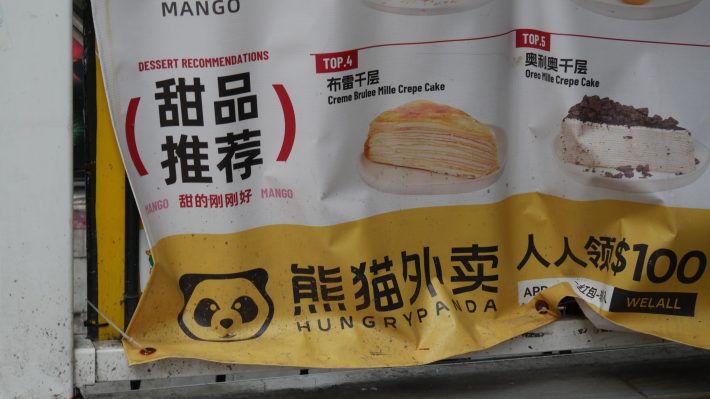
Food-delivery app HungryPanda pressured workers to make dangerous bike deliveries during last month’s blizzard, according to deliverymen who accused the company of dispatching them to closed businesses — then not paying them accordingly.
“It was extremely windy and extremely snowy. It was impossible to navigate on the ground. I had to push my bike to walk, one step at a time. The wind was very strong, and the snow was three meters high,” Lin Cunjiao told Streetsblog through an interpreter after the storm. “I said I didn’t want to do any more deliveries because it was too exhausting. They said this order is very big and would tip very well. Then, when I went to get the order, the store had already closed.”
Lin, one of two HungryPanda workers who spoke to Streetsblog for this story, said the company also ignored the maximum distance workers he had set for trips — which would be a violation of city law.
DoorDash and GrubHub suspended operations for much of the second big storm of the season, which began the night of Sunday, Feb. 22 and ran into the next day, but HungryPanda took the opposite track: In the run-up to the storm, workers received calls and messages from the company’s dispatchers, who encouraged them to make deliveries, according to a screenshot posted on Instagram by the account Ride With Delivery Workers.
Lin, who had previously had his HungryPanda account deactivated, got a message from a dispatcher on Sunday urging him to work during the storm.
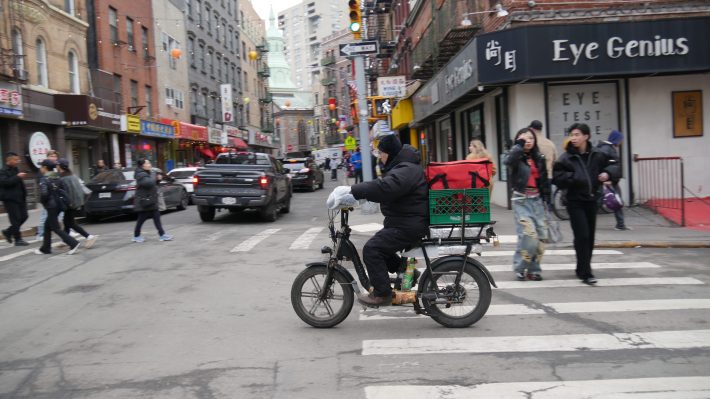
The next day, when Lin went out to work in Manhattan’s Chinatown at around noon, conditions were still brutal — even after Mayor Mamdani had lifted his citywide ban on “non-essential travel,” which exempted food delivery.
He felt he couldn’t say no since HungryPanda had previously deactivated his account, he said. Lin requested that HungryPanda only send him to nearby orders, but the dispatcher soon told him to travel out of his agreed-upon range — to Third Avenue and E. 12th Street — to pick up a grocery order.
“In two months, they had frozen my account five or six times, so I knew they could freeze my account. So I said, ‘OK, I’ll do some nearby deliveries,'” he said. “I couldn’t bike with it, so I had to walk it slowly on Third Avenue. Every time I tried to ride, I would slide and fall. I fell two or three times.”
And it got worse. At 1 p.m. the dispatcher told Lin to go do a delivery at 39th Street. When Lin got that request, he said no and logged off the app.
“It would take me an hour to get there for the delivery,” he said. “None of the streets were plowed. It was impossible. Too tiring.”
The system Lin described is unlike like that of most other delivery apps, whose workers often complain about being governed by faceless algorithms. Lin’s instructions came from a human dispatcher. After Lin declined the far-away trip, the dispatcher sent him to pick up from a succession of restaurants that had closed for the day, forcing him to do two hours of unpaid work before locking him out of his account again.
“They were all closed. I went to five or six businesses that were all closed. It took several hours,” he said. “They were retaliating against me. Five or six businesses, two hours of exhausting traveling, and no deliveries were made because the businesses were all closed.”
The behavior is typical of how HungryPanda treats workers during adverse weather events, according to workers and advocates interviewed by Streetsblog.
“They frequently give you time pressure,” said another delivery worker, Chen, who opted not to work during the blizzard. “When you’re doing a delivery, they might send you 20 messages telling you to quickly pick up your order.”
Haoju LU, a volunteer organizer with Chinese Delivery Workers Solidarity and a sociology PhD student at CUNY, said HungryPanda dispatchers pull out all the stops to get workers to come out for weather events, when some New Yorkers would rather pay someone to bring them food then go out themselves.
“Workers tell me that the managers always call them to go to work if tomorrow is supposed to have bad weather, like heavy rain or a snow storm. It is a long-time policy. Workers complain a lot about these things,” Lu said.
Through her organizing and research work, Lu has heard the complaints of workers who say they have been mistreated or, like Lin, feel like they have no choice but to work when the dispatcher calls.
“Workers tell me if they don’t go to work, maybe tomorrow the company will deactivate, in some extreme cases,” she said.
Founded in the United Kingdom, HungryPanda is growing its U.S. operation. The company is no stranger to enforcement from the city’s Department of Consumer and Worker Protection. A recent settlement revealed HungryPanda’s failure to abide by the delivery minimum wage law from Dec. 1, 2023 to Jan. 7, 2024, according to the consent order the department shared with Streetsblog — and agreed to pay workers more than $1 million in lost wages as a result.
The Department of Consumer and Worker Protection found HungryPanda owed one worker $13,000 after the worker logged an average of 43 hours per week at just $7.84 per hour, far below the $17.96 per hour minimum pay rate at the time (the minimum wage is now $21.44).
Beyond the minimum wage, which applies to canceled trips, city law also requires companies to let workers set a maximum delivery distance.
In a statement, the Department of Consumer and Worker Protection, which Mayor Mamdani has empowered to aggressively regulate delivery apps, called HungryPanda’s alleged practices during the recent storm “abhorrent and illegal.”
“DCWP has recently received similar reports from HungryPanda workers and we are investigating them,” Elizabeth Wagoner, Deputy Commissioner of DCWP’s Office of Labor Policy & Standards, said in a statement.
HungryPanda did not respond to multiple requests for comment. But last year, the company’s director of public affairs, Kitty Lu, told Food On Demand that she considers HungryPanda a “cultural ambassador” and that the company wants to “help workers in their day-to-day life.”
— with translation by Angela Wang
Update, March 19: After publication of this story, HungryPanda, which did not reply to four requests for comment before publication, denied that anyone with the name Lin Cunjiao is registered on its platform. The company denied pressuring workers to complete deliveries.
“HungryPanda operates on a voluntary, on-demand model, where riders independently decide when to log in and whether to accept orders. The platform does not require, pressure, or threaten riders to go online or complete deliveries,” company rep BinBin Spratt said via email. “Our internal records show that on February 23 there was one order cancellation related to a restaurant being closed without prior notice to the platform.”

Streetsblog has migrated to a new comment system. New commenters can register directly in the comments section of any article. Returning commenters: your previous comments and display name have been preserved, but you'll need to reclaim your account by clicking "Forgot your password?" on the sign-in form, entering your email, and following the verification link to set a new password — this is required because passwords could not be carried over during the migration. For questions, contact tips@streetsblog.org.