Memo to Mamdani: Rescind Central Park’s New 15-MPH Bike Speed Limit


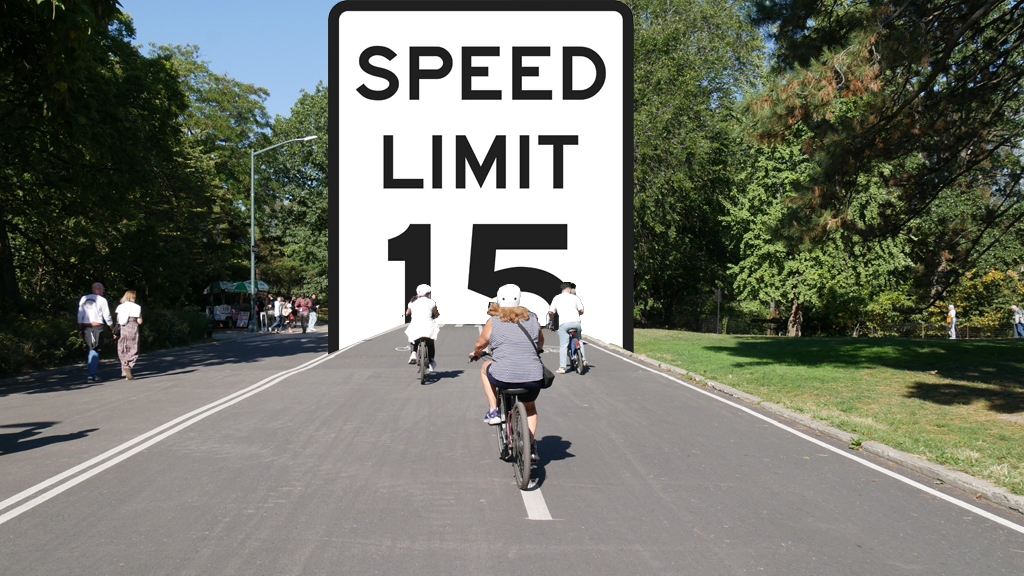
In the final days of his term, former Mayor Eric Adams announced that the Department of Transportation would reduce the speed limit for cyclists in Central Park from 20 miles per hour to 15 mph. Mayor Mamdani should immediately reverse this misguided decision before it takes effect.
In announcing the move, Adams cited his authority to regulate speed limits granted to the city under the so-called Sammy’s Law, and framed the change as a safety measure for all park users. The park’s governing non-profit, the Central Park Conservancy, eagerly endorsed the decision.
Safety in Central Park matters deeply — to pedestrians, runners, families, tourists and cyclists alike. But this particular policy misses the mark. Instead of improving safety, the lower speed limit undermines a century-old cycling tradition, misapplies state law and sets a troubling precedent for recreational cycling in New York City.
The park’s main drag, Central Park Drive, has served city cyclists for decades. Olympic gold medalist Kristen Faulkner is one of many world-class cyclists who began their careers training on this loop. The new limit disenfranchises serious recreational cyclists who depend on sustained and predictable conditions to train safely and responsibly.
The legal rationale is questionable, too. State legislators passed Sammy’s Law to prevent deaths and serious injuries caused by motorists, by providing New York City the power to lower vehicular speed limits because car drivers endanger pedestrians and cyclists. Adams’s decision to apply Sammy’s Law to cyclists stretches the law far beyond its intended purpose.
Adams never consulted cycling organizations that have long emphasized pedestrian safety and self-regulation. These groups already limit training sessions to early morning hours, when the drive is least crowded. This practice follows the spirit of Frederick Law Olmsted, who designed Central Park to prevent competition and conflict among different park users. A unilateral speed cap ignores that tradition of cooperation and shared stewardship.
The new policy also lacks any supporting evidence. The Central Park Drive Safety and Circulation Study — authored by DOT, Parks and the Central Park Conservancy in 2024 — does not recommend reducing cycling speeds as a safety measure. DOT has never presented data that shows a 15-mph limit will meaningfully reduce injuries or conflicts.
Existing speeding and right-of-way laws already provide effective tools to address genuinely dangerous behavior. These standards let law enforcement officers focus on individuals who fail to yield or behave recklessly, rather than imposing a blanket limit that penalizes responsible cyclists.
The new limit damages public health, too. Recreational cycling improves cardiovascular and mental health, and Central Park offers a uniquely safe venue for biking around. Any policy that discourages cycling — especially in a park where New Yorkers can ride continuously, far away from cars — poses a very real threat to the city’s longstanding goals of promoting active transportation and healthier lifestyles.
New York City is home to 800,000 active adult cyclists, yet it offers very few recreational cycling facilities that aren’t shared with pedestrians and runners. If elected officials can impose a reduced speed limit on the drive without any clear evidence or stakeholder input, they can easily do so on other recreational bikeways throughout the city — reversing years of progress toward cycling access and equity.
Central Park should remain a place where different users coexist through thoughtful management, evidence-based policy and mutual respect — not through misbegotten measures that single out one group without any credible justification. Mayor Mamdani should reverse the 15-mph speed limit to reaffirm his commitment to cyclists and preserve Central Park Drive as a vital, shared resource for all New Yorkers.

Read More:
Streetsblog has migrated to a new comment system. New commenters can register directly in the comments section of any article. Returning commenters: your previous comments and display name have been preserved, but you'll need to reclaim your account by clicking "Forgot your password?" on the sign-in form, entering your email, and following the verification link to set a new password — this is required because passwords could not be carried over during the migration. For questions, contact tips@streetsblog.org.