Streetsblog provides high-quality journalism and analysis for free — which is something to be celebrated in an era of paywalls. Once a year, we ask for your tax-deductible donations to support our reporters and editors as they advance the movement to end car dependency in our communities.
If you already support our work, thank you! If not, can we ask for your help?This year’s fundraiser includes a special gift for our biggest supporters. Don’t miss out.
Together, we can create a more livable, walkable, bikeable, equitable and enjoyable city for all. Happy holidays from the Streetsblog team!
A recent New York Post editorial accuses the Central Park Conservatory (yes, the paper got the name of the group wrong) of betraying the park’s “very purpose” in repurposing a lane of the park’s loop drive for “deadly” e-bikes and other micromobility vehicles.
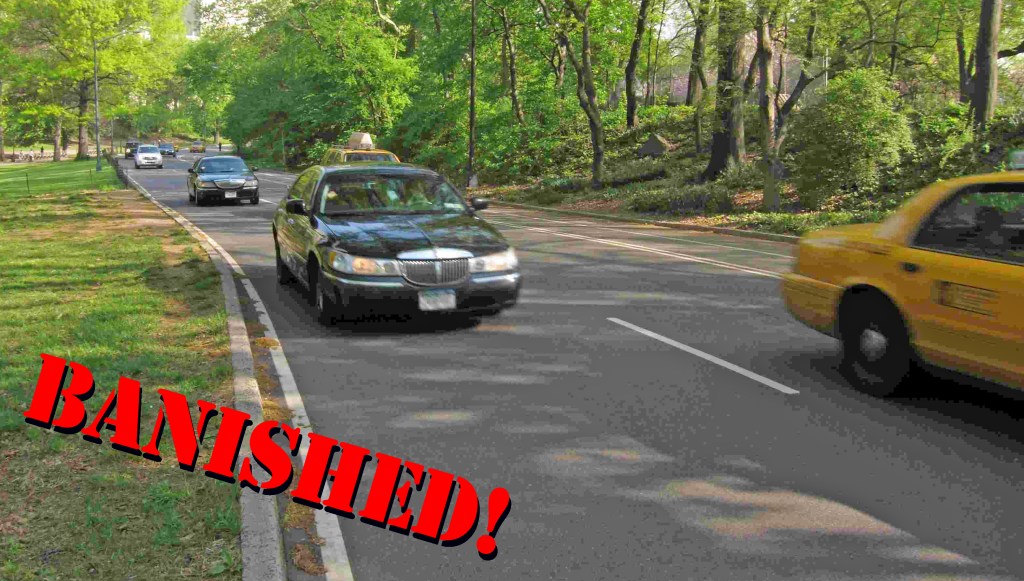
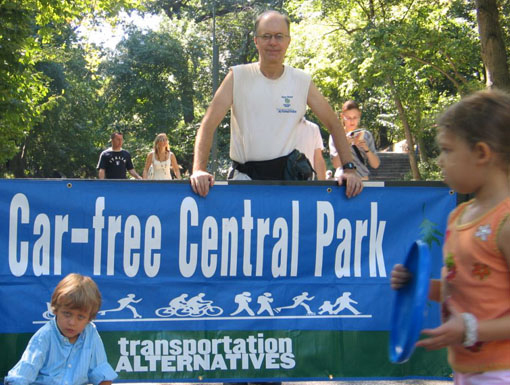
When I headed up the campaign to get cars out of the park from 1996 and 2018, our main argument was that the presence of car traffic ran completely counter to Frederick Law Olmsted’s vision of the park as a refuge from the city. But now, seven years after the automotive scourge was eliminated, I applaud the effort by the Central Park Conservancy (N.B. Post editors!) to safely accommodate e-bikes and scooters as part of the mix of users on the six-mile loop road.
Ken Coughlin led the fight to get cars out of Central Park. Here he is doing that.
Have I betrayed my own principles? No. But I do have some ideas about how to make the drives safer for all.
People now calling for a ban on e-bikes seem to forget what the loop was like when it was just an extension of the street grid. Recreational park-goers on foot or on two wheels were crammed into a narrow, painted lane as multi-ton vehicles hurtled by, often at more than 30 miles-per-hour. The threat was omnipresent, and runners and cyclists directly inhaled exhaust fumes.
The oppressive monoculture of drivers has given way to a lively, heterogenous mix of users, and it seems that all of them are now claiming ownership of the loop. In its editorial, the Post is doing the bidding of one of the shrillest voices — the E-Vehicle Safety Alliance, which seeks to ban e-bikes from all city parks (and force the bikes to be licensed) while consistently opposing common-sense street changes — both inside Central Park and elsewhere — that are proven to save lives.
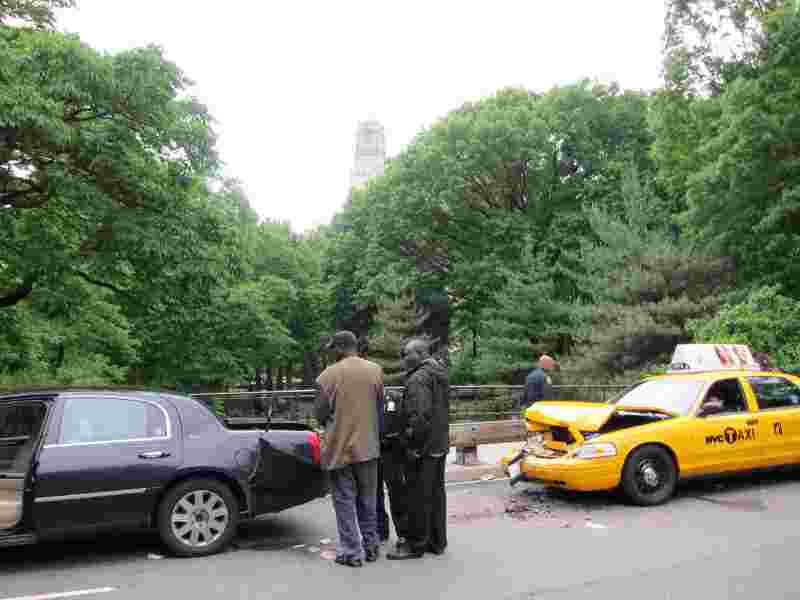
People forget these kinds of crashes.
The much-derided Central Park Conservancy has gotten two important things right: First, it is acknowledging that the loop is a recreational space, not a street. Most of the traffic lights at pedestrian crossings – first installed nearly 100 years ago to control motor vehicle traffic – are being converted to flashing yellow signals, instructing those on wheels to yield and putting pedestrians on notice that they should pay attention when crossing. I hope the Conservancy goes further and eliminates many of the signals entirely, particularly north of 72nd Street.
I also agree with the Conservancy that there is no practical way to exclude e-bikes from the loop at this point, and why would we want to? Parents with kids on cargo e-bikes should be able to enjoy the park, or simply use it as a safe way to get uptown or down. Delivery workers should be able to bypass deadly city streets on their way to and from their jobs. Citi Bike riders — whether tourists or residents – can’t reasonably be excluded, nor should they be.
The fact is that battery-powered e-bikes and scooters are our best bet for clearing our deadly, car-choked streets, not to mention our choking lungs. People who would never consider riding a conventional bike are taking to e-bikes in droves, and the city should be doing everything it can to further incentivize their use — and make roadways safer. Proposals like licensing would just slow this beneficial mode shift.
And while I’m at it, The Post needs to be taken to task for using the word “deadly” as an adjective to describe “e-bikes.” It’s journalistic malpractice, given that if e-bikes were the only vehicles on our streets, we’d be within spitting distance of achieving Vision Zero: In 2024, e-bikes accounted for 1 percent of roadway injuries, city stats show.
So what’s the way forward?
Still, not all the e-vehicle traffic on the Central Park loop is necessary, and the city could do two things that will remove much of it: The lowest-hanging fruit would be to build protected bike lanes on the Central Park transverses so that all the cross-town cyclists can be safe and not have to use the loop road or take space away from any pedestrian. The city’s Department of Transportation and the Conservancy are exploring this idea, but it is long-overdue and easy.
The second change is to ring the park with a two-way protected bike lane. Offering a straight alternative to the meandering and hilly loop, this would keep a lot of riders out of the park entirely. Many cyclists, particularly delivery workers, are currently using the drives as a safe and fast way to get to and from Midtown.
Finally, e-vehicles shouldn’t be tearing through the park at 25 or 30 mph (or more). Beyond the fact that Mayor Adams created a 15-mile-per-hour e-bike speed limit, no electric bike can be sold if it can exceed 25 miles per hour.
It’s unlikely that cops from the Central Park precinct or the Conservancy can or should be the ones to enforce this, but given the law, I would have no problem with a new city or state law mandating speed governors on all legal e-vehicles. (The irony, of course, is that the self-styled street-safety activists should support this proposal, even as they oppose speed-capping devices inside cars.)
If members of the EVSA truly want to make e-vehicles safer, they should be the ones pushing for speed limiters and not trying to exclude certain users from safely enjoying our amazing parks.
Olmsted and his co-designer Calvert Vaux intended the loop to be an integral part of the park, and planned it for a sedate parade of “pleasure carriages”; today, it’s Central Park’s most popular attraction, and Olmsted and Vaux would likely be astonished, and maybe taken aback, by the carnival of happy users. But I think they’d also be delighted that the cars are finally out and so many are taking advantage of their creation in so many different ways.
Streetsblog has migrated to a new comment system. New commenters can register directly in the comments section of any article. Returning commenters: your previous comments and display name have been preserved, but you'll need to reclaim your account by clicking "Forgot your password?" on the sign-in form, entering your email, and following the verification link to set a new password — this is required because passwords could not be carried over during the migration. For questions, contact tips@streetsblog.org.
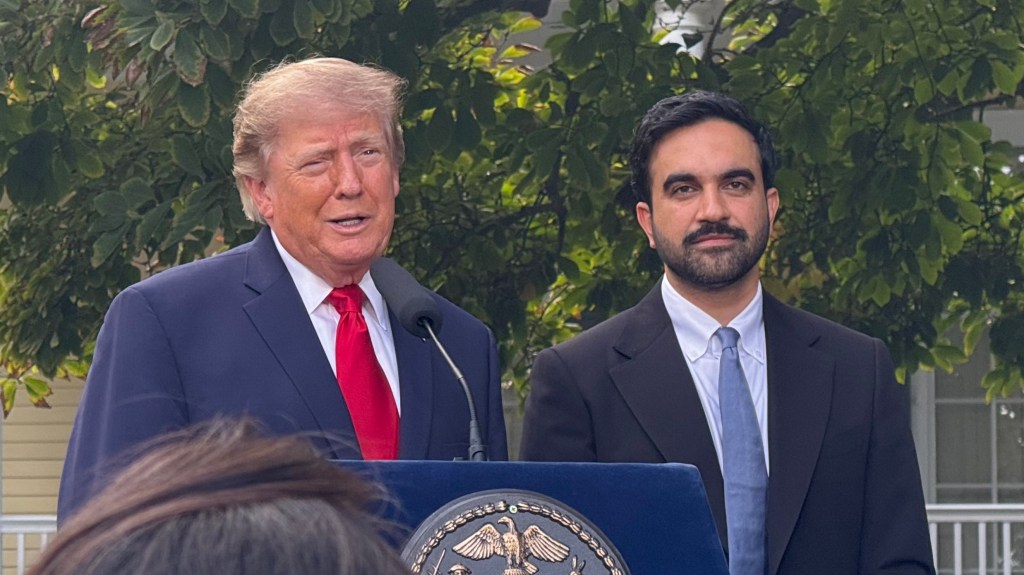
President Trump sort of inadvertently made an argument for banning horse carriages from Central Park on Thursday when he critiicized the City Council's 40-7-2 vote to end the Central Park horse carriage industry with an ill-conceived analogy to cars.
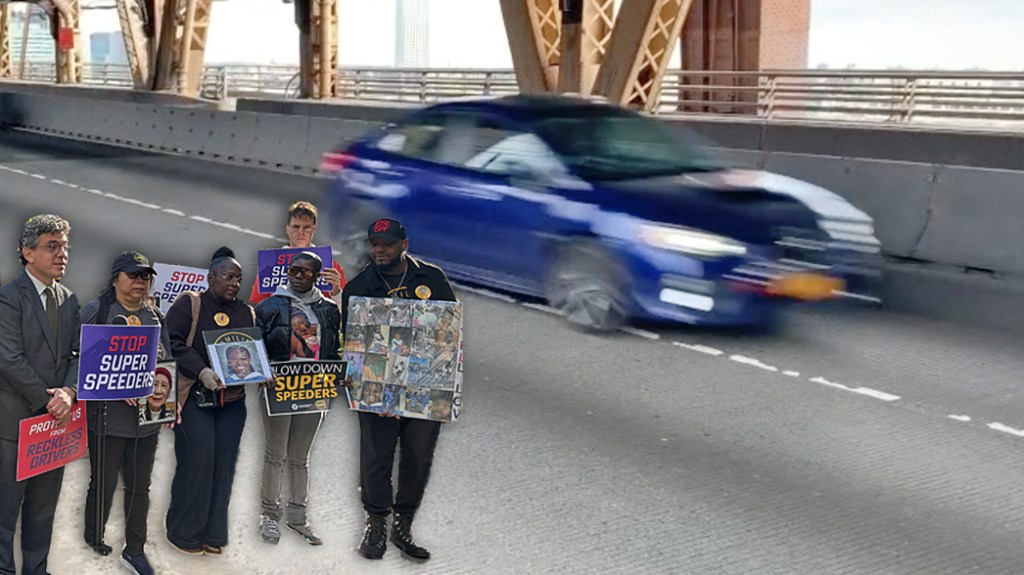
The city's much-anticipated program to require speed-limiting devices inside the cars of repeatedly reckless drivers will launch next year, though questions remain.