Advocates to MTA: More Fare Caps Will Be Fairer For All
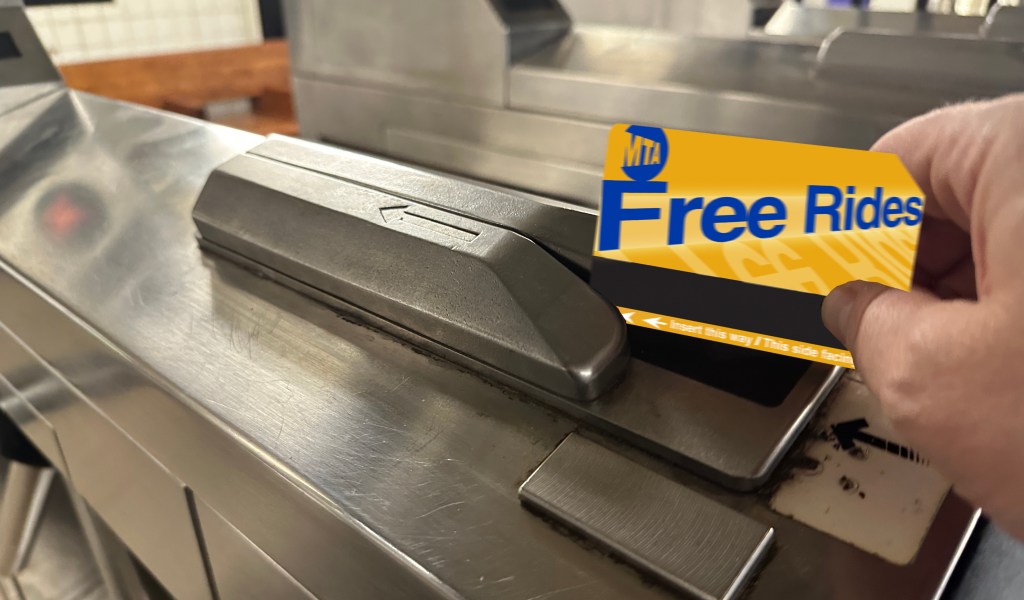
More caps, less fares.
The MetroCard is effectively dead and buried, but advocates say the MTA must embrace a bigger and better fare cap if riders are going to get the most out of the OMNY system.
The MetroCard, for example, offered daily and monthly unlimited versions, but its tap-and-ride replacement only offers a single counterpart: in any seven-day period, riders pay $35 for their first 12 rides, but the 13th and all rides after that in the same weeklong stretch are free.
When fare capping came on the scene in 2021, MTA Chairman Janno Lieber promised that OMNY offered “the opportunity to rethink fares,” but the only tweak since then is that the seven-day period is no longer fixed from Monday to Sunday, but is rolling
Advocates say it’s time to move beyond just the seven-day cap and offer a better, more varied fare policy that rewards different kinds of riders and more types of trips. More capped fare options encourage more New Yorkers to choose transit by expanding beyond the idea of “commute to work, commute home,” but encourage use of the train or bus for trips that otherwise would be taken in a different mode, advocates told Streetsblog.
“More fare caps are good for riders, it makes sense to be free after a certain point,” said Brian Fritsch, the associate director of the Permanent Citizens Advisory Committee to the MTA, an organization pushing the MTA to adopt a daily and monthly fare cap. “We spend too much time thinking about the ‘ideal office worker,’ and we should be more interested in making sure that we capture the heaviest users.”
The current weekly fare cap essentially guarantees a free day of rides for anyone who rides the subway or bus twice a day, seven days a week. Lieber touts the system as a better deal for riders, since it gives them the flexibility to ride every day without having to lay out $132 up front for a monthly MetroCard.
But the drawback of having only a weekly fare cap is that straphangers who ride multiple times a day, but fewer than 12 times in a week, miss out on any discount.
If you ride the train or bus five or six times in one day, for example, but don’t hit 12 trips in a single week, you don’t wind up getting any of the benefits of fare capping. The weekly fare cap also means that riders who take 48 or more trips over the course of 30 days may miss out on fare capping if those trips don’t fit neatly into seven-day sets of 12 — and opt to ride less as a result.
“It really helps in driving some of the discretionary trips, where someone might decide, ‘I’m close to my fare cap; I’m going to take the train instead of instead of an Uber or driving,'” explained Fritsch. “That’s where it really becomes beneficial to the MTA.”
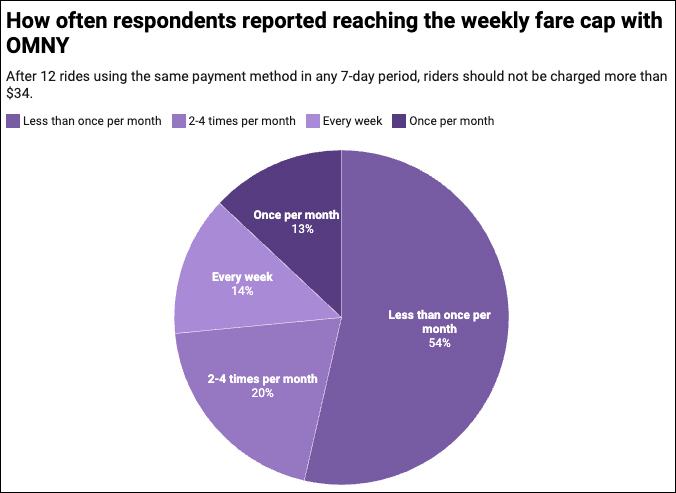
The MTA’s decision to start with just a single kind of fare cap may have made sense to introduce a totally new system of fare collection and not confuse riders with too many fare equations. But last October, the MTA announced that 87 percent of subway and bus trips were paid for with OMNY, and it’s increasingly the only way to pay for a transit trip (though anyone still holding a MetroCard with any value or time on it can still use them for now).
New York exceptionalism
The MTA one-fare-cap approach makes it a national and international outlier. Los Angeles and London have figured out how to offer daily and weekly fare caps in the case of the former, and Milwaukee has daily, weekly and monthly fare caps.
Transport for London, for instance, saw value in introducing the daily fare cap as a replacement for what used to be an unlimited ride daily pass that riders could purchase at the start of their day, instead of tickets for each trip. Once the Oyster card, London’s version of a tap-and-pay system, was introduced, the daily fare cap ensured that riders wouldn’t have to consider each day whether to buy they needed to buy a daily pass or just separate tickets for each trip they took.
An MTA spokesman, who declined to comment on the record, said the agency is still evaluating the impact of its recent transit fare increase from $2.90 to $3.
A monthly option
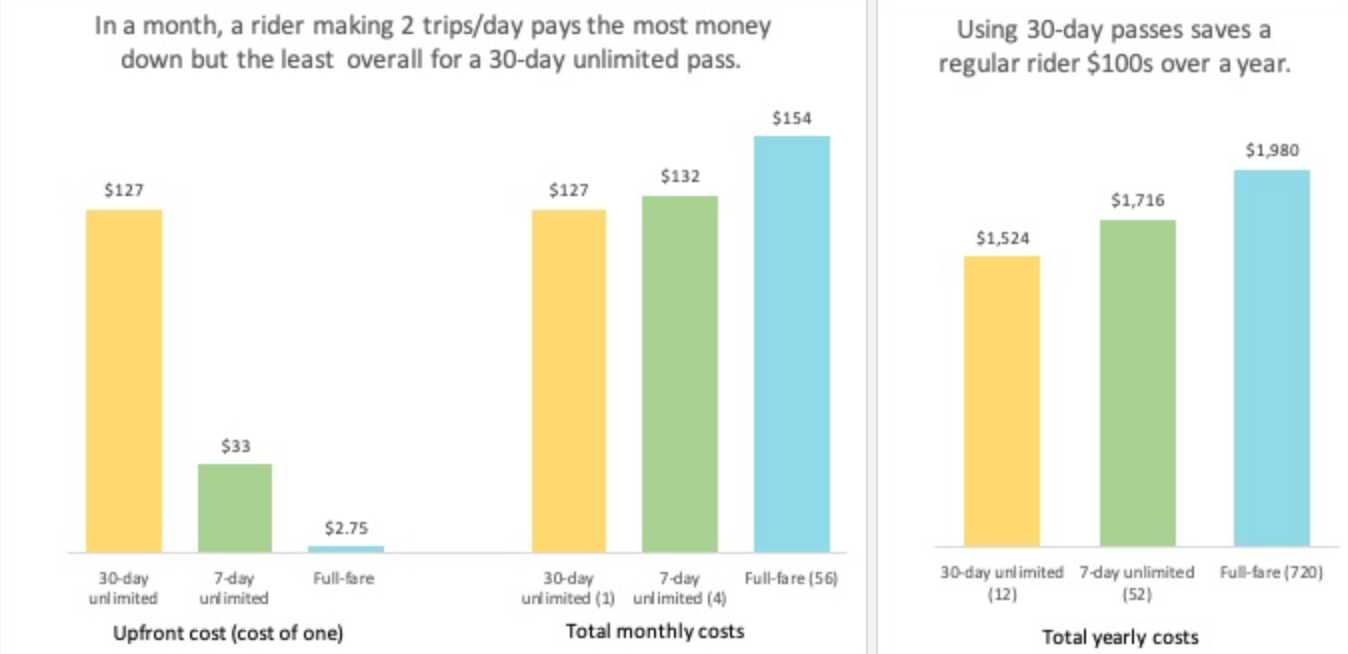
Instituting a monthly fare cap would go some of the way towards replacing the retired 30-day MetroCard, and could stem some of the criticism that the weekly fare cap is a secret 11-percent fare cap, which is based on the math of comparing the cost of 12 30-day MetroCards versus the the cost of 52 weeks of rides capped at $35.
“The end of the monthly MetroCard actually meant a massive fare hike for New York’s most loyal riders,” said Effective Transit Alliance Executive Director Blair Lorenzo. “A cap of 46 rides over 30 days would at least restore the status quo.”
When the weekly fare cap was introduced, organizations like the TransitCenter called on the MTA to institute a 30-day fare cap in order to allow low-income New Yorkers, who were much more likely to buy seven-day MetroCards than 30-day cards because of the high upfront cost of the monthly cards, to benefit from the
A one-day fare cap
Research has shown that monthly fare caps increased ridership 4 percent on American transit systems, with a smaller impact from daily caps. Even then, riders have specifically asked for both daily and monthly fare caps, a PCAC survey found.
“Good rider incentives drives demand for the system,” Fritsch said. “Some people really are used to thinking about it in terms of monthly benefit or even a daily benefit, and I think anytime you have those incentives for riders, they they respond to them and use the system more regularly.”
A daily fare cap would be not unlike the MTA’s long-departed “Fun Pass” which provided unlimited rides for a single day, but was discontinued in 2010 because it was used mostly by scammers. But advocates see a value in something like a cap on paying for three rides in a day in order to encourage people to take trips on the train or bus.
“It’s especially useful for either tourists or people who are not in the city every day. If priced reasonably, say three rides, it encourages them to use transit to get to as many places as possible around town, using transit without needing to think about the cost of travel. That’s a noticeable economic boost,” said Lorenzo.

Read More:
Streetsblog has migrated to a new comment system. New commenters can register directly in the comments section of any article. Returning commenters: your previous comments and display name have been preserved, but you'll need to reclaim your account by clicking "Forgot your password?" on the sign-in form, entering your email, and following the verification link to set a new password — this is required because passwords could not be carried over during the migration. For questions, contact tips@streetsblog.org.