Mamdani’s 14th Street Redesign: The Perfect Opportunity For BRT-Style Bus Stations
It’s time to give bus riders some shelter from the storm.
A “once-in-a-generation upgrade” to the 14th Street busway offers Mayor Mamdani a chance to live up to his pledge to make the city’s streets “the envy of the world” — by finally bringing fully enclosed bus boarding stations to New York City, advocates and experts said.
“Just like 14th Street led the way and showed the city what was possible with a busway, it can also demonstrate what true bus rapid transit looks like with level boarding islands and even beautiful bus stations,” Riders Alliance Director of Policy and Communications Danny Pearlstein said on Monday, after Mamdani and the Department of Transportation announced the start of a two-year study on making permanent the 14th Street busway and nearby 12th Street and 13th Street protected bike lanes.
Launched in 2019, the 14th Street busway sped up trips between Third and Ninth avenues and set the standard for bus priority street redesigns that hasn’t quite been matched elsewhere in town. DOT’s study will look at how to improve the landscaping and pedestrian experience on 14th Street, Union Square and nearby streets and make the busway itself safer, more attractive and better for riders, officials said.
“We’re taking it to the next level with greenery, pedestrian space, and stronger safety infrastructure,” Mamdani said in a statement. “I invite New Yorkers to join DOT later this month and help shape the world-class future of 14th Street.”
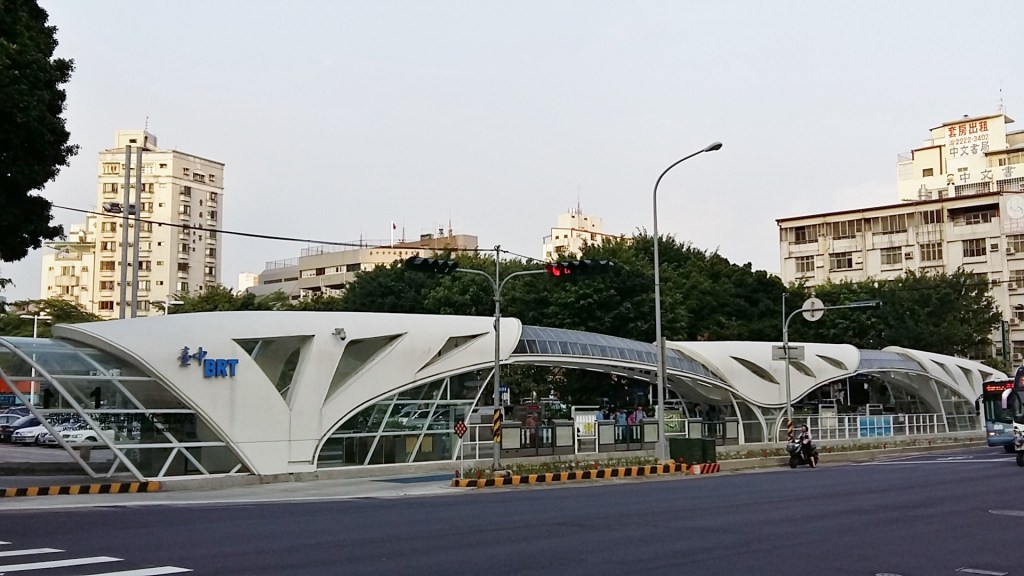
New York City officials have talked about bringing “true” bus rapid transit to the five boroughs since the days of Mayor Mike Bloomberg, but the effort hasn’t moved past Select Bus Service, which shares some of the characteristics of bus rapid transit — off-board fare payment, bus lanes, all-door boarding, widely spaced stops — but lacks enclosed stations to provide at-level boarding at the curb.
Last year, two separate reports urged the city and the MTA to re-engage with BRT concepts. And since the M14 is an SBS bus that runs on a car-free stretch of 14th Street, the redesign offers a good time to try the last missing piece of a BRT corridor.
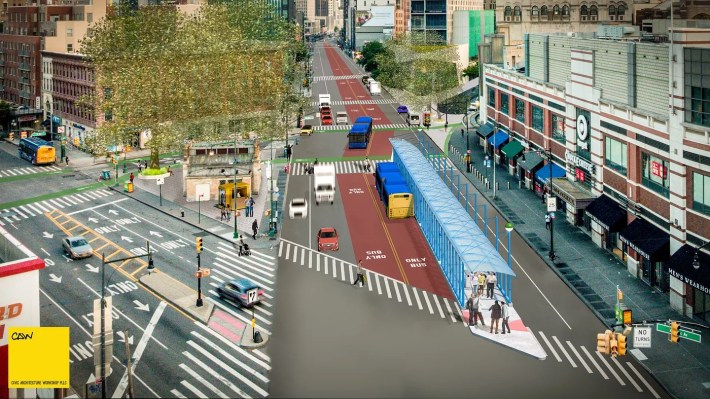
“There’s ample space, and we already have the road roadway, so creating a shelter with all the elements of that we laid out in the report with off-board fare payment, enclosed shelters with platform doors and level boarding are all possible — if there’s will to do it,” said Brian Fritsch, the associate director of the Permanent Citizens Advisory Committee to the MTA, which penned one of the two reports.
The MTA doesn’t have buses with doors on both sides — a necessary feature to put boarding islands in the middle of the road. But 14th Street would still be a good place for curbside bus boarding stations, according to Walter Hook, an international bus planning expert who worked with Annie Weinstock last year to rank potential BRT corridors in the city.
“We like the central median bus stops because we’re on a two-way road with a big median in the middle of it, and so we just grab the median or what’s currently a left turn lane,” Hook said. “On a busway, that doesn’t matter as much because you’ve already taken the whole road.
“Since you already have the whole street from Ninth Avenue to Third Avenue, we have a quasi-central median alignment anyway and there’s not a turning conflict problem that we need to resolve,” Hook added.
The Union Square Partnership released concepts for improving the 14th Street busway back in 2021 that did not including bus boarding stations, which in Hook and Weinstock’s conception would have gated entries like a subway station.
Stations along the route “would not only make sense given the importance of Union Square as a destination, but would also provide the opportunity of adding high-quality, iconic transit stations to the plan,” Weinstock wrote at the time.
A station’s level boarding platforms would reduce the time buses spend loading and unloading passengers and make it easier for riders in wheelchairs and older riders to get on and off the bus — since they would no longer have to step down onto the street, Hook noted. That and the speed gains from just allowing people to walk onto the bus instead of waiting for their OMNY tap to validate would save about one second per passenger at each station, he said.
That could improve bus speeds on the corridor to as much at 10 miles per hour, Hook told Streetsblog.
“The delay that’s still hampering that corridor is primarily a boarding delay, caused partially because a fair number of elderly and disabled folks that have a bit of trouble getting in and out of the bus,” Hook said. “If we had a BRT type of station that was level with the bus floor on at all the doors, we think we could save in the neighborhood of one-half to one second per passenger.”
A spokesperson for the agency did not rule out the boarding stations, but noted that it is up to New Yorkers to say if they want want to see them happen.
“We are looking at bus stop upgrades as part of the design upgrade,” DOT spokesperson Vin Barone said in a statement. “But at this time, there isn’t more to share on details, which will be developed during the planning process.”
The Union Square Partnership and the Meatpacking BID are helping DOT get the word out.
“In the Meatpacking District, we’ve seen firsthand how investing in people-centered public space transforms neighborhoods for the better,” said Jeffrey LeFrancois, president of the Meatpacking District Management Association, who called the next phase a “generational opportunity to significantly improve this vital, busy corridor.”
DOT will hold its first in-person workshop on the plan on Wednesday, March 25 from 4 to 7 p.m. The agency is also taking feedback in an online survey that can be filled out through April 10.

Read More:
Streetsblog has migrated to a new comment system. New commenters can register directly in the comments section of any article. Returning commenters: your previous comments and display name have been preserved, but you'll need to reclaim your account by clicking "Forgot your password?" on the sign-in form, entering your email, and following the verification link to set a new password — this is required because passwords could not be carried over during the migration. For questions, contact tips@streetsblog.org.