Forget Free Buses: Mayor Mamdani Should Instead Seek ‘Audacious’ Subway Expansion
Affordability is the $1-billion question.
The same annual billion-dollar outlay that Mayor Mamdani hopes to allocate for fare-free buses should be spent instead on the kind of subway expansion that hasn’t been seen in New York City since the early days of the system’s founding, a group of transit wonks argue in new report.
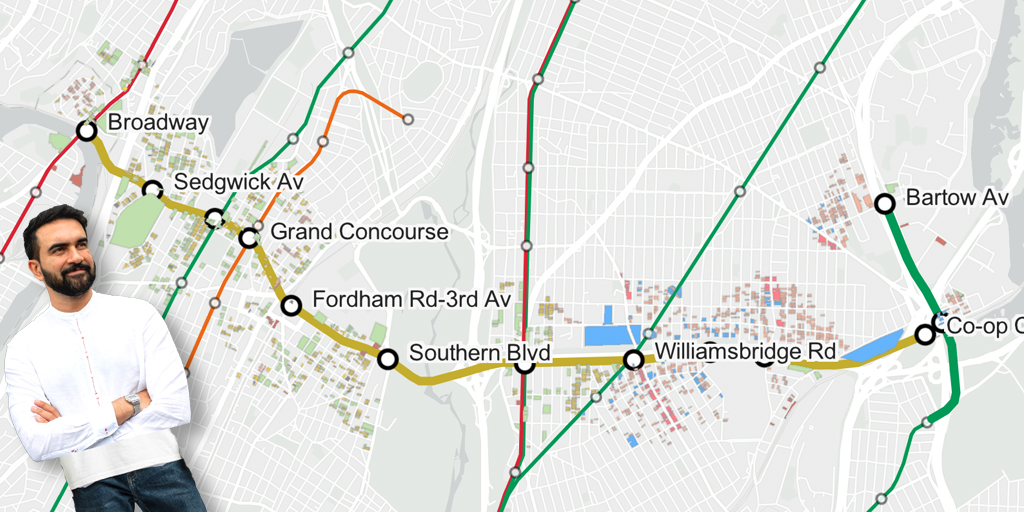
According to the transit advocacy organization, the Transit Costs Project, a $40-billion, 40-year effort would add 41 miles of new subway lines and 64 new stations, resulting in 40,000 units of affordable housing and tens of thousands of more units of market-rate housing without even a single change to the current zoning regulations around the stations.
The group put out its recommendations in a report, A Better Billion, that argues that a greatly expanded rapid transit system is a key component in tackling the city’s affordability issues.
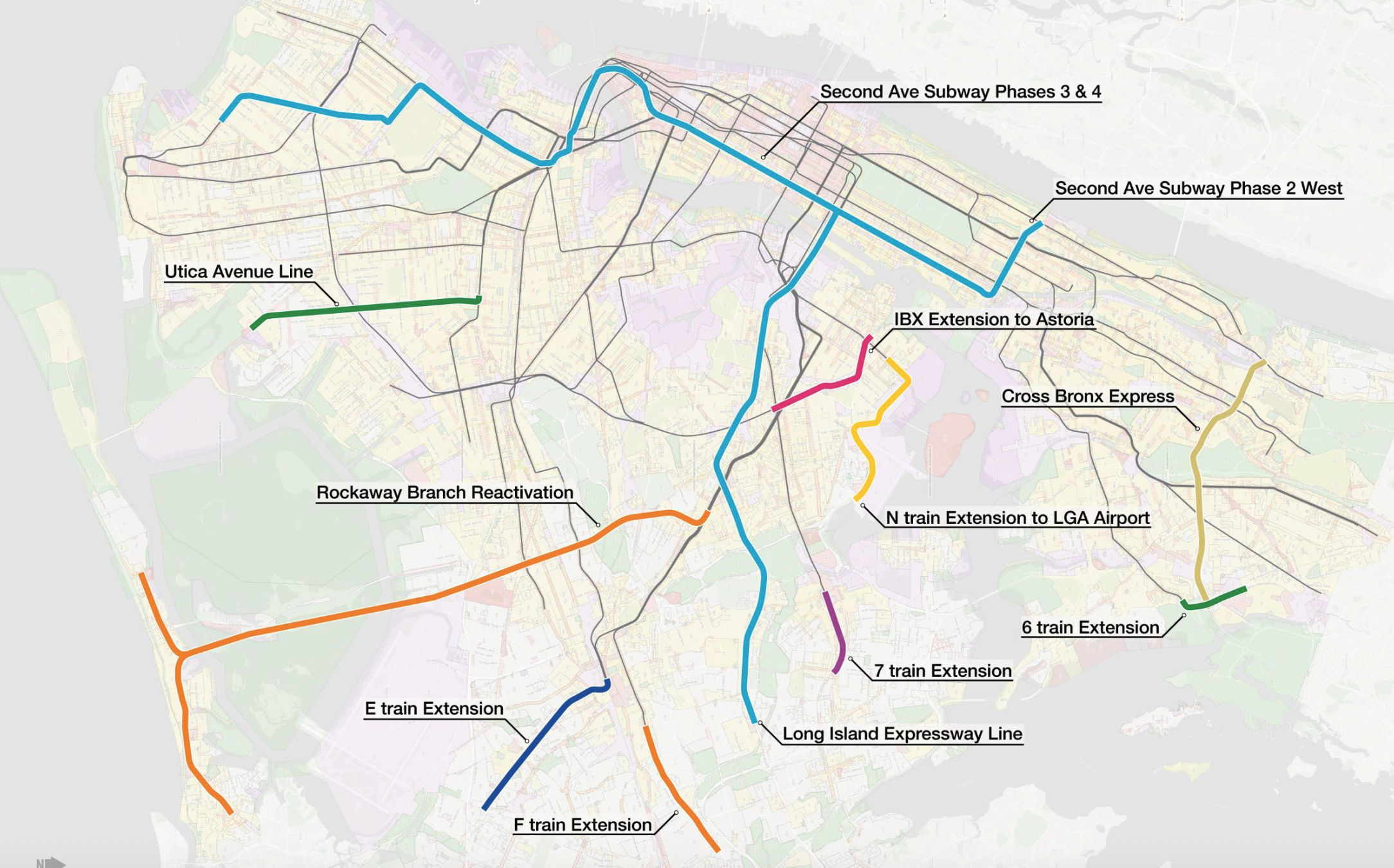
The 12 major subway expansions through 2069 include:
- The long-awaited Utica Avenue extension.
- Subway service stretching out past its current limits to northeast Queens and southeast Queens.
- A fully operational Second Avenue Subway from west Harlem to Gravesend.
- A reactivated Rockaway Beach Branch, aka the QueensLink.
- A fully automated Cross Bronx light rail that runs every 90 seconds.
The authors of A Better Billion admit that their plan would likely kill Mayor Mamdani’s free bus service. But the report’s authors noted that they were explicitly inspired by the mayor’s clarion call for the city to put transit at the center of the city’s politics, which is why they have offered up what they call an “expansive and audacious” plan to make the city more affordable.
“A Better Billion combines Mayor Mamdani’s transit ambitions with a generational vision worthy of New York City,” the authors wrote.
Eric Goldwyn, the head editor on the report, served on the mayor’s transportation and infrastructure transition committee. He said that this transit-focused vision for a potential billion-dollar bounty could even directly support things like Mamdani’s idea for building 200,000 units of affordable housing across the city.
“There’s this big housing push [and the report is] a pathway to help achieve that goal,” he said. “It’s a very different concept of of what New York can be, but I think if you want more people, you want a bigger tax base, you want greater affordability, you need more housing. And I think this helps us get there.”
To make it all happen, the report authors say that the $1 billion per year for fare-free buses could instead be leveraged to raise $34 billion and get $14 billion in federal matching funds from New Start grants, to pay for what would wind up being a $48-billion plan in total. Of the $1 billion per year, $850 million would be used for subway expansion, while $150 million per year would go towards accessibility upgrades, owing to the requirement that 15 percent of the capital plan be devoted to meeting the requirements of the Americans With Disabilities Act.
Crucially, the $850 million per year for the expansion of track miles and stations would be spent directly over the life of the project, instead of being used to back up bonds that would need to be paid back over time and with interest.
Not just train stuff
The proposal to expand the subway and build tens of thousands of housing units is not just about building for the sake of building, or even adding new color to the subway map. The report makes a case that using the money to build instead of covering for fares would make the city more affordable by allowing even more people to take advantage of the city’s density without the shackles of a car.
As the authors note, the average cost of owning and operating a car is $12,296 per year. On the other hand, thanks to MTA fare capping, “it will be impossible to spend more than $1,820 [per year] on bus and subway trips.”
Expanding the reach of the subway’s rapid transit capabilities would mean that people in places like Co-op City, Queens Village, East Flushing, Locust Manor and Fresh Meadows would unlock the kind of access to jobs, recreation, education and, as the report’s authors note, even Mets games, that people who live near the subway already enjoy. Some of the construction would also take pressure off existing nearby or parallel subway lines, which greatly increases quality of life for transit users.
“Housing affordability is the problem with the affordability crisis, and if we don’t make space for housing, we can’t win that battle,” said Goldwyn. “Investing in subway infrastructure is a good way to to do that because people are willing to move farther away if they can get to their jobs or to their schools or anywhere in the same amount of time or even faster. I love the bus, but it’s not the same as the subway in terms of capacity or speed. Even if you do all the [bus priority things], buses are not going to be going 55 miles per hour down the street.”
For his part, Mamdani remains laser focused on making buses both fast and free.
“Mayor Mamdani campaigned on making the slowest buses in the country fast and free, and he intends to keep that promise,” said administration spokesperson Matt Rauschenbach. “He understands that working New Yorkers need affordable options to get to work, visit friends and family, and explore the city that we all love. He looks forward to working with the governor and MTA to get his fast and free bus proposal done and exploring other ways to give working people a bit of relief during their commutes.”
The challenge, of course, is that Mamdani must convince the governor and state legislature to allow the city to raise some of its own local tax rates to find the $1 billion for fare-free buses.
Gov. Hochul is not yet on board and has fiercely resisted raising taxes. A spokesperson for the governor did not respond to a question on whether she would support higher taxes in exchange for 41 new miles of subway tracks and 64 new stations.

Read More:
Streetsblog has migrated to a new comment system. New commenters can register directly in the comments section of any article. Returning commenters: your previous comments and display name have been preserved, but you'll need to reclaim your account by clicking "Forgot your password?" on the sign-in form, entering your email, and following the verification link to set a new password — this is required because passwords could not be carried over during the migration. For questions, contact tips@streetsblog.org.