OPINION: How to Fix the City’s Slow-Moving Government
Every day, New Yorkers confront the failure of our government to adapt to decades of accumulated change — and nowhere is that failure clearer than on the city’s streets and sidewalks.
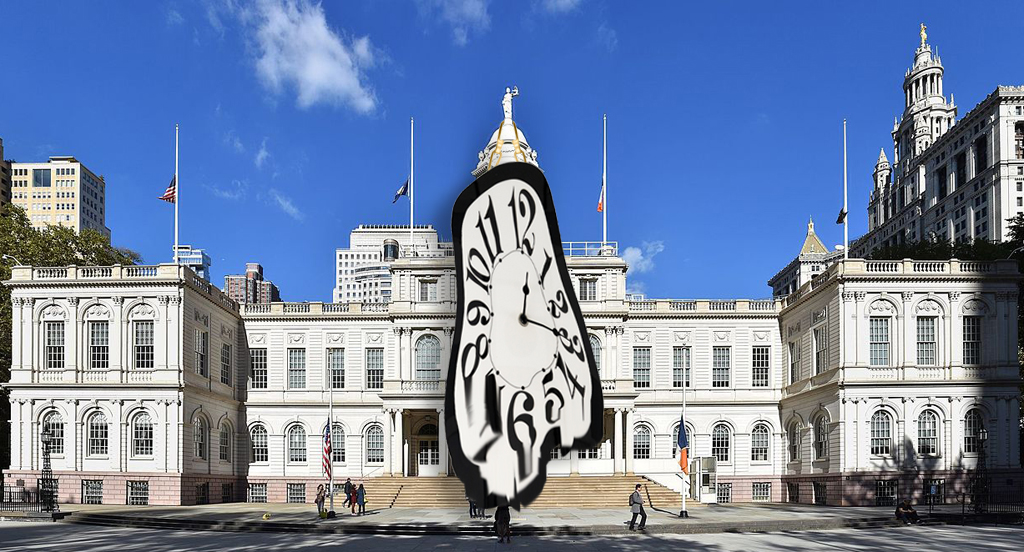
The perpetual question is: Why does everything take so long? Busways, bus lanes, bike lanes, open streets, pedestrian plazas, day-lit intersections, red light cameras, speed cameras, outdoor dining sheds — why do all of these policies take far longer to implement than anyone ever anticipates? Why does the go-go-go energy of the city not apply to street safety? When did the New York minute become the New York decade?
As a longtime pedestrian safety advocate and founder of CHEKPEDS, I have a theory about the plodding apathy that seems to define transit policy in this city: transportation projects take so long, and become so expensive, because of the collective failure of our city and state’s alphabet soup of agencies, beginning with the DOT.
These departments and commissions don’t grasp the full scope of their inconsistencies, and the effort and resources needed to overcome these silos create endlessly disjointed, confusing programs and contradictory regimes of enforcement.
This is not about a lack of money. Rather, laws written decades ago for a very different streetscape continue to dictate what our government can and cannot do. So-called “solutions” are fractured among numerous and inconsistent programs.
For example: Sanitation and the Department of Transportation do not agree on how to clean pedestrian spaces. City lawyers don’t agree with DOT on how to provide insurance to open streets and school streets. Agencies do not agree on the definition of a clear path for pedestrians. By law, Sanitation can only enforce the rules two hours per day (that needs to change — and can with this Council bill). Open dining does not include vendors, and fresh-food vendor rules are myriad but often incoherent. All of these disagreements strand both residents and small businesses in a dark maze of confusion.
The lack of simplicity and clarity creates an expensive, fragile system that resembles an outdated software program: The code is broken, and we keep installing patches, but it still breaks — constantly preventing us from adding new features.
That’s the bad news. The good news is that if we fix these agencies, these projects will cost less — allowing a much more productive administration to tackle new projects. Curing our government of its ills does not require a lot of money but rather executive leadership and political courage. So rather than jumping headlong into projects. It would make sense to create at least three task forces.
The first group would identify all obsolete, redundant and conflicting language in the city’s laws and rules. The second group would identify systemic conflicts and inefficiencies between agencies, and simplify and restructure them based on mayoral priorities. The third and final group would identify systemic conflicts and inefficiencies within DOT, and restructure the agency pursuant to the same mayoral priorities. All three of these task forces would be given six months to convene and issue their findings.
This strategy would guarantee the incoming administration’s vision outlives the next election cycle and delivers benefits for the duration of the mayor’s term.
Clarification: Story was updated to make it clear that the Department of Sanitation is required by law to only enforce the rules two hours per day.

Read More:
Streetsblog has migrated to a new comment system. New commenters can register directly in the comments section of any article. Returning commenters: your previous comments and display name have been preserved, but you'll need to reclaim your account by clicking "Forgot your password?" on the sign-in form, entering your email, and following the verification link to set a new password — this is required because passwords could not be carried over during the migration. For questions, contact tips@streetsblog.org.