MEMO TO MAMDANI: Make Queens Boulevard the City’s First ‘Cycle Super-Highway’
The city has come a long way on Queens Boulevard, my home borough’s namesake stretch that runs from Long Island City to Jamaica. But now it’s time to take it up a notch.
For decades, Queens Boulevard was the notorious “Boulevard of Death.” Freeway-sized widths and speeds promoted reckless driving through residential communities that claimed the lives of too many New Yorkers over the years. That included 22-year-old Asif Rahman in 2008, who was struck by a driver while cycling home. The tragedy pushed his mother, Lizi, to do something. “For almost eight years, I fought by myself, and it was difficult,” she told me, for an article I wrote in Bloomberg in 2024.
Then the city did something — and it worked.
Advocacy from Lizi Rahman and others catalyzed Vision Zero, then-mayor Bill de Blasio’s pledge for zero traffic fatalities and injuries. Beginning in 2015, the city’s safety-first approach trimmed crossing distances and turn radiuses, while adding bike lanes along the service roads. The city lowered the speed limit on Queens Boulevard from 30 to 25 miles per hour. By the time all seven miles of the redesign wrapped up in 2024, traffic deaths had all but disappeared from the corridor, with injuries seeing a similar precipitous drop — an immense victory for the city’s efforts.
Let’s not stop there, though.
In part due to the city’s efforts, Queens Boulevard today serves as a vital connector for cyclists living in the seven neighborhoods it passes through, many of which don’t have much bike infrastructure. Yet it’s far from reaching its potential as a people-first promenade, with daily hazards that dampen usership and scare away even the most confident riders.
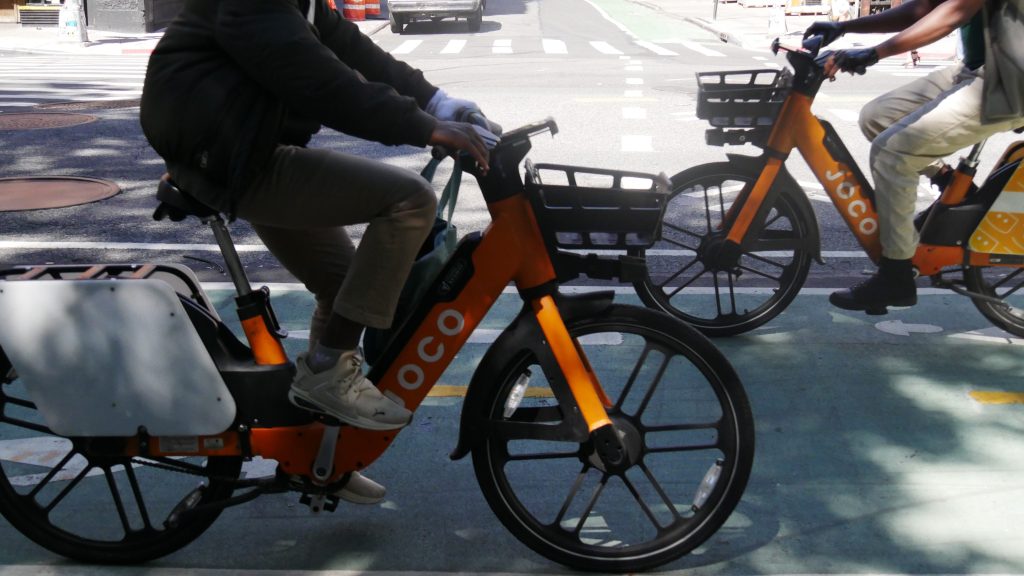
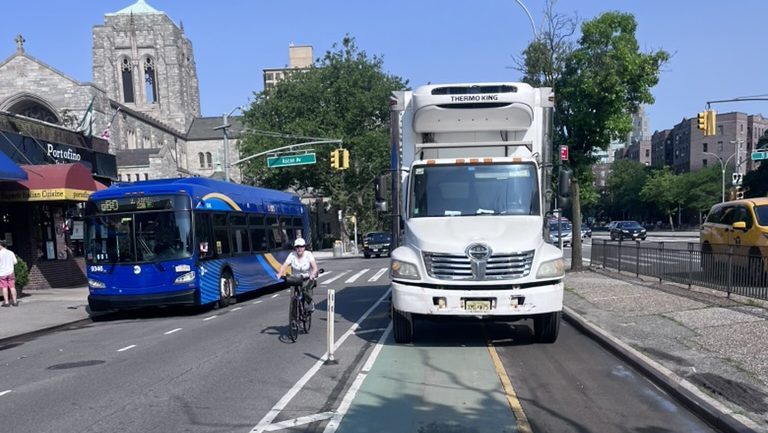
I bike the road regularly in my new role at Friend of the QueensWay — especially now that Citi Bike has reached Forest Hills. I experience Queens Boulevard’s shortcomings firsthand. The “protected” part of “protected bike lanes” often just means crushable bollards or stopgap barriers that invite bike lane blockages. Double-parked vehicles send cars onto green paint, which has eroded in some parts, blurring safety for road users. “Mixing zones” force drivers and cyclists to navigate the same space are abrupt. Add lots of potholes to that mix, and you’ve got a pretty substandard cycling experience.
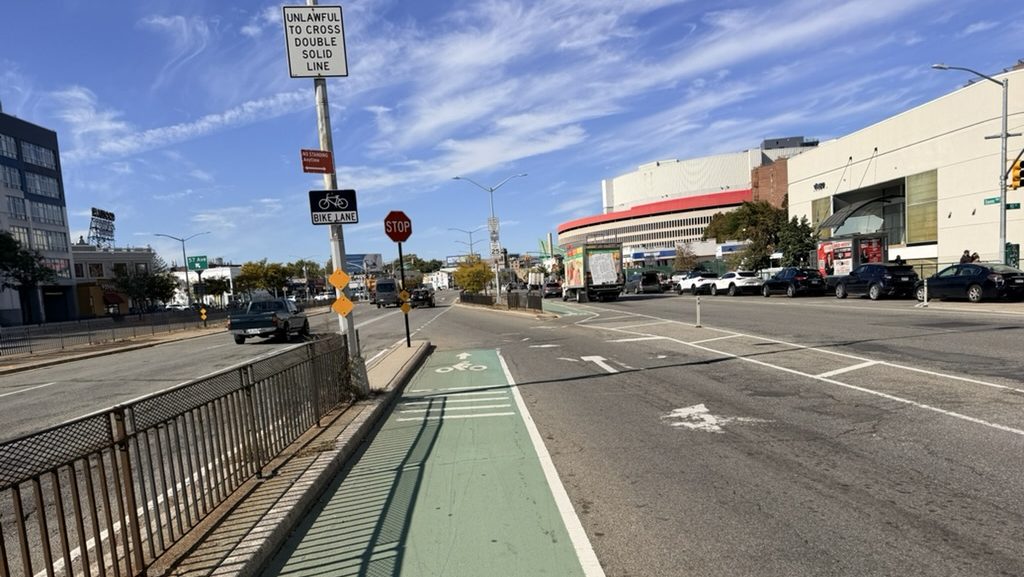
As its recent record shows, Queens Boulevard has all the right ingredients of modern-day safer street design. But too often, it feels like a fragile baseline, where you’re still riding next to high levels of car traffic with barely an inch or two of separation to keep you safe. It’s aching for an upgrade that doubles down on the life-saving investments the city made during the first decade of Vision Zero, and readies it for the second one.
The solution? A cycle super-highway.
A refreshed, forward-thinking design could include innovative neighborhood traffic diverters, like we’re seeing spring up in Greenpoint and Astoria; non-mountable lanes separated by new greenery, like at Brooklyn Navy Yard; and a whole new sense of navigation that honors the borough’s central artery and all the incredible diversity that surrounds it, like we see on the Empire State Trail maps along the West Side Highway, America’s busiest bike path. Let’s call it Queens Boulevard 3.0.
In London, the “cycle super-highways” formed the foundation of the city’s cycling network seen today. Bike paths are either grade-level or lined with protective concrete, making it difficult for cars to encroach. The wayfinding is world-class, with directions and distances to neighborhoods and institutions at every major turn. And the lanes truly act as a spine, shuffling riders off on other routes or “quietways” that stem from it. We see similar interventions in Paris, Copenhagen and Guangzhou.
Thankfully, there are some signs of progress on Queens Boulevard to get there. In the city’s new Vision Zero plan, Queens Boulevard is listed as part of the ‘Great Streets’ initiative, with $30 million set aside in federal funding for a capital overhaul. What’s proposed to start next year looks promising: a center-running bus lane; new plantings; and an elevated pedestrian and cycle paths.
But that capital work only covers a stretch, and it’ll be a major missed opportunity if it doesn’t meet the moment in front of us. When the next road repaving is scheduled, which is ideally sooner rather than later, DOT should take that opportunity to test out new features of its street redesign toolkit that move beyond the bollard. And the city should leverage that momentum to deliver the ‘world-class streets’ that Mayor Mamdani touts to the rest of the Boulevard.
Asif Rahman’s death catalyzed his mother to take action. And no doubt, the results have been life-changing. But the city shouldn’t stop there—a Queens Boulevard that serves as the gold standard for bike infrastructure in New York City would further build upon and honor Asif’s memory, ensuring future generations never feel unsafe riding home.