An Interview with the Biggest Cycling Club in New York City
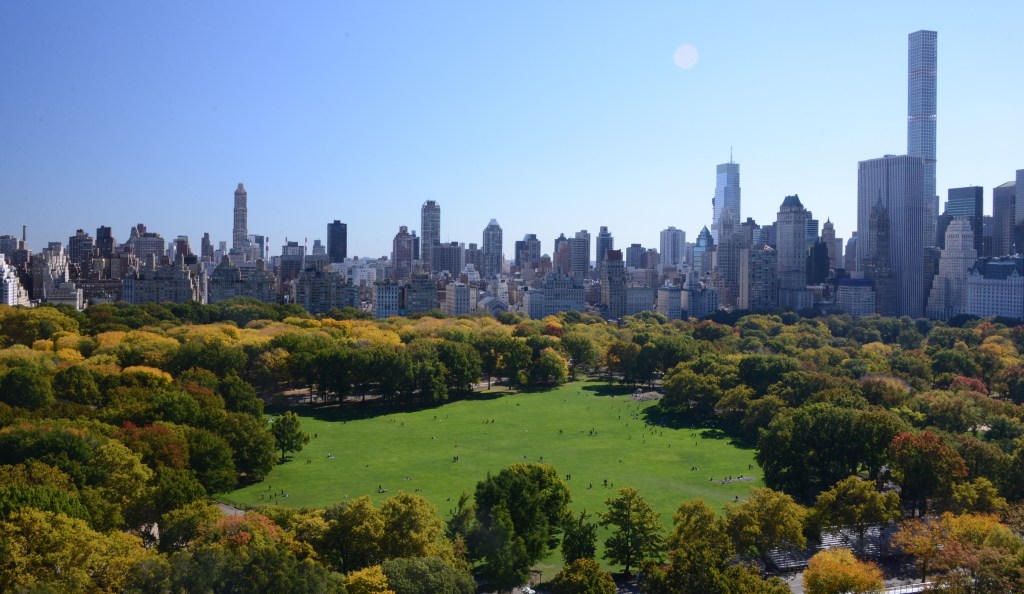
The New York Cycle Club is the largest and most prominent recreational cycling club in the five boroughs. Established in 1936, the NYCC organizes daily rides in Central Park and plays a significant role in shaping the practice and culture of the city’s cycling community.
The NYCC entered the spotlight earlier this year, when the club filed a lawsuit to prevent the City of New York from reducing Central Park’s speed limit to 15 miles per hour. Many of its members believe that limit would eliminate their ability to cycle for fitness and sport on the park’s 6-mile-long drive.
Former mayor Eric Adams moved to impose the lower limit in the final days of his administration, and Mayor Mamdani intended to follow his predecessor’s lead — until the club persuaded a city judge to block the new speed limit from taking effect.
The crux of the legal conflict is Sammy’s Law, the state-level legislation that allows the mayor to impose lower vehicular speed limits on city streets. The city and the club disagree over whether that law permits the city to alter the legal speed limit of analog bicycles.
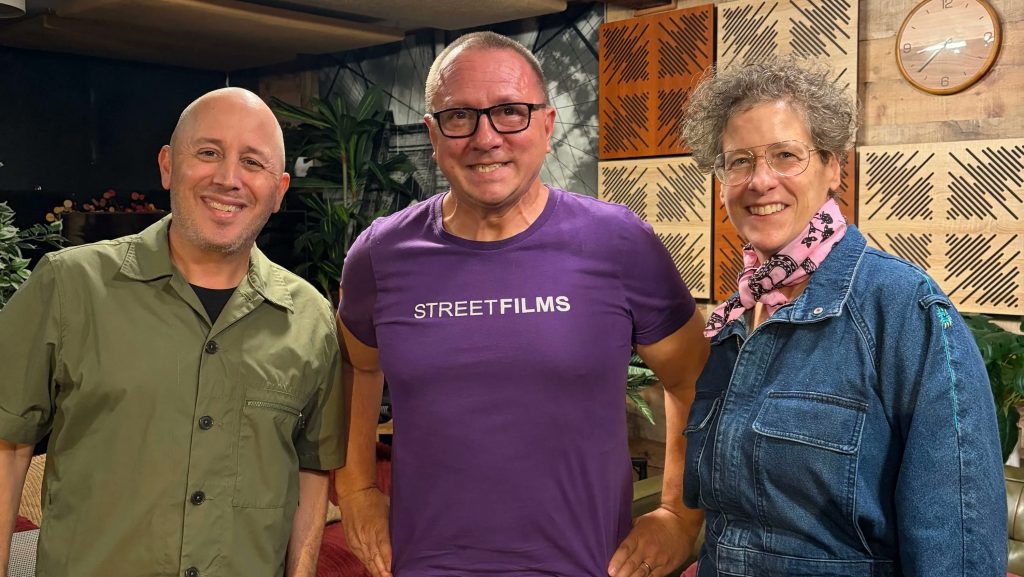
Below, you’ll find our interview with five of the club’s members:
- Colin Taber, the club’s president
- Neile Weissman, the club’s public affairs director
- Anna Taruschio, the club’s secretary
- Natan Elman, the club’s A-rides coordinator
- James Gilbert, the club’s racing team captain
And be sure to check out our separate interview with two leaders of the Century Road Club Association, which focuses on competitive race cycling in Central Park.
This interview has been edited for length and clarity.
Streetsblog: What is the New York Cycle Club? How would you describe it?
Colin Taber: We are a recreational cycling club based in New York. It’s always been Manhattan-centric. It’s primarily recreational cyclists. Road bikers. We ride in Central Park. We have a big Brooklyn contingent that rides in Prospect Park. We have contingents all over the city. We ride in all five boroughs as well as the Tri-State area. We provide a training program for road cyclists who want to do group cycling. We are a bit of a cooperative. Dues are minimal. All rides are led by volunteers. Nobody in this club is paid. We are a 501(c)(3) non-profit that mainly advocates for our members, but we also advocate to further the interests of cyclists in New York City.
Neile Weissman: We’re about 3,300 members. About a third reside in Manhattan. We’ve been around since 1936, and we’re the largest recreational cycling club in New York City. We have a race team, but by and large, this is social. It’s not a competitive organization.
Anna Taruschio: Our spring program runs every Saturday for 12 weeks. It runs at all different levels of cycling, from introductory to intermediate to advanced. It’s run by volunteers. The only thing that you have to pay is your club membership, which is $30 per year. The goal of the training program, which is called SIG, is to train cyclists to ride safely in groups and to ride safely in the city and outside of the city. It’s a huge time commitment for both the participants and the leaders. For me, personally, it provides a tremendous benefit to anybody thinking about cycling in or around New York City.
Streetsblog: What does SIG stand for?
Taruschio: Special Interest Group.
Streetsblog: Got it. How long have each of you been cycling in New York City?
Taber: I started with the club in or around 2013.
Taruschio: I’ve been commuting in the city since law school. I don’t want to date myself, but it’s been about 25 years. I did the SIG training program in 2011. That was my first real interaction with the cycle club, and I’ve been involved ever since.
Natan Elman: I’ve been cycling in New York City since 2013, and I’ve been with the club since 2014.
Weissman: I joined the club around 2004. I did the SIG then. I’ve been working my way down ever since. I originally started cycling around 1998 because I got plantar fasciitis and I couldn’t walk, so I was essentially using the bike as a wheelchair. And it wasn’t until about three or four years later that someone asked me, “Why don’t you join a bike club?” And I said, “What’s a bike club?” So I joined the Five Borough Bicycle Club. And then in 2004, after I got a road bike, I joined the New York Cycling Club.
Gilbert: I started the NYCC race team 10 years ago. I’ve been riding forever, and I’ve been in the city for 20 years.
Taber: The club has all levels. We have everybody. James represents the tip of the spear as far as speed, but our biggest contingent is mid-pack. Not even the A riders. Probably the B riders, which I would say is represented by Neile and I. And there are C riders who are even slower. Their rides average 10, 12, 14 miles per hour on the flat. They take much shorter routes in general. It ranges from people who can do a Century Ride in three or four hours, to people who need eight or nine hours to cover the same length.
Gilbert: We race in Central Park, with the Century Road Club Association, and in Prospect Park. The permit for Central Park requires us to hold mentoring clinics, so my team and other racers spend quite a lot of time teaching and training new riders. We do everything. Everybody has to take a basic skills class that involves riding and picking up a bottle on the ground, turning tight corners so you can turn at low speeds, taking your hands off the bar, riding while people are jostling you around a bit. Bike handling skills.
We also run mentoring clinics, where we’ll do a race but it’ll be surrounded by other racers. We ride with the racers who are doing their first race, and we give them pointers — keep your arms in, basically how to be safe. I lead a lot of those mentoring clinics. I start every mentoring clinic with a speech where I point out that we are guests in Central Park, and that whether people are in an organized race or riding recreationally, the jogger lane is sacrosanct and that nobody may ever enter it. That we always pass on the right hand side. If there are people going slowly on the right hand side, you don’t cut in on the left — you come quietly behind and politely say excuse me, and you wait to go through.
When we’re practicing, we often form a four- or five-person paceline, which goes very quickly. But we’re always looking to come to a complete halt if we need to pass on the right and that part is blocked. Since we’re a very visible team, spend a lot of time educating both new racers and park users. If we see people riding the wrong way, we’ll often try and help them understand that it’s a one-way loop. If we see riders riding in the recreational lane, we’ll take the time to ride next to them, very politely, and say: Hey, just so you’re aware, it’s against the rules to do that — can you please stay in the designated cycling lanes?
We point out to people that cycling in New York, in Central Park, is a privilege — and that some people want to take that privilege away. That we’re all under scrutiny, and that we all need to — as a community — self-police and make sure that we set the example. Because, to reiterate, it is a great privilege to be in Central Park. I’ve lived all over the world: Tokyo, Hong Kong, London, Amsterdam. All of them have big bicycling cultures. Central Park is very, very special in that it has a continuous loop that allows one to keep training. In London, Regent’s Park has traffic lights, and everybody has to come to a stop. And it doesn’t have New York’s flow. New York is extremely lucky to have that.
I ride in the park at 4:30 AM most mornings. I think that we provide a very valuable service to keep other park users safe. Having us there training discourages big groups of teenagers from walking through. Having us there means there are eyes on people, which makes the park safer for the walkers and dog walkers that also use the park in the early morning. If Central Park goes down to 15 miles per hour, we will not be able to train. I would not even be breathing heavily. The nearest place that we could train would be a 30-minute commute through hard streets.
It would pretty much kill my bike racing team. For those of us who live in the city, it would be finished. We’d either be riding indoor trainers or going out of the city on the weekends. But this community is already very much under threat. The numbers for racing have declined 30 or 40 percent since COVID. We’re fighting very hard, spending money and time, training people, bringing people in, trying to keep people excited by it. Fifteen miles per hour kills the whole race community.
Streetsblog: OK. That’s a lot of information. We will get into a lot of this subject a little bit later. But I do want to sort of set up the interview with a little more context, and to that end, I want to return to the basic act of biking laps in Central Park. And one thing I want to better understand is: When you are on a road bike in Central Park — you’re hunched over, you’re cycling — what exactly is going through your mind? Why are you there? What is that experience like? Can any of you at least try to describe that? What’s happening in your mind when you’re on a bike?
Elman: Part of that would be the cyclist’s version of the runner’s high. It’s a great feeling to be on a bike and exert energy. It makes you feel good, and when your body is exercising, it releases endorphins, and you feel good. And with cycling, it can be social as well. So for me, it’s a highlight of my day.
Gilbert: As someone who’s in the park at 4:30 a.m., you can see the different people that use the park as each hour changes. The 4:30 in the morning people are the kind of alpha — people out doing serious running and doing serious cycling. By about 6:30, we start to see some dog walkers and recreational riders come in. By 7:30, you’ll see the tourists on bikes coming into the park. For somebody visiting New York City, to ride around Central Park, you get the skyscrapers, you get the greenery. It’s a historic park. It’s stunning.
I race at a national level and a world level. If you miss a day or two, you really lose three or four days, in terms of the training to get to the very pinnacle of the sport. You have to be extremely consistent. Central Park offers a very unique training environment in that it’s a six-and-a-half mile, non-stop loop. As for why I do it: I’m an addict. I admit it. I think it’s just one of the most glorious things. From a psychological point of view, I believe that performing monotonous and repetitive actions takes your stress away. You don’t think as much about all your problems in life. You’re focused on riding safely. It’s a very exhilarating sport.
Taruschio: Being outside for me is paramount. I don’t have an indoor setup. I haven’t belonged to a gym in decades. I used to be a runner. I think that’s about the closest I can get to what it feels like to be riding. I’m not as early a riser as James, but Natan and I are in the park at 5:30 every morning, five days a week. We run laps together and also separately. By run, I mean we lead.
These laps that happen in Central Park, as James does for the racing team, Natan and I are the analogs for the more recreational riders still at the A level, but definitely more recreational than racing. And so for me, it’s really about being outside, having the fresh air, the endorphins, that kind of like runner’s high or exerciser’s high. It’s also about community. We are a very, very strong community of people who are dedicated enough to set their alarm for 5 a.m., every single morning, five days a week., It’s a very devoted group of people who ride all winter long. Natan and I rode through the last winter, which was especially brutal. At least four, sometimes five or six people every time showed up on days that were rideable.
We all go on trips together. We go on bike trips together, every year. We celebrate birthdays together. We have New Year’s together. This is a very big and very important part of people’s lives in New York City. Central Park is really fundamental to that because it gives us a place to meet regularly and exercise together. Cycling, at least at our level, is one of the only sports where you really need a community. You need a group in order to get better. Because of the wind resistance, because of the draft, being in a group actually helps you go faster. It’s different from running. It’s different from every other sport that I know of. We rely on each other in order to practice our sport as well. That’s a very big part of it for me, too.
Gilbert: I have friends that leave New York City to cycle in other cities, where they say people ride out of the city, from wherever they are, in a sun diagram. Whereas New York is an island, and we have limited bridges and limited places we can ride, so it has a much stronger community of cyclists. Everyone gets brought together. Route 9W and Central Park are often described as the catwalks of cyclists. You always bump into your friends there, which is very unlike other cities.
Streetsblog: I want to talk about the more mechanical and practical aspects of laps in Central Park. You are in this group, and you are going at a certain speed, and the loop has surface crosswalks, and each crosswalk seems to have its own rules about when you should pass or when you should come to a hard stop. I want to better understand how the location and condition of crosswalks influence your lap pattern. Do you slow down in anticipation of a crosswalk, or do you typically hope that no one’s in the crosswalk and take a chance on a potentially harder stop? How does that work exactly?
Weissman: Before you guys discuss what happens when you encounter that situation, I want to share a screen that shows why we ride at this hour of the morning and why timing is critical here. I’ve adapted a tool used by the Federal Highway Administration to grade bike paths, and what it tells us is that Central Park is really three different bike paths. The first one is early in the morning from 6 to 8 AM, where you’re getting like 300 people per hour. This is an incredibly safe facility. Bike clubs are basically saying that we understand it is not appropriate to ride in Central Park when there are a lot of people around. We’re doing it when no one is around, and the facility is so well-engineered that this is incredibly safe.
Gilbert: Because there was a lot of crime in Central Park in the ‘80s and ‘90s, a lot of the road around the Central Park Loop was cut back, so there are no crosswalks where you can’t see 20 or 30 meters on either side. There’s no part where somebody would suddenly jump out, and you wouldn’t have enough time to see them. Look at Engineers’ Gate. Can people turn into the park at high speed? Sure, but you could see that from 50 meters away, and definitely slow down in time.
Streetsblog: What I’m hearing is that your instinct is to slow down and stop at crosswalks if you see someone. Is that correct?
Gilbert: Absolutely. My point was that visibility is very good in the park. There is no vegetation or anything else around the crosswalks, so there is plenty of opportunity to see people. A bicycle going at 30 miles an hour — which is kind of extreme — can stop in 10 or 15 meters. It’s very quick. If somebody were to run out, there wouldn’t be a sort of long sliding.
Streetsblog: Let’s zoom in on this policy question. Would all of you consider a temporary time, between maybe 5 a.m. and 8 a.m., where Central Park’s speed limit in Central Park is 20 or 30 miles per hour, or whatever you want it to be, and then reverts to a much lower speed limit?
Weissman: I 100 percent agree with that.
Taruschio: 100 percent.
Gilbert: Our race team is adamant: 7 a.m. until 7 p.m., no group riding, no speeding, no anything. I will kick you off the team. If you’re in the park at 7 a.m. and you’re not stopping at every single traffic light — you are off the team. In the summer, we move that back to 6:45 a.m. because in June and July, there are a lot more tourists in the park. But to be clear, my team has a hard rule: you are out of the team if you’re riding between 7 a.m. and 7 p.m. in the park.
Taruschio: I’m usually home by 7:15, so we’re out of the park. We start at five. We start at 5:40, wheels down at 5:45, and we’re done in an hour and 20, usually.
Streetsblog: And in those laps, what is the number of pedestrian-cyclist conflicts that you typically see? Like one, two, zero?
Taruschio: Very few. Very few. And they’re only toward the end of our lap. Let’s say the first two laps for the first 30 minutes, or however long it takes, is empty. There’s nobody in the park except us, depending on the time of year. It’s very seasonal. It gets lighter much earlier in the summer. But for most of the year, we’re in the dark. We have a hard-and-fast rule — the same as James was saying — if you don’t have lights, especially front lights, so that people can see us from very far away, you cannot ride.
Also: We’re not individual riders. We’re in a group, so we have even more visibility. And one of the things we always emphasize in our pre-ride talks is being very vocal, especially when you’re in the front of a paceline. People behind the front can’t see as well. People on the front have perfect visibility to be very loud if they see anyone or anything. There are raccoons, squirrels, lots of things.
Elman: Unleashed dogs.
Taruschio: Unleashed dogs.
Gilbert: Dogs are a big problem.
Taber: There’s been events lately on that front. But I want to take a moment to highlight that, as a club, we have probably experienced every wrinkle that you could possibly find in terms of accidents that affected not just cyclists but our own members. We had one of our longtime cycling club members struck down and killed by a cyclist when he was jogging.
The off-leash dog policy is important. We do advocate, and are actively advocating, to keep the kind of cycling we’re talking about within that narrow band of time, when the park is naturally not being used. It’s not published, really, anywhere other than on our websites. We would like it to be, if not law, then an official policy. Neile might say it is [an official policy]. I don’t know. It is with us, and we’ve let the city know that we do it. I don’t know whether they embrace it. I think that recent events have brought things to a head, and we’re fighting for our lives, a little bit, as far as this resource goes.
Streetsblog: Let’s talk a bit about the lawsuit the club filed earlier this year. How did that lawsuit come about? Whose idea was it? Or was it more than one person’s idea?
Taber: I’m not sure I could trace it back to a single person. It might have been Neile’s idea.
Weissman: It might have been.
Taber: I don’t think we’re looking to necessarily attribute credit, for better or for worse, to one person. Once you single out a person, they could become a target of somebody who really hates what you’re doing, so I’m a little leery of that. But yes, I mean: We have a large board. The board is 15 members, about to become 16. The leadership of the club, whose bailiwick it is to deal with this kind of stuff, includes me, Neile, Steve and Anna. She focused on rides, but now she’s the secretary. She’s been involved in a lot of those discussions. Among us, we decided as a group that it was a good idea. We had the board vote on it. We all agreed to do it.
Streetsblog: The lawsuit hinges on the statutory language of Sammy’s Law, and the argument that NYCC has made in filings is that Sammy’s Law really only applies to quote-unquote motor vehicles, and thus the legislature needs to pass a separate law — the city can’t just use this law to impose a speed limit on non-motor vehicles like human-pedaled bicycles. The question that arises from that is: Does New York Cycle Club accept speed limits on human cyclists, or would it prefer that there just not be any speed limits? Especially when it intersects with questions of liability and whether the NYPD can ticket them. What is the thinking there, exactly?
Weissman: First, separate out what we’re talking about in Central Park, and what happens outside Central Park. Within the city, we’re governed by the speed limits on the road, and we’re governed by traffic lights and all the rest of it. And once we get outside the city, we’re dealing with cars on the road, where the speed limits are already high enough that it’s a non-issue. The question is: what is it inside of Central Park? Right now, the speed limit in the park is 20 miles per hour. And because the park is very hilly, any cyclist is going to exceed the 15 mile per hour speed limit on all the downhills. Effectively, a 15 miles per hour speed limit would turn the drive’s extended descents into speed traps where even casual cyclists would exceed the speed limit without pedaling.
Streetsblog: At the same time, you can still square the circle by having a specific time every day, right?
Taber: We think the best solution is to limit that activity to the time when basically no one else is using the park, or very few people using it for selective reasons. The drive itself is largely clear of everything but raccoons and squirrels, apparently. But I think there is a magnitude of difference between 20 and 15 miles per hour. When it comes to what people actually do — let’s talk about the daytime when we’re not out there. You’re going to have all these different companies. You’ve got all these different types of visitors, including some folks in spandex on road bikes, but mostly Citi Bikes and other recreational cycling. Like Neile said, you can exceed 15 miles per hour without even trying, even on a gentle, sustained downhill. There are beautiful downhills in the park.
We believe in a speed limit. But if they’re during the cycling training hours, do we need to put a number on it? That’s the question, and we’re certainly willing to discuss that and what it should be. But we know that 15 is beyond the pale. Like James said, it would basically destroy the ability to train meaningfully in Central Park. There are people who own apartments all around the park, specifically because of the cycling in the park. It’s a great thing for the park in a lot of ways. There’s a lot of assets. We had an Olympic champion come out of that environment just a couple of years ago. On the women’s side, she was a surprise winner. She got her start doing laps in the park.
Elman: I rode with her.
Streetsblog: You see runners in the park, and some of them wear weighted vests to artificially increase their body weight, so they have some resistance to run against. I know how to ride a bike, but I am not intimately familiar with the physiological mechanics of cycling, and so my question is: Is there any option for cyclists to have the equivalent of a weighted vest to increase the resistance of cycling, or is that not really an option for this type of sport?
Gilbert: From a technical point of view, a Citi Bike is probably as slow as a bike gets. It’s very un-aerodynamic. It’s got wide tires. The tires are not made of hi-tech latex. That doesn’t make sense. Whatever the tires are made out of, and just the weight alone of wearing a vest going downhill with gravity, you’re going to pick up that speed anyway. To be honest with you, if somebody said there was a bike that automatically added resistance at 20 miles an hour, I would probably be quite happy with it. I ride indoors when the weather’s not good, and when the resistance goes up, who cares whether I’m traveling one mile an hour or 10 miles an hour? From our perspective, the consistency of a loop is what’s really important. Not having to stop at traffic lights and stuff like that.
But is there a viable method? Could you have some sort of parachute, or very baggy clothes? Could you have a bike that puts on an automatic brake lock? Could a company provide bikes on the side of Central Park that say, “Hey, look, these are compliant bikes, and they’re automatically going to keep you at this resistance.” Would the appetite be there to pay for it? I’m not quite sure.
Personally, I think the self-regulation that’s already in place is more than adequate. A lot of the issues that arise are with people that don’t know how to keep their dog under control, or runners who don’t look as they run across the road. I would rather use that money to install swimming pool-style boards up high that say, runners stay in this lane, cyclists stay in that lane, and traffic lights as well. Have everything flashing amber before 7 AM, with a sign that says, please look both ways. Personally, I don’t think the park is a dangerous place. I think self-regulation is enough. And to finally answer your question: you would need some sort of automatic brake, because anything heavier would pick up speed on the downhill.
Streetsblog: That’s a really good point. And I do want to talk about dogs.
Weissman: Let me share my screen one more time. This is from the Department of Transportation. They measured the speed of cyclists in the park, and it only exceeds 15 miles per hour in the early morning hours. Going back to what we know causes crashes: It’s not speed. It’s density. The time when most of the conflicts are happening, we’re talking about 20 conflicts a year over 40 million people. That’s like seven decimal points. Six zeros and the number five. So in absolute terms, the park drive is incredibly, incredibly safe — far safer than the city as a whole. And if we are drawing cyclists down to the 6 to 7 AM period, when no one’s around, we’re basically saying that we’ll stay out of the park when all the conflicts are happening.
Gilbert: When you did your lap in the park, what time of day was it?
Streetsblog: I did it at 10:30 A.M.
Gilbert: And what was the weather like?
Streetsblog: It was on Wednesday, so it was beautiful.
Gilbert: What was your experience of riding around the park? What did you think and see?
Streetsblog: I started on the southeastern corner of Central Park, near Grand Army Plaza. This was one of my ride’s most confusing parts, because you’re presented with three separate lanes divided by stone medians, and there’s absolutely no signage telling you where to go. I chose one that didn’t have a horse carriage in it, and then I went north along East Drive.
It was gorgeous. There weren’t a lot of people out. Sometimes things got a little touchy on the crosswalks with pedestrians — are they going to walk, or are they not going to walk? And they’re just looking around. I thought the current design was kind of confusing. You have the jogger’s lane, the cycling lane, and the shared lane. But the shared lane has pedicabs that go slowly and block a lot of visibility, especially for pedestrians that are coming in on the right side. I noticed a lot of tourists, or people who appear to be tourists, using the shared lane as a shoulder to pull off into, which I thought was crazy. At the very least, there should be a real shoulder that you can pull off onto that is not within the lane itself.
There were a few people on road bikes. They were faster than everyone else.
Gilbert: How did they make you feel? Did they make you feel that they were riding appropriately?
Streetsblog: The ones that I saw did this thing where a pedestrian would be walking into the crosswalk on the right, and or would be standing there, and I would slow down to let the pedestrian go — but the road cyclist next to me would continue in the cycling lane, but then at the crosswalk curve left so that they would be in the running lane, and then curve back into the cycling lane once they left the crosswalk, to open up as much distance between them and the pedestrians.
Gilbert: Were they riding safely?
Streetsblog: I would say so. I did not like the fact that they entered the crosswalk when there was a pedestrian standing there and appearing to try to cross the crosswalk. I didn’t like that.
Gilbert: I agree. I agree. It bugs me as well.
Streetsblog: I think what is happening is that there is this extremely strong community of cyclists — such as your club and CRCA and several others — who are really, really good at self-policing. They police their members to such a degree that the people who are not as conscientious, who don’t really care that much about representing cyclists, are just not participating in this conversation about how it’s a privilege to ride in Central Park. They just ride whenever they want to, and that lack of conscientiousness correlates with less-than-savory cycling behavior. Meanwhile, the safest and most respectful cyclists — the ones who have the most to lose — are cycling at an hour when no one else sees them.
Gilbert: It’s a privilege. You know, just as a tangent, the amount of litter in New York City really upsets me. There is an attitude in the city that I see increasing, of people who just don’t pay attention and don’t care. It’s one of the reasons why I really like the cycling community, because everybody’s on the same page — we’re in this together. That community is lacking in so many other parts of the city.
Weissman: Regarding dogs, I’ve got a one-minute video cued up which shows a paceline and a dog going onto the path. Why don’t you let me play that and then we can discuss it.
Streetsblog: Jesus!
Taruschio: Yeah. You can’t unsee that.
Elman: I watched this without sound when I first saw it. I never went back to watch it again. And I know those people.
Streetsblog: My understanding of Central Park is that it has no dog runs whatsoever. Nothing enclosed or formal or anything like that. Dogs must be leashed on the loop, but there is also a strange patchwork of areas that can have dogs off-leash, while other areas can’t. And then these rules change by time. So at certain hours of the day, you can have dogs off leash in certain areas. At other times, you can’t. But generally speaking, you cannot ever have unleashed dogs on the Central Park Loop. Is that correct?
Taruschio: You’re absolutely right in everything you said, but there’s another factor: You must be able to control your dog at all times. That’s the underlying requirement. So your dog may be off leash, but you must be able to control your dog at all times, regardless of where it is in the park. That’s important to remember.
Streetsblog: Some New Yorkers seem to enjoy flaunting their off-leash dog. They’re flexing a little bit. Like, oh, are you gonna say anything? Oh, are you gonna object to this? I feel like that is a little bit of what is happening in Central Park. There is almost a cold war between dog owners and not just cyclists but a lot of other people, too, who do not appreciate having uncontrollable dogs running across the park. As cyclists, what is your experience with dogs? Are most dogs that you encounter in the park leashed? Are they unleashed? How would you describe the status quo in Central Park these days?
Elman: I’m amazed that crashes don’t happen more often with the amount of off-leash dogs around the loop throughout even early mornings. I, personally, have crashed over a dog when I ran in front of a cyclist who was in front of me. He went down, and so I went right on top of them. I see it all the time. We all see it. Sometimes they’re nice and behaved, but they’re still off-leash, and they can chase a squirrel any moment.
Taruschio: In our safety talk, I always emphasize that the cyclist should stay in the middle of the road, because that’s where you have the most visibility for when a dog runs out. You have the most reaction time. I find it terrifying. There are dogs off-leash, and we’re there during off-leash hours, so it’s especially true when we’re in the park.
Elman: And we all love dogs. I love dogs. I’m a former dog owner.
Taber: Similar to the idea that bikes could be kept under 15 miles per hour all the way around, the idea that you can keep control of your dog at all times is one of these fallacies — our society demands that we believe it, but it just can’t happen, right?
Gilbert: I ride a lot. I rarely see dogs that are a problem, but I am aware other people have had issues. Personally, in the ten years I’ve been riding, I’ve never come close to a dog. There was a race where a dog ran into a peloton and caused massive carnage. If you’re cycling in the park, you know there are dogs. Be prepared to stop. Ride at your own risk.
I think the dog-walkers mostly do their best. I think the cyclists mostly do their best. Occasionally, things happen, and everybody is aware of the dangers. Everybody who’s worried about getting hit by a dog on a bike can slow down. And if you’re going fast and you don’t have enough time to stop, that’s kind of on you. I feel for the dog-walkers, because everybody wants to use the park for their own means, and we all have to get along and meet in the middle, and be understanding, and do our best to make sure everybody’s okay.
Taber: I can’t imagine the crash is much fun for the dog, either.
Gilbert: There’s a fantastic inner loop, the bridle path, that goes around and is friendlier for dogs. There are no bicycles at all, and it’s got fences all the way around it. It seems to me that there’s a good middle ground there. Also, at the top of the park, there are the woods, which are fantastic and perfect for dogs to run around. There is enough space in Central Park for everybody.
Weissman: Prospect Park — their off-leash hours and locations are effectively cordoned off from the park drive, so it’s not nearly the same problem. So long as the inside of the park, inside the drive, is open for off-leash hours, people will be crossing it.
Streetsblog: How do we solve this issue? How do we obtain a settlement that makes everyone happy? What do you think needs to happen? What’s on your wish list for changing Central Park?
Taber: Signage seems to be just not enough. Bigger signs, more obvious signs. You have to have it in such a way that the recreational users during the day are going to find out and understand what they’re supposed to do. The current signage is cryptic at best, and there is not nearly enough of it. Put it at the main entrance areas of the park. You talked about your experience of being confused about what to do. There’s a lot that could be done there.
The other thing is: Why the hell are there no dog runs? There are no cordoned-off areas where dog owners, who I would think would also want to avoid having their dogs hit by a bicycle, could go and safely run their dogs. James mentioned the bridle path, which could be publicized that way or relabeled, because the bridling, from what I understand, is minimal now.
I think the club would be basically okay if road cycling were limited in the time of day that it was done. But I wouldn’t prefer that for the city’s sake, as a citizen. It would be a big loss to lose cycling in the park all day long, but I could understand it, given the events that are going on. I could accept that much more easily than the idea that we can’t cycle at all. As for the 15 miles per hour speed limit, I understand why they’re trying to make it consistent with the rest of the city. I don’t know if we can head it off, ultimately. But if we get our training hours, where there’s an exception to the rule — whether we say okay, it’s okay to go 20 or 25 or there’s no speed limit, whatever we say — then our communities can continue to exist. It’s a big community, and I think it’s important to the city.
Gilbert: I would wish for more swimming pool-style boards and signage that let people know what the rules are. Just help people that aren’t used to the park to understand the flow of the park, so they don’t feel confused and they can enjoy the park fully. And I believe that a 7 AM to 7 PM hard limit is easy enough for everyone to understand. And I think outside of that, from 7 PM until 7 AM, I think our community is able to self-regulate. I don’t think 15 or 20 or 25 or 30 miles per hour makes a difference. I think that, if you’re on an electronic scooter at 35 miles per hour with tiny wheels, your ability to stop is very, very different from a bicycle, which has much bigger wheels and positions your center of gravity further back. You can stop much, much quicker. In a dreamworld where we have unlimited money, having a jogger’s lane, an electric lane, and a bicycle lane would be great. And some better signage.
In a parking garage, if you drive the wrong way, your tires get punctured. There should be some of those devices around the park as well. When I’m riding, I think of a bingo board. Guy pushing a shopping trolley — that’s one point. Delivery guy riding the wrong way around the park — another point. Kids who have been out drinking all night long, and there’s three or four of them riding Citi Bikes the wrong way — more points. Stopping people from riding the wrong way would make the park a lot safer.
We could have a jogger lane with a bigger barrier, too. I often see joggers running in the bike lane, which I don’t understand. I think anybody who rides within six feet of the jogger lane is crazy because they do step out. A very prominent person in the cycling community was recently injured badly by a cyclist that was running. He just cut across without looking behind him, and knocked this guy over. He broke his shoulder and hip.
Elman: A big, big sign in the park that warns about wrong-way cycling.
Taber: Well, there’s at least one sign. They’re little, and on a 6-mile loop there’s probably three of them.
Gilbert: If you go to ski parks, American ski parks are very different from their European counterparts. If you’re skiing in Europe, and you ski off the side of the mountain, the French authorities will say: “Well, you should have had a guide. It’s your fault.” At an American ski park, they’ve got the Armco barriers, they’ve got big signage, they’ve got a fast lane, a slow lane. Why doesn’t Central Park, with the money that we have, have a better system for letting everybody understand how to properly and fully enjoy the park? It seems strange. All of the side paths say “no cycling” on them, which is fantastic. I don’t see why we can’t have a little bit more to regulate these different users.
Weissman: We’re talking right now about physical separation. Our immediate goal is to formalize early-morning training, which creates a temporal separation and doesn’t cost anything. It’s something we’ve been doing for 20 years, but the Central Park Conservancy won’t legitimize it. That would be a huge safety measure. We’re keeping the park safer because we’re basically sucking all the fast cyclists away from the high-use periods. But not all cyclists belong to a bike club, which is why the Conservancy should amplify that message on its own web site.
Taber: We’re advocating for that in multiple forums — with the Conservancy, the City Council, anywhere we can try and get a foothold.
Streetsblog: Before we wrap this up, did any of you have any questions for me? It’s okay if the answer is no.
Taber: Are you going to portray us in a positive light — as regular people with regular lives and needs like everybody else?
Gilbert: What’s the purpose of the article? What’s your goal?
Streetsblog: It’s just to publish an interview. I interviewed you, and I also interviewed two leaders at the Century Road Club Association. The point is to provide an unfiltered exchange between Streetsblog, and the people who cycle with these clubs, about the situation in Central Park. I might write a standalone piece by myself. It would refer to these interviews, but it would not quote you at length, or anything like that.
As for my perspective: Like I said, I have a bike, but my perspective is much more pedestrian. That’s how I navigate the city 99 percent of the time, and I’m interested in this question of how we negotiate and compromise around pedestrian-cyclist conflicts, because those are less examined and less studied than car-pedestrian and car-cyclist conflicts. I think Central Park is a really interesting case because the city removed almost all cars about eight years ago, in 2018, so it is essentially the proving ground, the test site, for how we successfully accommodate both cyclists and pedestrians in a somewhat tight space. That’s my angle.
Gilbert: In the same way that you asked us: What would be your wish list for Central Park, cyclists and pedestrians?
Streetsblog: My instinct is to say that cyclists really deserve their own park — and somewhere that is not Kissena Park. That velodrome is not centrally located. It’s difficult to get to. And I see these images of bike infrastructure in Europe — the elevated bike boulevards. I would very much favor something where there are zero opportunities for pedestrian-cyclist conflicts, in the same way car-free streets have zero opportunity for pedestrian-car conflicts.
Weissman: This is exactly what Central Park was designed to be. If you go back to the early days, all of the commercial traffic was confined to the transverses. Rich people in carriages had the park drive. Fast equestrians had the bridle path, and the middle class and working class people had all the footpaths. They never met. You couldn’t even see each other. But when Robert Moses remade that drive for cars and laid out the signaled crosswalks, he kind of screwed up the whole thing. No traffic engineer who ever rode a bike would place a crosswalk at the bottom of a hill, like there is at the Delacorte. That’s insane. In other words, if you basically put the park back to what it was — and encourage the use of the arches — you have the separation.
Taber: Neile and I will sometimes have a conversation about this — we’re cyclists and we’re advocating for our club members, right? Here’s what we need. But we’re citizens of this city as well. We walk and run in the park, too. I told the story of NYCC member Irv Schacter who died in 2014 after running next to a teen on a mountain bike who swerved to avoid a horse-drawn carriage. It’s just super-ironic. These are mostly tragic accidents, and we all have strategies when coming across other people when we’re out there in the park. I’ve ridden laps in the middle of the day. I’m really slow. The speed limit will be no problem for me.
But when someone’s crossing the street, I ride around behind them so they can keep going and I can keep going. Everyone understands this instinctively, right? Anyone who spends any time there. But then you have a bunch of people who have not done that, or a situation where a dog gets out of control. We understand all of these are one-offs, for the most part, and we spend a lot of time in this country trying to stop these one-offs from happening.
I thought James’s description of how the skiing situation is different in Europe versus here was apt. We want to be good citizens, too. That’s why we have limited ourselves to these hours. We’ve been strict. We’ve had club members periodically who bump up against it. “Hey — how come we have to still live with this?” Even I did. As Neile will remember, when I first came in as president, I was kind of like: “Can we…? Is anyone really doing this?” But it’s the best solution.
We can’t be shut out completely. That just doesn’t seem fair.
Weissman: I’m going to give you one more quote. New York City has 800,000 adult cyclists. So then the question is: What recreational cycling facilities is the city providing for these 800,000 cyclists? Besides Central Park and Prospect Park, what is there? This is an issue of scarcity. Or think of it another way: If half of the 40 million people who arrive in Central Park by bike are allowed to use just ten percent of the space — and are expected to share that space with runners and pedestrians — conflicts are inevitable. That’s the problem with the 15 miles per hour limit: it treats a design problem like a behavioral problem. The solution is to carve out times when the park is nearly empty so cyclists can train.