Bright Lights, Big City Ticket: Intra-NYC Commuter Rail Trips Are Surging
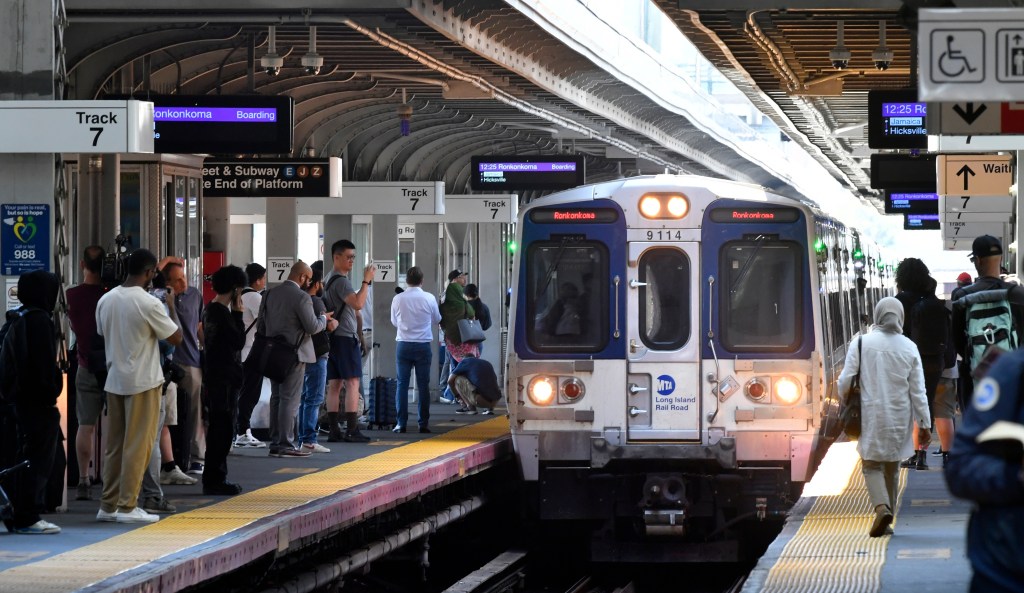
New York City residents are riding commuter trains at record rates thanks to cheaper tickets that let people pay less to ride between stations inside city limits, MTA officials said on Wednesday.
Ridership on the Long Island Rail Road and the Metro-North Railroad has nearly rebounded to pre-pandemic numbers — largely thanks to disproportionate ridership growth in New York City, whose residents have taken advantage of $5 off-peak and $7 peak “City Tickets” for intracity travel that the MTA expanded from a weekend-only deal in 2022.
Ridership at city stations has grown a flabbergasting 180 percent compared to just four years ago, according to figures revealed at Wednesday’s MTA board member.
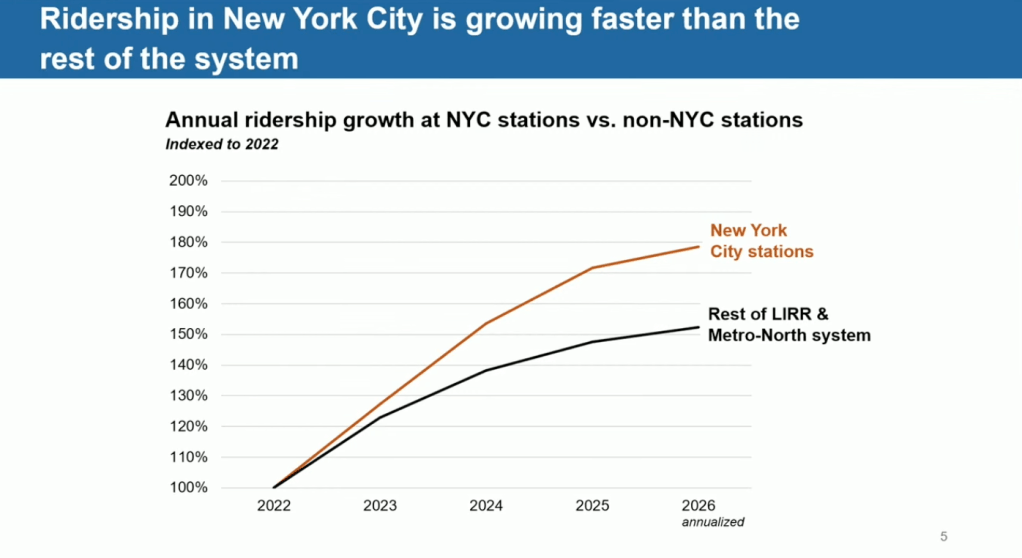
“Ridership at stations within New York City is outpacing ridership growth at at non-New York City stations,” said MTA Chief Customer Officer Shanifah Rieara. “That growth has exploded since the expansion of the weekday City Ticket back in 2022.”
LIRR President Rob Free said the agency’s move to attract more riders has paid off handsomely. This year, 29 percent of all ticket sales on the commuter railroads were City Tickets, and ridership has increased by 478 percent at the Laurelton station in Queens and 503 percent at the Melrose station in the Bronx.
“In looking at ways to increase ridership, address transit deserts and provide more affordable travel options for New York City residents, we uncovered a new market for commuter rail service,” Free said on Wednesday. “From 2022 to 2025 [City Ticket] ticket sales grew a whopping 361 percent for the commuter railroads.
The MTA introduced the City Ticket in 2003 as a $4.50 weekend-only discount ride for intracity travel on the LIRR and Metro-North. Advocates and elected officials spent the following years pushing the MTA to make even better use of its commuter rail stations inside the five boroughs, many of which are service neighborhoods with limited or zero subway service. In 2022, the agency began offering a $5 off-peak version of the ticket; in 2023, it introduced a $7 peak option, Gov. Kathy Hochul endorsed the idea as a way to encourage post-pandemic transit ridership.
Advocates who pushed the MTA to open the city to more potential riders celebrated the good news as proof that giving people options can increase ridership.
“The success of the City Ticket shows that people want to be able to choose their mode of choice or whatever is easiest for them to make their trip shorter, and that riding the railroad is often that that way of travel,” said Lisa Daglian, the executive director of the Permanent Citizens Advisory Committee to the MTA. “We recommended this dozens of years ago, and are thrilled that it’s going stronger than ever.”
Daglian and the PCAC previously pushed the MTA to more widely adopt a different type of discount commuter rail ride that they called the Freedom Ticket. The proposed arrangement would have paired a weekly City Ticket with a seven-day MetroCard. While the MetroCard has gone the way of the Laserdisc, Daglian still hoped the MTA would explore more ways to take advantage of the clear interest in the City Ticket.
“We continue to encourage the MTA to look at a City Ticket weekly, a City Ticket monthly, a City Ticket with some kind of transfer to transit. Give the people what they want. If it works, make it better. And it works, so we can make it even better. Let’s figure out how to do that, now’s the time,” she said.
MTA leadership wouldn’t commit to adding a subway transfer to the City Ticket, but said they were open to exploring ways to grow the program and introduce even more discounts.
“We will always consider them as part of our consideration of strategies to keep the system affordable,” said MTA Chairman and CEO Janno Lieber. “We’re always looking at new ideas in the appropriate time frame.”

Read More:
Streetsblog has migrated to a new comment system. New commenters can register directly in the comments section of any article. Returning commenters: your previous comments and display name have been preserved, but you'll need to reclaim your account by clicking "Forgot your password?" on the sign-in form, entering your email, and following the verification link to set a new password — this is required because passwords could not be carried over during the migration. For questions, contact tips@streetsblog.org.