Prospect Heights Tried a Lighter Approach to Street Cleaning Enforcement — It Didn’t Work
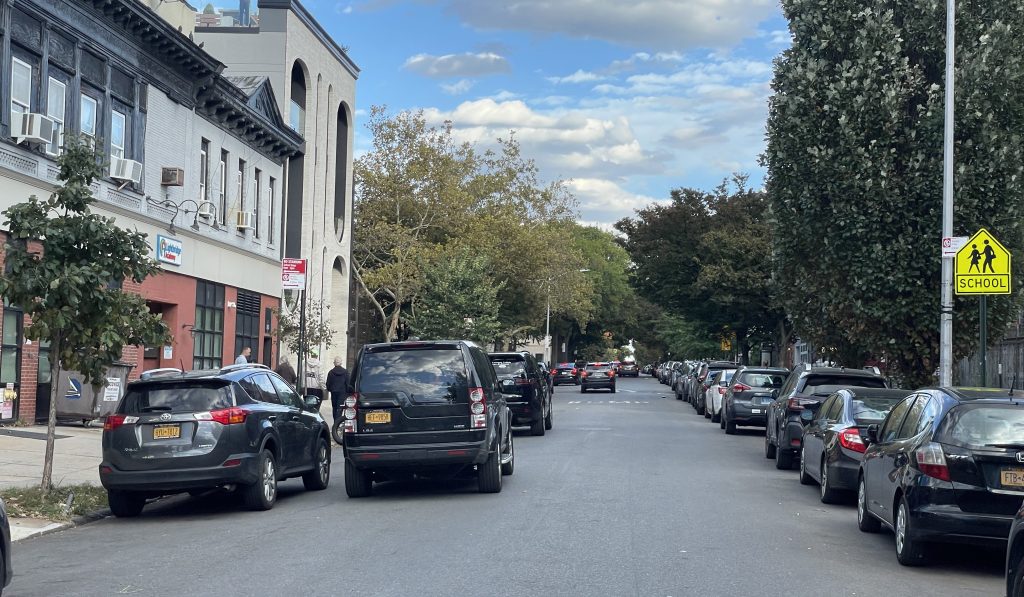
Give an inch back to parking, drivers take a mile.
The Sanitation Department abandoned its eight-week summer experiment to let motorists in a small sliver of Brooklyn park their cars during some street cleaning hours after, surprise, the roads got dirtier and parking violations jumped during remaining enforcement hours.
The alternate side parking “pilot” in Prospect Heights and Crown Heights cut the amount of times motorists had to move their cars for DSNY sweepers from two times a week per side of the road to just once per side, at the request of the area’s Council Member Crystal Hudson, who said constituents complained to her about having to move their cars more than drivers in some other neighborhoods.
“I was hoping that this could’ve proven that fewer days of alternate side parking enforcement would yield greater compliance, but that’s just not what the data has shown,” Hudson told Streetsblog. “It’s definitely a disappointment.”
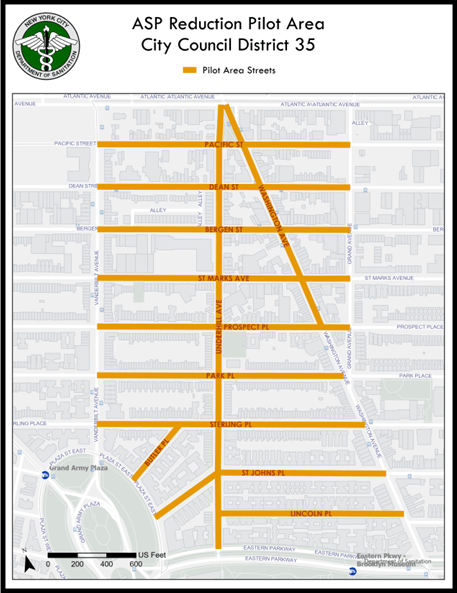
The pilot lasted from Aug. 3 to Sept. 25, and covered a roughly 10-by-two-block area from Atlantic Avenue to Eastern Parkway, between Vanderbilt Avenue and Grand Avenue.
DSNY deployed officers to monitor the street before and after, and they also found that building owners kept their sidewalks less clean during that time.
The neighborhood got dirtier and people broke the rules more, according to DSNY data. Compliance with the remaining parking rules dropped by 11 percent, from 73 percent to 62 percent. Sanitation officials slapped drivers with an average of 457 tickets a month — two violations more than the month before, when alternate side rules were in effect for double the amount of time.
One parking expert said it was a “wise choice” by New York’s Strongest to resume the full-time cleanup schedule.
“If you’re telling me that the streets got dirtier when you cleaned them less, that does sound to me like you want to go back to cleaning them more,” said Rachel Weinberger, vice president for transportation at the Regional Plan Association. “The whole ASP thing is out of control in the city right now in terms of non-compliance.”
DSNY estimates that about half a million drivers fail to move for their sweepers every week. As a result, debris remains on the street and ends up blocking catch basins, worsening the increasingly frequent flooding in the city, according to a spokesperson.
“This is not an academic problem…we don’t ask people to move their cars just because we feel like it, but because it’s the best way to get the street clean and failing to do so has real-world consequences,” DSNY’s Deputy Commissioner for Public Affairs and Customer Experience, Joshua Goodman, told Streetsblog.
The fine for breaking street sweeping rules is $65, a price many motorists are happy to pay a few times a month rather than shell out far more for a space in an off-street garage. Two-year-old legislation in Albany to automate enforcement, like the city already does for bus lane tickets, has yet to pass.
Council Member Hudson announced the pilot effort in July, saying that for “years our office has heard from Prospect Heights residents who have asked whether twice-a-week Alternate Side Parking is still necessary to keep neighborhood streets clean. This pilot will help determine whether once-a-week ASP can maintain the same level of cleanliness while reducing the burden on residents.”
The lawmaker and residents claimed the rules were an unfair burden on locals, since streets in wealthier and whiter neighborhoods like Park Slope often only have one cleaning day per side.
“It doesn’t make any sense that Park Slope on the other side of Flatbush Avenue just has to do it once,” said Steve Flack, president of the Sterling Place Block Association. “In the end I think should be equal across Brooklyn.”
However, more alternate side parking also means the street is supposed to get cleaned more often, even if it comes at the annoyance to motorists. Two-thirds of households in Hudson’s district do not own a car, according to U.S. Census figures.
“We are trying to address what I think to a lot of people has just felt like a system that is not equal or equitable across the different neighborhoods,” Hudson said.
Goodman said alternate side parking hours go back “a long time,” but that residents can request changes to the schedule via their community boards, which still requires sign-off from the Sanitation and Transportation departments.
Alternate side parking dates back to 1950 — overnight parking was illegal up until then. The police commissioner at the time, Arthur Wallander, even lamented “the public streets being used as garages,” saying it “constitutes one of the gravest problems facing the city.” Thus, alternate side parking was born to keep city street clean in a car-dominated world.
“[Alternate side parking] seems like an intractable problem in a way,” said Weinberger. “The streets do need to be cleaned.”
Weinberger, who has studied parking in the city for decades, said DSNY should have also measured the compliance rates up against another set of streets at the same time, to control for any other factors, such as increased parking availability due to people being away during summer.
“This study, it reinforces that there is a problem,” the transportation researcher added. “I just wish the study had been a little more comprehensive.”

Read More:
Streetsblog has migrated to a new comment system. New commenters can register directly in the comments section of any article. Returning commenters: your previous comments and display name have been preserved, but you'll need to reclaim your account by clicking "Forgot your password?" on the sign-in form, entering your email, and following the verification link to set a new password — this is required because passwords could not be carried over during the migration. For questions, contact tips@streetsblog.org.