OPINION: Mamdani Is Making a Catastrophic Mistake on QueensLink
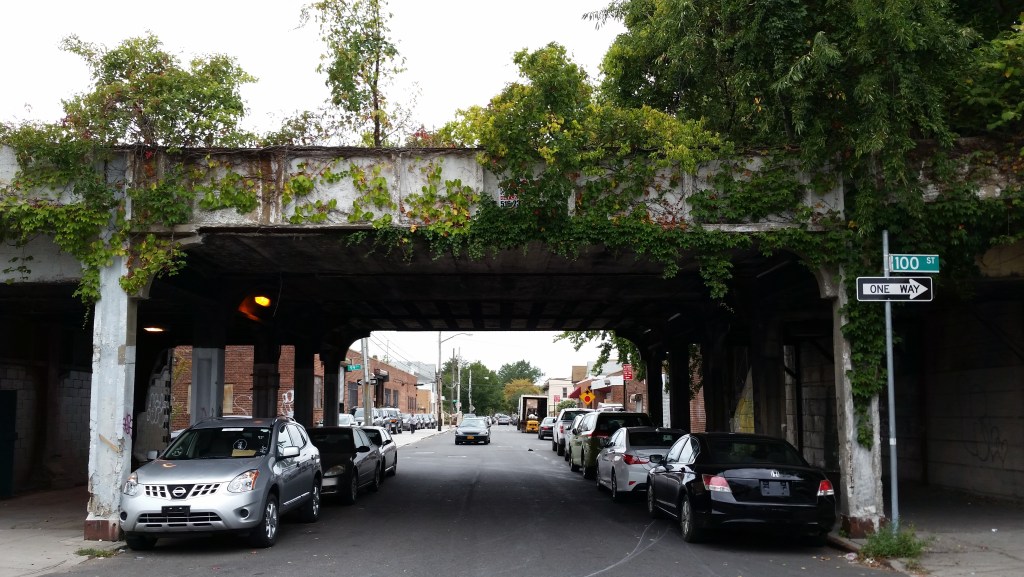
Queens is in a transportation crisis. The borough features some of the city’s worst commutes and its most congested subways, while its population has grown by 8 percent since 2010 and will grow even more in the coming years. The status quo is unsustainable without more subways.
This is why so many residents of Queens have supported QueensLink, a proposed project that would extend the M train from Forest Hills to the Rockaways. Yet on May 22, the Mamdani administration renounced the project and threw its support behind a competing proposal for a park.
Mayor Mamdani is committing a terrible error. He must reverse course.
QueensLink’s upsides are obvious. By repurposing an abandoned Long Island Rail Road line, the project would create the borough’s very first north-south subway line. The M train would parallel overcrowded roads like Woodhaven Boulevard and the Van Wyck Expressway, providing commuters with a much faster option.
There are other benefits, too. Straphangers in South Queens and the Rockaways already spend more time commuting because they must swing through Brooklyn before reaching Manhattan. QueensLink would create a much more direct path through west-central Queens. That would save at least 15 minutes each way — freeing up at least 125 hours over a single year.
QueensLink specifically addresses the constrained capacity of the A train, which shares tracks with three other train lines and services three southern terminals: Lefferts Boulevard, Far Rockaway and Rockaway Park. These factors mean A train riders spend a lot of time simply waiting for their train to show up. QueensLink solves this by delivering a completely new train to south-central Queens and the Rockaways. This new train would take over one of the terminals of the A train, ensuring more service on the other two terminals.
Finally, QueensLink would enhance transit in other parts of the city. Forest Hills, the terminus of the M and R trains, currently turns 20 trains per hour. Diverting the M train to the Rockaways, however, would allow MTA crews to turn an additional nine trains per hour. The Queens Boulevard Line, which carries the M and R, can easily handle these extra trains. Together, the M and R don’t exceed 20 trains per hour, while the Queens Boulevard Line can run 30 trains per hour.
This extra capacity could restore G train service to Forest Hills, something elected officials have demanded since the MTA permanently shortened the G to Court Square in 2010. This would make it easier for everyone to access Forest Hills, and free up capacity on the E, F, M and R trains. It’s a reminder that the subway is a network: new and better service in one part almost always benefits every other part.
QueensLink is a slam dunk for the entire city and easily fits into Mamdani’s affordability agenda. Because QueensLink would run through car-dependent areas, the project would remove millions of car trips and save New Yorkers thousands of dollars. Extra capacity makes it easier — both logistically and politically — to build more homes, driving down rents for everyone. Those homes would generate more tax revenue, which would help pay for QueensLink.
All of these reasons only deepen the mystery of Mamdani’s decision to abandon QueensLink and instead support QueensWay, a competing plan for the same abandoned LIRR line where QueensLink would be built. QueensWay supporters want to turn the entire right-of-way into an elevated linear park and “cultural gateway.”
But this is an absurd use of the city’s limited resources, and it reveals the fundamental asymmetry between the competing projects. QueensLink would create 33 acres of new parkland, but QueensWay would discourage the city and state from adding transit in the future. That is because its architects designed Metropolitan Hub to block transit, which is the main point of contention. All of the benefits listed above would simply never happen.
Supporters of QueensWay argue that their park doesn’t necessarily preclude transit. But their actions say otherwise. The first phase of QueensWay, the Metropolitan Hub, will make it more difficult to retrofit future train service. For example, QueensWay’s plans call for erecting a bridge over the Lower Montauk Branch that will not be strong enough to support moving trains. QueensWay would place the park and a pedestrian path exactly where the MTA would need to lay rails for QueensLink.
All of this heightens the financial and political price of QueensLink, which would require the demolition of QueensWay’s elevated park. Demolishing a park — even a relatively small one, even under the promise of a replacement park — is a politically toxic endeavor in New York City.
Politically sophisticated New Yorkers have been alert to this dynamic for a long time. Last year, a Manhattan art gallerist persuaded former mayor Eric Adams to permanently alienate an empty city-owned lot that his father had landscaped as a private garden, in order to block the construction of a permanently affordable housing development for elderly New Yorkers.
That is the fundamental idea behind QueensWay. Its supporters want to make the addition of rail so radioactive that any future politician would abandon QueensLink — just as Mamdani has now done.
QueensWay supporters produce other dishonest arguments, too. They insist, for example, that the MTA thinks QueensLink will cost between $5.9 and $8.1 billion. The MTA actually calculated that the project would cost only $1.9 billion to construct. The $6.2 billion difference consists of contingencies, soft costs and other budget items unrelated to construction.
And that $6.2 billion figure is almost certainly inaccurate. A 77-percent soft cost to total cost ratio appears to be completely unprecedented. I could not find a comparable project, even a very risky one, with a similar ratio. Even Phase 1 of the Second Avenue Subway, which gained notoriety for its pricey contingencies, recorded a 29-percent ratio. Under this more realistic ratio, QueensLink is far more likely to cost something closer to $3 billion — not $5.9 billion, and certainly not $8.1 billion.
I do not understand why QueensWay supporters want to make it even harder to build new transit in a borough that is begging for it. Their position is particularly confounding when they want to build part of their park next to Forest Park, one of the biggest parks in the city. Nor do I understand why Mamdani is abetting the group’s plan after years of opposing it. However, the new mayor still has a generational chance to correct his mistake and pursue QueensLink.
So what should Mamdani do? At the very least, he should ensure that QueensWay is built to QueensLink standards. That must include tangible space dedicated to rail and structures strong enough to handle the weight of trains. This way, in the very likely event that QueensLink is needed, $43 million doesn’t go to waste and QueensLink doesn’t get stuck in political purgatory.
More ideally, he should start by blocking all future funding for QueensWay and reallocating that funding to the rest of the city’s parks. To actually fund QueensLink, he should look at the recent upzoning of the Aqueduct Racetrack in South Ozone Park, where the new buildings’ property tax rolls could pay for QueensLink — in much the same way former mayor Michael Bloomberg rezoned Hudson Yards to pay for the 7 train extension to 34th Street. Finally, the mayor should publicly renounce QueensWay and recommit to QueensLink.
Read More:
Streetsblog has migrated to a new comment system. New commenters can register directly in the comments section of any article. Returning commenters: your previous comments and display name have been preserved, but you'll need to reclaim your account by clicking "Forgot your password?" on the sign-in form, entering your email, and following the verification link to set a new password — this is required because passwords could not be carried over during the migration. For questions, contact tips@streetsblog.org.