Mamdani Officially Buries The QueensLink
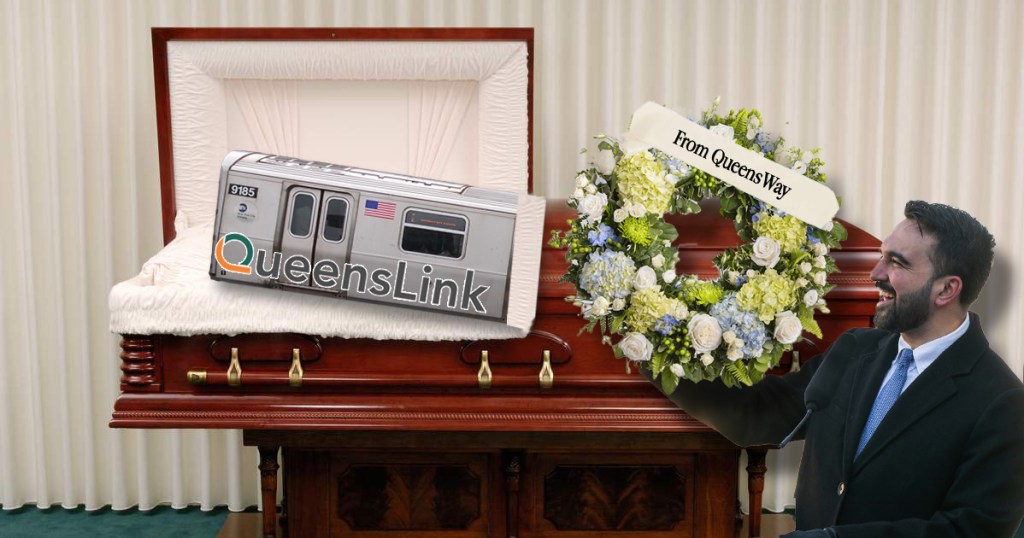
It’s a broken link.
Mayor Mamdani is going full speed ahead with his predecessor’s plans to build the QueensWay park over abandoned train tracks in Central Queens, after his administration decisively told advocates for bringing transit to the right of way that he won’t change course from his budget proposal to fund the park’s construction.
Advocates for the proposed passenger transit reactivation known as QueensLink got the hard “no” after making their case last Friday to Mikelle Adgate, chief of staff to Deputy Mayor of Operations Julia Kerson.
“She said, ‘After reviewing your initial business case study and the statistics that you provided, we are moving forward with Queensway Phase One,'” said QueensLink spokesperson Noelle Hunter, who added that the administration insists that building QueensWay won’t block transit service in the future.
The transit organizers had hoped to convince City Hall to “pause” work on the green space, which Mamdani funded in his executive budget to the tune of $43 million. They argue that once a piece of the park goes in, it will be impossible to bring train service to the area.
“We asked to lockbox the current funds for QueensWay, basically putting a pause on the project, so that we can incorporate some sort of transit component, or until we know the details of how a transit addition to the project would really work,” said Hunter.
Almost 75,000 people per day would use the QueensLink, replacing almost 15,000 daily car trips in the area, the latest study QueensLink supporters estimated. In making their case to City Hall, QueensLink organizers specifically cited cases of the Purple Line in Maryland and the Beltline in Georgia, where rails-to-trails projects either drove up costs or prevented proposals to bring train service back to unused tracks.
That history and the latest study in support of the QueensLink wasn’t enough to sway the mayoral representative, Hunter said. Mayor Mamdani supported QueensLink as a member of the Assembly and as a candidate for mayor; his reversal this year came as a surprise to the proposal’s proponents.
“Obviously, we’re not pleased. We really expected a lot more from this mayor, especially since transit has been such a big component of his policy platform,” said Hunter.
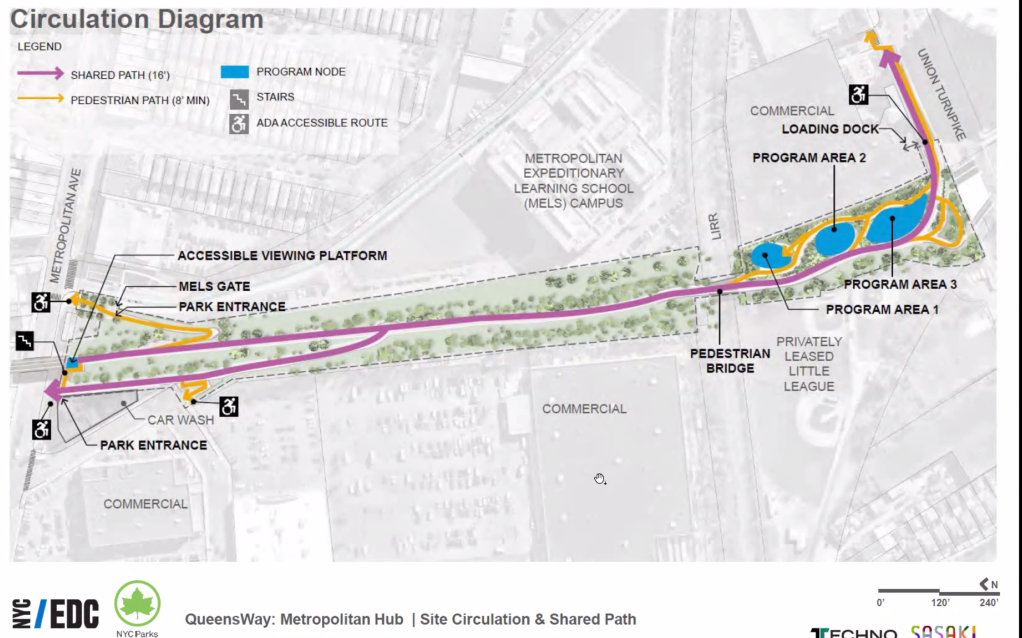
“Building the park now won’t block transit in the future” is the same line that former Mayor Eric Adams’s administration gave when he budgeted money to design and build the first phase of the QueensWay from Metropolitan Avenue to Union Turnpike, known as the Metropolitan Hub.
But while it’s true that a park can always be ripped up, it also looks like this particular park will be directly in the path of the train proposal, as Streetsblog previously reported. The city’s most recent designs of the Metropolitan Hub show the park pretty firmly entrenched in areas that train project would have to subsume. Any addition of transit on the route may require shutting down the park, at least temporarily.
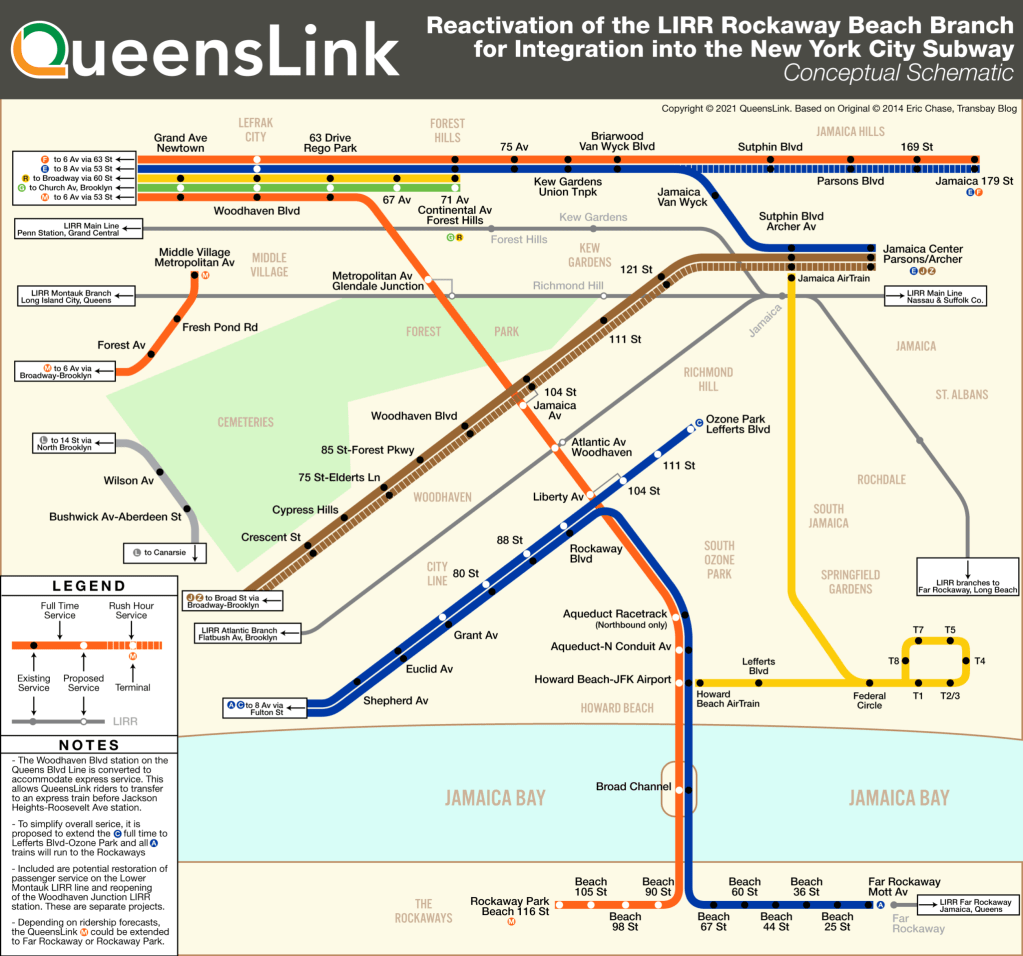
The proposed QueensLink design would extend the M train from the Rego Park-63 Drive station to Beach 116th Street-Rockaway Park. Advocates want to build park space on top of and next to the train line, which they propose to run underground from Rego Park and come back aboveground just north of Union Turnpike — right where the first phase of QueensWay is slated to be built.
The Mamdani administration is looking at the decision as one that expands green space, rather than precludes transit.
“The City remains committed to expanding green and open space across the boroughs and is actively exploring all available funding options to make that a reality,” said Mamdani spokesperson Jeremy Edwards. “The City remains committed to completing the Metropolitan Hub phase (Phase 1) of the QueensWay and is currently advancing to final design by mid-2026, with construction beginning by the end of 2026.”
The mayor’s decision is only the latest blow to the QueensLink, which has long failed to win support from top decision makers in the city and state.
The MTA, for example, has never been keen on the idea. In 2019, the agency completed a legally required study of reactivating rail service on the right of way then immediately buried it. QueensLink boosters have accused the agency of inflating the costs of the project in order to make it appear unrealistic.
The MTA did include a brief look at the QueensLink in its 20-Year Needs Assessment released in 2023, but once again judged the project as not delivering enough bang for the buck.
More recently, MTA Chairman and CEO Janno Lieber at least praised the project advocates for the depth of the work they’ve done to study it — but still stopped short of saying the MTA was interested in pursuing the idea.

Read More:
Streetsblog has migrated to a new comment system. New commenters can register directly in the comments section of any article. Returning commenters: your previous comments and display name have been preserved, but you'll need to reclaim your account by clicking "Forgot your password?" on the sign-in form, entering your email, and following the verification link to set a new password — this is required because passwords could not be carried over during the migration. For questions, contact tips@streetsblog.org.