By George! Could A ‘Land Value Tax’ Fund The Interborough Express?
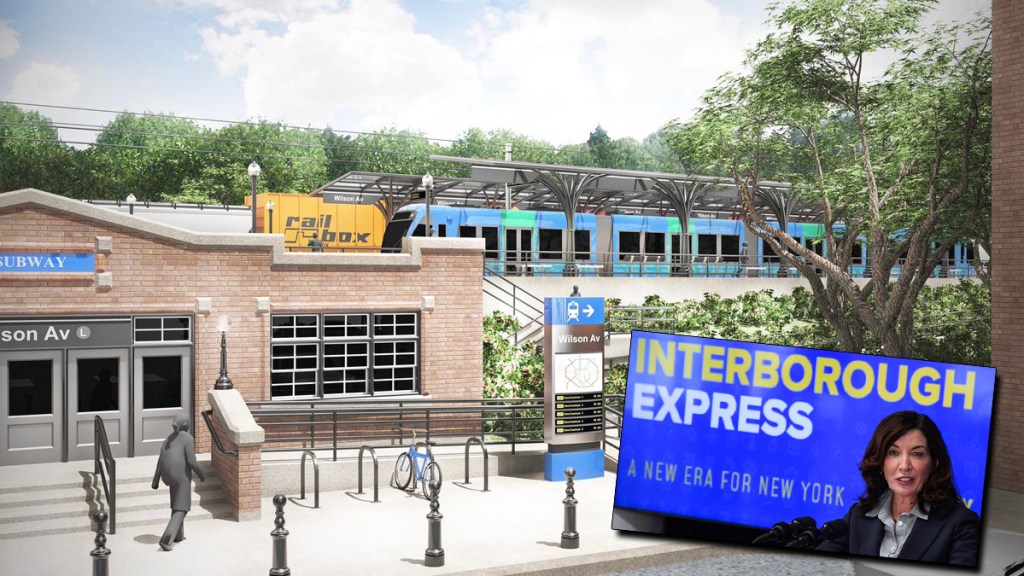
New York City could pay for the completion of the Interborough Express by itself if its leaders are willing to take a piece of the higher property values that the transit expansion will bring, and put that money back into the IBX.
MTA officials have already identified $2.75 billion in their agency’s 2024-2029 capital plan to cover half of the $5.5-billion proposal, which Gov. Hochul announced in 2022. That means New York must find another $2.75 billion to pay for the remainder.
In years past, a transit project like the IBX would have been a layup for federal funding, but President Trump and Secretary of Transportation Sean Duffy have held up billions in transportation grants authorized by Congress. In April, MTA Chairman and CEO Janno Lieber revealed that his team was already exploring “different strategies” to move forward without federal funding for the project.
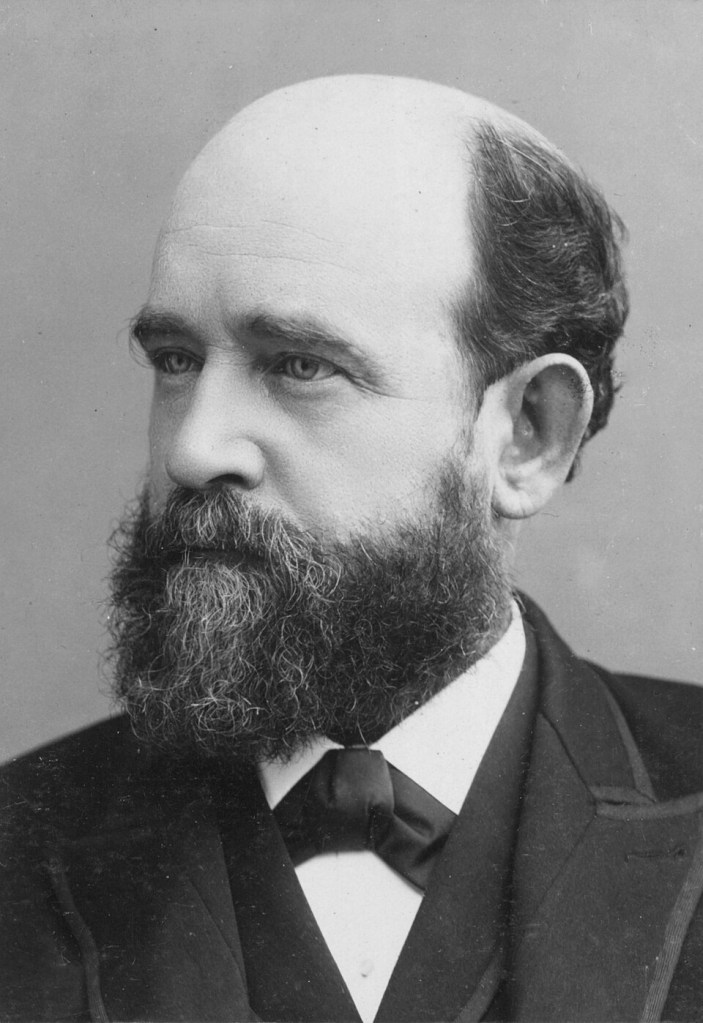
The MTA is a state agency and the IBX is a state project, but Mayor Mamdani may yet hold the key to its funding. Several public financing experts pointed to the work of Henry George, the 19th-century political philosopher and one-time New York City mayoral candidate, who argued that taxing the value of land itself to pay for public services, including free transit, would unlock universal prosperity.
City and state officials expect the IBX to generate significant residential development, due in part to “City of Yes,” the package of zoning reforms that former Mayor Eric Adams championed and signed into law in late 2025. Those reforms strongly encourage housing density near mass transit.
A state law passed in 2016 allows the city to embrace George’s central proposal — the land value tax, also widely known as value capture — to use that new development to fund new transit lines.
The law allows for three types of value capture to be used to support transit capital projects. The first type, known as tax increment financing, or TIF, is the most controversial version of the practice because it directly siphons off property tax revenue that would otherwise go towards the city’s general fund. It works by authorizing the MTA to pay back loans for a project using the incremental increases in property taxes projected to occur thanks to the existence of the new transit project.
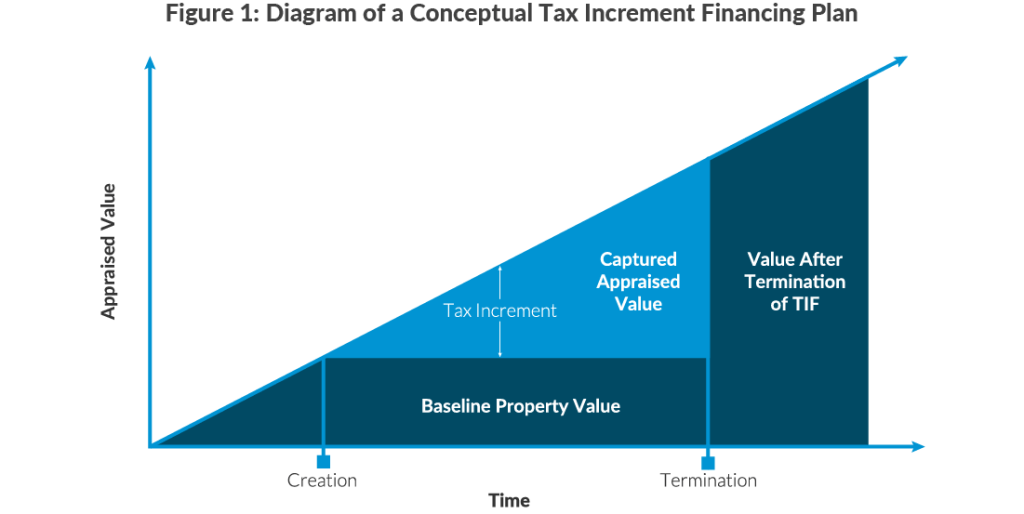
A TIF has never been used in New York City to pay for a subway expansion, but former Mayor Mike Bloomberg implemented a TIF-like scheme to pay for the 7 train’s new terminal in Hudson Yards. Bloomberg allowed developers to make “payments in lieu of taxes,” which are payments from property owners to the city at a discount rate from usual property tax payments, which were used to repay loans the city took out to build the subway extension.
The 2016 value capture law also allows the city to help fund new transit by creating additional property taxes that don’t siphon any money away from the general fund. One of these is a tax on the increased value of the property on land near a transit expansion. The other, called a land value tax, is a tax on the increased value of the underlying land itself near a transit expansion.
Here’s how it works: New public transit service in a neighborhood boosts nearby property values, since the infrastructure creates more easy opportunities for residents to reach more of the city, and for businesses to attract more customers. That’s true even in an area where property values are already high. On the Upper East Side, economists found that the opening of the Second Avenue subway raised property values by 8 percent, which in raw terms came out to an astounding $5.5 billion.
Even without a land value tax, the city already captures some of the value new transit projects from the increased property value of the land and the structures that exist on the land. But researchers found that only about 30 percent of that value flowed back to the city, with the rest of the wealth in private hands. By creating another layer of property taxes explicitly designed to capture some of the additional value from the new transit, a land value tax allows the city to fund transit without losing that tax revenue.
“Land value capture allows the public to recoup a share of that windfall — on the principle that public investments shouldn’t exclusively enrich private landowners — and reinvest it for public benefit,” Reed Schwartz and Alex Armlovich argued in the Niskanen Center briefing.
When the city calculates the market value for a lot, the Department of Finance adds the value of the land to the value of the structure that sits on it, and then determines the property tax from that number. The chart below shows that calculation for one property on Lexington Avenue by the Q train.
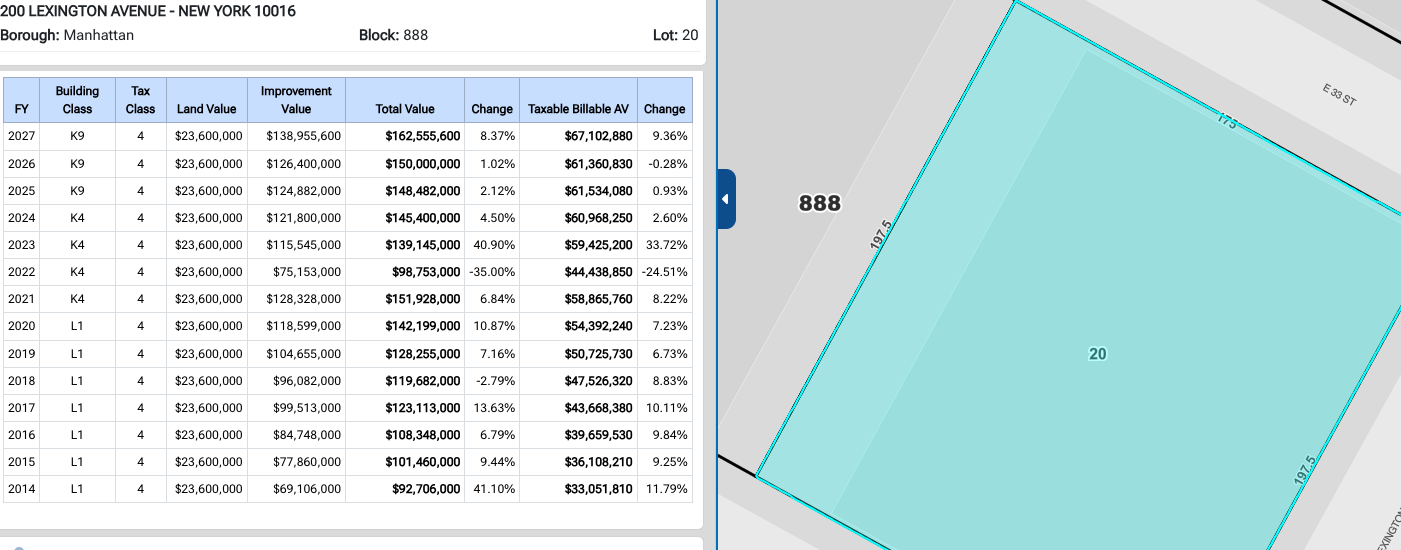
If the city established a land value tax along the Interborough Express route, a property owner’s normal tax bill would still go to the city of New York, and still be based on the value of both the land and structure, both of which would rise thanks to the transit improvement. But the city would also levy a new assessment on the land the property sits on (or, if someone owns property with nothing on it, the value of the vacant lot) and the city would tax the difference between the initial land value and the newly assessed value at a legislated percentage and use that money to back bonds that pay for the construction of the IBX.
Value capture hasn’t been used as a policy to spur transit construction in New York City outside of the time that Mayor Bloomberg used it, but it’s been used to support Hong Kong’s Mass Transit Railway Corporation since the mid-1980s.
The MTA has highlighted the fact that the IBX will connect the neighborhoods served by the line to vast swathes of the city with just a 30-minute transit ride, opening residents and businesses up to more jobs, more educational opportunities and more customers.
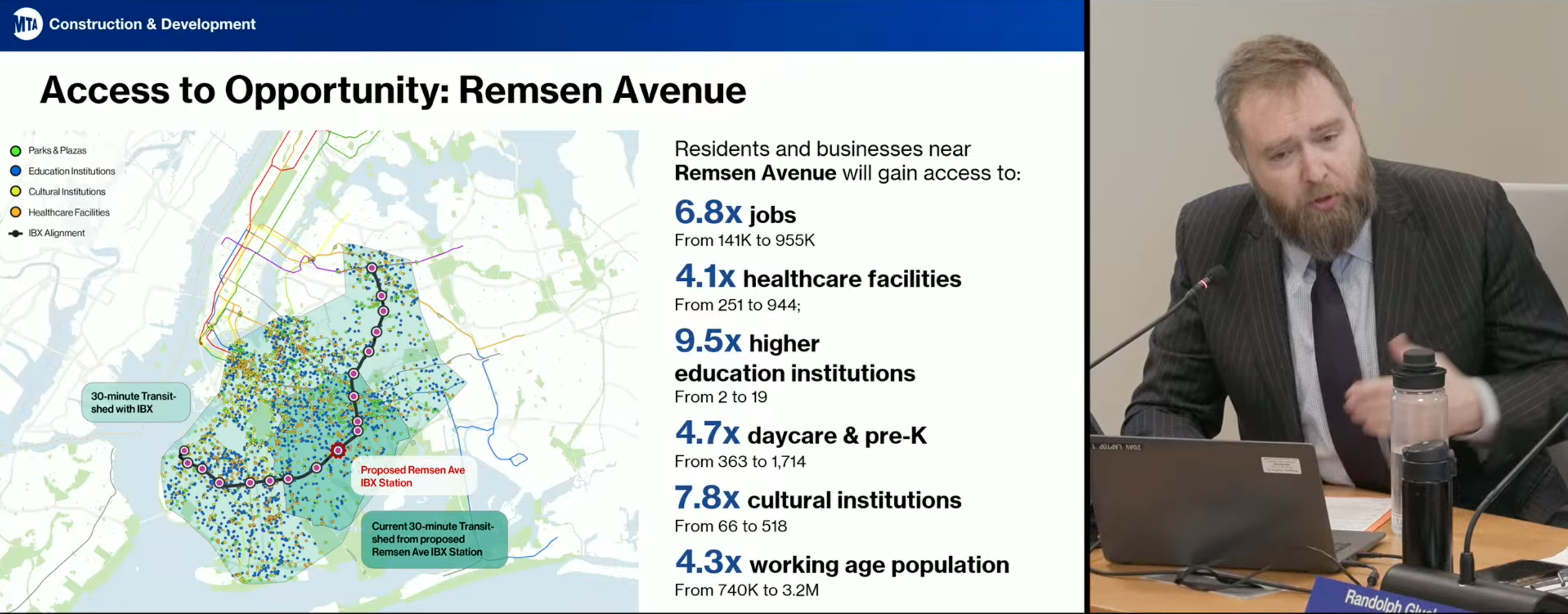
The IBX is guaranteed to increase the value of the land around it. And proponents of value capture have made the case that if the value of a lot jumped from $100,000 to $200,000 because of its proximity to the light rail, the larger public should benefit because it was a public initiative — in this case, the IBX — that enriched these private landowners.
“We often like to say that this is returning the value,” said Greg Miller, the executive director of the Center for Land Economics, a national organization that promotes the use of a land value tax. “That doubling of value that your land value just went through, you did nothing to do, and if the city doesn’t take 100 percent then you are still gaining money on your wealth.”
Land value tax proponents also see it as the most effective form of value capture because it doesn’t discourage people from building on their land.
“Land is not created by entrepreneurs the way that buildings are. If you raise the tax on it, it can’t get up and move to New Jersey. Land famously just stays where it is, and you raise the revenue in the build and the no-build condition. It’s the value created by the transit access, no matter what happens to the zoning and what happens to the building decision,” Armlovich said recently at forum discussing the possibility of the city funding the IBX with a land value tax.
But with the city already doing a rezoning study on Coney Island and McDonald avenues ahead of the Interborough Express going into service, the value capture advocates said that a land value tax could deliver even more transit funding if it’s paired with an upzoning.
“These are independent things but when put together they work well in collaboration. When you upzone land, you create a lot of land value. When you upzone land and put a transit corridor in, they catalyze each other. You’re going to see a lot more land value increment go up, and you’re going to see a lot more desire to live in those areas that the IBX creates,” said Miller.
If the city does choose to implement a land value tax for the Interborough Express, the high-level simplicity of the concept will give way to the more complicated implementation of the policy. Mayor Mamdani and the City Council will have to work out the footprint of the areas covered by the new charge, as in land that’s a quarter-mile or a half-mile away from stations, how long the tax payments will last and what percentage of the value uplift the city wants to capture.
The city will also need help from Albany to institute a policy like this. The current law that authorizes value capture for transit projects sunsets at the end of 2027, which is not nearly enough time to set the new assessments or build the IBX, so legislators and Gov. Hochul will have to keep extending the law by another year or even make it permanent.
For her part, Gov. Hochul tried extend the state law authorizing the MTA’s use of value capture by 10 years in this year’s budget, but state legislators only agreed to a one-year extension.
A spokesperson for Hochul reiterated her commitment to getting the project done.
“The IBX will be absolutely transformative, dramatically shortening commutes and unleashing the full potential of Brooklyn and Queens communities that have been overlooked and underinvested in for too long,” said Hochul spokesperson Sean Butler. “Gov. Hochul has been absolutely committed to delivering this project and her leadership secured significant funding for the IBX in the MTA’s capital plan, allowing design and environmental review to get started last year.”
When he was in the Assembly, the mayor was a booster of value capture and included a bill that removed the 2027 expiration date from the state value capture law in his Fix the MTA package, a 2023 push to improve the financial and governance future of the MTA.
But now Mamdani is making decisions with the city’s tax rolls, his team is slightly circumspect about whether he’s ready to go full Georgist.
“The city remains focused on supporting the IBX to better connect New Yorkers while ensuring that communities in Brooklyn and Queens can continue to thrive,” City Hall Jeremy Edwards said in a statement.

Read More:
Streetsblog has migrated to a new comment system. New commenters can register directly in the comments section of any article. Returning commenters: your previous comments and display name have been preserved, but you'll need to reclaim your account by clicking "Forgot your password?" on the sign-in form, entering your email, and following the verification link to set a new password — this is required because passwords could not be carried over during the migration. For questions, contact tips@streetsblog.org.