New York City’s Buses Are About to Grow Up
Mayor Mamdani and Gov. Hochul’s ambitious bus plan for New York City, known as Next Stop, promises to achieve a 20-percent increase in bus speeds on 50 major corridors. This alone will dramatically improve the lives of bus riders by speeding up their trips and improving reliability.
But the plan’s most exciting commitment involves bus rapid transit, an established technology that leaps over the constraints of regular buses. As Mamdani discussed earlier this month, BRT has the potential to achieve such a high standard of service that passengers will begin to treat it as an extension of the subway system.
Next Stop represents a completely unprecedented alignment and political commitment between the mayor, governor, City Council, the MTA, and the Department of Transportation — and not only on what to do, but where to do it. The plan offers clear and measurable performance benchmarks and a new dashboard to monitor progress. Impressively, where speeds are falling short of targets, the city promises to go back and make changes.
As planners and advocates who have worked on bus and BRT systems in dozens of cities around the world, including New York, we believe Next Stop can deliver the goods and finally turn Gotham into one of the world’s great bus cities.
The network effect
Mamdani and Hochul identified five corridors on which DOT and the MTA plan to install BRT infrastructure: Flatbush and Utica Avenues in Brooklyn, Tremont Avenue in the Bronx, Northern Boulevard in Queens, and an inter-borough route between Kensington in Brooklyn and John F. Kennedy International Airport in Queens. Construction on the Flatbush corridor is already well underway and scheduled to be completed by 2030, while the other corridors will undergo planning during that time period.
This is an ambitious and commendable plan. These are major, highly trafficked corridors that connect to other bus routes, subway lines and other important amenities. Mamdani and Hochul are returning to the central idea that inspired the first Select Bus Service routes in the early aughts: That a rapid bus route must belong to a larger network to truly serve its passengers.
But what exactly is BRT?
BRT’s most important characteristics, as spelled out by the Institute for Transportation and Development Policy, include fully dedicated, center-running bus lanes or full busways, off-board fare collection, station platforms that are level with bus floors for easy and accessible boarding, and left-turn restrictions for private vehicles.
But not all BRT networks are created equal. That’s why a group of transportation experts developed the BRT Standard, a policy manual for guiding and evaluating new and existing BRT projects. Additional elements — such as attractive, weather-protected stations; quality passenger information; and passing lanes at stations — help a BRT corridor reach a silver or gold rating. Higher ratings correlate with improved performance and easy-to-use corridors that provide a better passenger experience.
On New York City’s existing bus priority and Select Bus Service corridors, average speeds hover around 6.9 mph, while American BRT systems regularly achieve average speeds between 11 and 14 mph. If Mamdani and Hochul successfully implement most of what they’ve promised on the proposed BRT corridors, they will meet and exceed the BRT Standard, translating to higher speeds and a more comfortable ride.
Bringing BRT to New York
How do you design BRT corridors for New York City streets while fulfilling the BRT Standard? We believe Mamdani and Hochul must laser-focus on three elements — the lanes, the stations and the buses — which must work in concert to achieve fast, reliable and comfortable service.
The lanes
Next Stop promises to create high-quality bus lanes by installing busways, fully separated lanes and center-running lanes that enjoy signal priority at intersections and limit cross traffic and unauthorized vehicles. While New York’s bus network already includes some of these elements on short route segments, they are far from the norm.
Additionally, the proposed BRT corridors are several orders of magnitude longer than anything currently in use, allowing the bus routes on them to integrate much more fully into the city’s broader transit network. These lane configurations are a crucial upgrade to the city’s existing toolkit, though designing the streets to ensure the buses actually move quickly requires a detailed level of design that goes beyond the simple application of a toolkit.
Every bus rider knows how private motorists impede, delay and slow down buses by turning at intersections on bus routes. Because of this, the city should prohibit as many turns as possible across bus lanes on the BRT corridors. DOT is already building center-running bus lanes with impressive physical separation and many left-turn restrictions on the northern end of Flatbush Avenue, but the agency should go even further and remove the mixed-traffic left turns that create bottlenecks at Livingston Street and Lafayette Avenue.
The stations
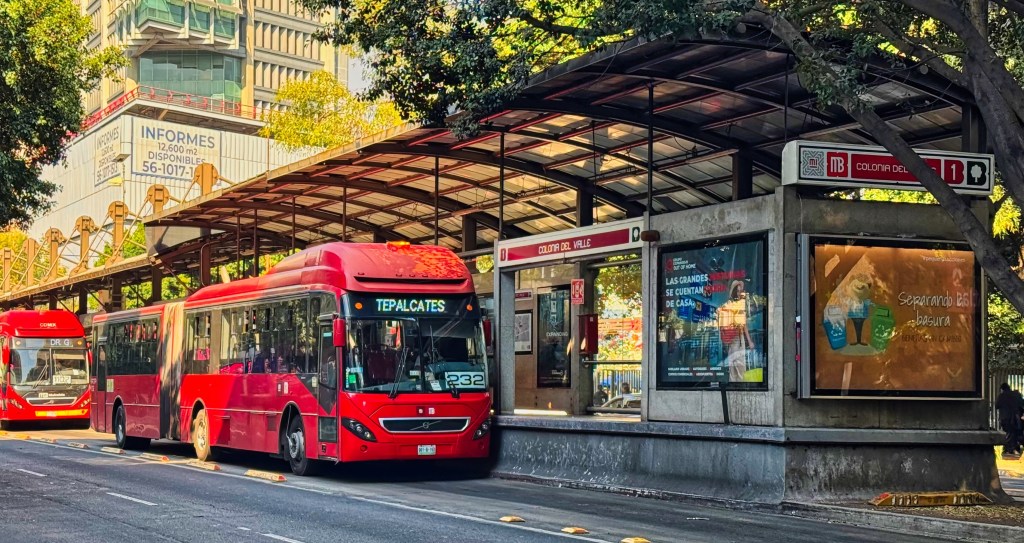
Significantly, the Next Stop report says the city will install “world-class rapid bus stations” that will feature “accessibility investments such as level boarding, seating, shelter, [and] greening, community and cultural programming, and last-mile connections.” This will improve accessibility for elderly and disabled New Yorkers, and make life easier for parents with strollers and riders with carts and luggage. It will also reduce boarding time for everyone, which translates directly to speed increases.
In cities across the world, BRT stations serve as architectural beacons, adding new texture and color to the streets. They convey the clear message that BRT is a new and unique part of the transit network. BRT stations often include full protection from inclement weather; provide security and accessibility; and feature public space improvements in their vicinity.
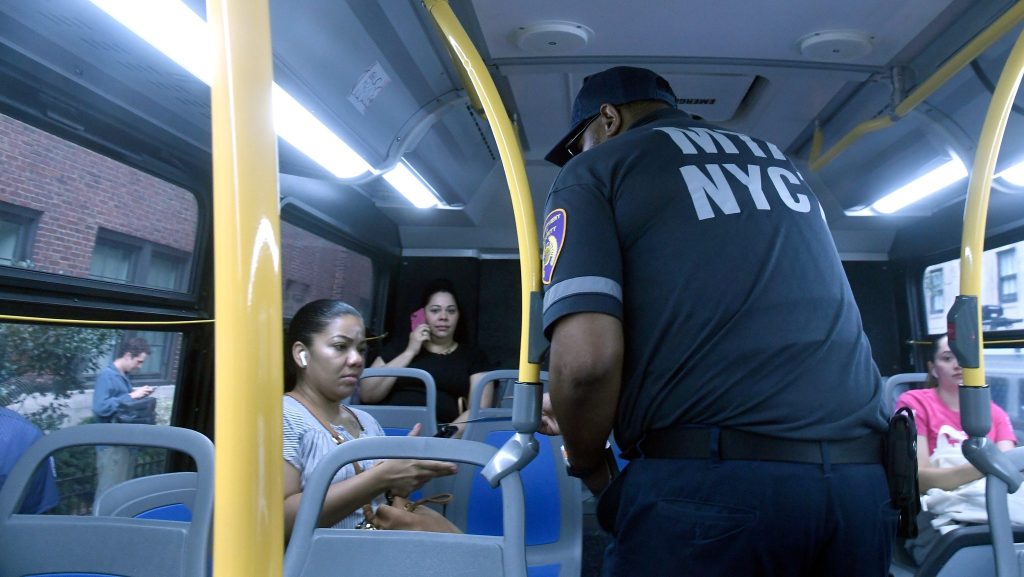
The MTA has already committed to phasing in all-door boarding by 2027, although the precise timeline of that phase-in is somewhat unclear. All-door boarding will speed up buses by reducing dwell time at stations. At high-volume boarding locations, the city should install fare validators at the stations themselves to avoid creating an otherwise inevitable line of passengers waiting to validate their fares on-board.
Bringing this caliber of infrastructure to New York will require solving several bureaucratic puzzles, beginning with the selection of an agency to build them and figuring out how the new stations relate to existing bus shelter franchise agreements. These stations will need additional capital investment, likely from DOT and the MTA. To help cover some of these costs, Mamdani should look at expanding the Department of City Planning’s successful Zoning for Accessibility program to include bus shelters.
The buses
Unfortunately, Next Stop doesn’t commit to acquiring buses that are specifically designed for BRT and would help achieve some of the plan’s goals. The MTA is planning to purchase a new fleet of 2,500 buses, giving them leverage to secure the designs they need – including dual-sided boarding options – from the limited pool of American bus manufacturers, which the agency hopes to expand. Achieving level boarding at BRT stations requires some modifications to the boarding bridges for wheelchairs and strollers.
Procuring buses with doors on both sides of the bus would also provide DOT with the flexibility to build a single station on an existing median shared by buses traveling in both directions. This would consume less road space, reduce construction timelines, as well as costs to build and maintain. Such buses are already being used in several BRT systems around the United States and many more internationally.
From plan to practice
For DOT and the MTA to live up to these commitments and secure the support of other critical agencies, our mayor and our governor must push their respective agencies, and the labor unions with whom they negotiate, to cooperate and do things differently.
Mamdani and Hochul’s plan is a fantastic start. It demonstrates a level of unity and cooperation that is normally unheard of — especially in the five boroughs. This is the best chance in decades to transform our bus system and elevate New York as one of the world’s leaders in bus transportation. That’s easier planned than executed, of course, but we hope and expect the governor and mayor to deliver for the city’s two million daily bus riders. They deserve a rapid ride.




Read More:
Streetsblog has migrated to a new comment system. New commenters can register directly in the comments section of any article. Returning commenters: your previous comments and display name have been preserved, but you'll need to reclaim your account by clicking "Forgot your password?" on the sign-in form, entering your email, and following the verification link to set a new password — this is required because passwords could not be carried over during the migration. For questions, contact tips@streetsblog.org.