Opinion: Mamdani’s New Era For Bus Riders Starts With A Bold ‘Streets Plan’
Last Saturday, it took my kids and me two hours to ride eight miles roundtrip to see my grandma at the end of the Bx7 bus line. On the way home, in the back of a crowded bus stuck at 225th Street near the Broadway Bridge, I thought of Mayor Mamdani, who knows the spot from his high school commute.
Recalling his long, cold waits for the bus, the mayor told reporters in February, “In a city where time is money, too many New Yorkers have seen their precious time treated with casual disdain.” The mayor gets firsthand how important fast buses are to New Yorkers’ livelihoods and dignity. He understands that bus riders’ freedom to get around is our freedom to get ahead.
Fast buses won’t come easy. The mayor’s promises, however, must be delivered — and delivered transparently. The difficulty is already apparent in how the mayor’s language about bus speeds has changed. In February, he promised buses that are “at least” 20 percent faster. By April, he said his improvements would make buses “up to 20 percent” faster.
To meet the challenge ahead, we need a whole-of-government approach to fixing our slowest-in-the-nation buses. The task is urgent. Rising rents are pushing workers to the limits of the city, far beyond the subway’s reach. Working people cannot afford a dignified life while giving over hours every day to slow bus service.
A streets plan for fast buses
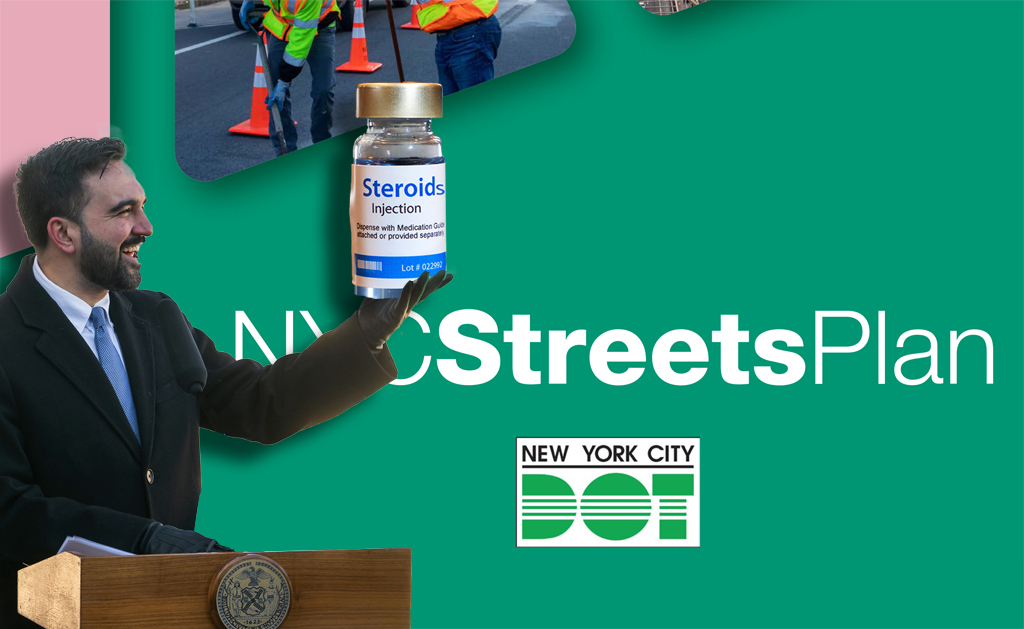
The mayor has a golden opportunity in the new Streets Plan due later this year. The first one was full of mileage markers that went entirely unmet by then-Mayor Eric Adams, especially for bus lanes. The next one will apparently emphasize quality over quantity, as Streetsblog reported.
In fact, riders need more than just a bus plan or map of improvements along specific corridors. We need an entire Streets Plan devoted to the mayor’s vision of a city where buses are genuinely fast and where riders save lots of valuable time.
Much faster buses are achievable. In an analysis of Fordham Road and Utica Avenue, the non-profit People-Oriented Cities found that conversion of heavily used existing Select Bus Services on each corridor to full bus rapid transit could save riders 10 and 17 minutes per trip respectively between major destinations along each route.
That’s what Mayor Mamdani described in his 100-Day Address when he referenced “new, world-class, rapid bus routes for 100,000 New Yorkers who live more than a half mile away from a subway or rail stop.”
It all starts at the curb
Though the official announcement focused on safety and deliveries, the city’s new Office of Curb Management is welcome news to bus riders too. Blocked bus stops and double-parked cars and trucks slow us down along seemingly every route. Our curbs are public space, held in common for everyone, and like any other real estate, they’re valuable because they’re finite.
When the government devotes our curb lanes to car storage, it is saying that it is OK with deliveries and pick-ups being pushed into empty bus stops or into the path of moving buses, delaying riders. The new Streets Plan must incorporate loading zones in place of car storage to permit deliveries and drop offs without compromising bus service.
Pittsburgh successfully piloted 75 smart loading zones, reservable via a mobile app. Traffic speeds rose. Parking times dropped by more than half, incentivized by loading fees. Double parking virtually disappeared. Automated camera enforcement helped keep the peace, something that could be done in New York in concert with major delivery companies.
Curbing car use
It’s not just double-parked cars; private vehicles on the move also get in the way of buses and delay riders. New York has an extensive transit system, sidewalks everywhere, and Citibike. Yet New Yorkers are driving more, 16 percent more in the past two decades despite less than 2-percent population growth. It’s not just Uber; private car travel is driving the spike. Meanwhile, Paris cut driving in half with a growing toolkit of carrots and sticks. It can be done here, too.
Around the country, states are leading the charge to cut driving, including California, Colorado, Minnesota and Oregon. New York’s climate plan hinges on reducing driving and further legislation is pending in Albany, too. But the city should lead; the next Streets Plan should commit to Open Plans’ goal of a 40-percent reduction in driving by 2035.
It’s tempting to adopt an “everything bagel,” all-of-the-above approach, but there’s no way to speed up driving citywide, maybe at all, and certainly not without compromising transit and public safety and adding to New Yorkers’ mounting health and transportation costs.
By contrast, reducing driving to speed up buses is a virtuous circle. The better we do on one front, the better we do on the other, affording more and more freedom to move around and access basic needs and opportunities, regardless of age, income, or ability.
Commutes we can enjoy
When Mayor Mamdani announced his appointment of Transportation Commissioner Mike Flynn, he vowed to unleash Flynn “to make this streetscape and the public transit of the city we call home the envy of the world.”
With ambitious projects joining Grand Army Plaza to Prospect Park and reconnecting the Brooklyn neighborhoods long divided by Linden Boulevard, where I spent too much time stuck in traffic as a kid, this administration is showing the way.
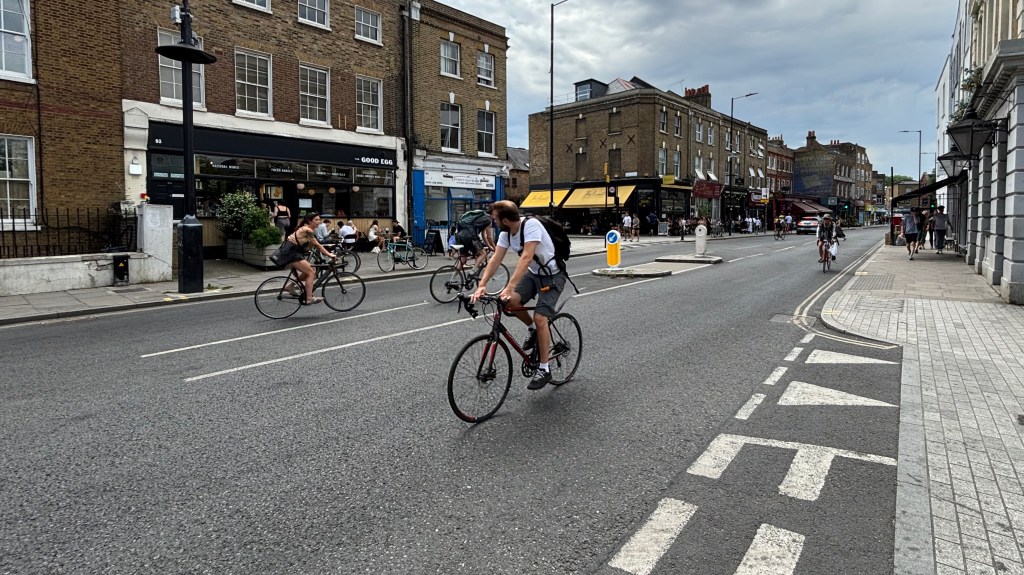
There’s much more New York can do to lean into our strength as a transit, cycling and walking city. Low-traffic neighborhoods can buffer bus rapid transit and greenways along priority corridors from Utica Avenue to the newly proposed East-West Bronx route from the High Bridge to the Hutchinson River. Wide bicycle lanes designed with passing in mind can be protected by paid parking, creating new revenue streams to support, for example, free buses.
From his race against the M34 bus to his walk down the length of Manhattan, Mayor Mamdani’s campaign last year was named a “love letter to the city.” He won subway-adjacent neighborhoods resoundingly but bus-dependent areas were skeptical, even cynical.
As he looks ahead, the mayor knows well that transforming our politics and cementing an enduring majority for compassionate, efficient, and effective government starts on our streets. With the right Streets Plan and thorough execution, fast buses can become our reality. In view of the whole street, the mayor’s daring promise is squarely within our reach.

Read More:
Streetsblog has migrated to a new comment system. New commenters can register directly in the comments section of any article. Returning commenters: your previous comments and display name have been preserved, but you'll need to reclaim your account by clicking "Forgot your password?" on the sign-in form, entering your email, and following the verification link to set a new password — this is required because passwords could not be carried over during the migration. For questions, contact tips@streetsblog.org.