Opinion: A Fairer — And Better — Way For Taxi Passengers To Pay The Congestion Toll
Now that the Trump administration’s legal challenge to congestion pricing has been tossed by federal District Court Judge Lewis Liman, it’s time for some minor elective surgery that was too hot to calendar while the lawsuit was alive.
I propose a reconfiguration of one of congestion pricing’s ancillary-yet-pivotal components: the surcharges on taxi and Uber trips that “touch” the Manhattan congestion zone (south of 60th Street, excluding the West Side Highway and FDR Drive).
Making this simple change will allow each surcharge dollar to go further at cutting gridlock, while taxi and Uber passengers continue to pay the same amount overall.
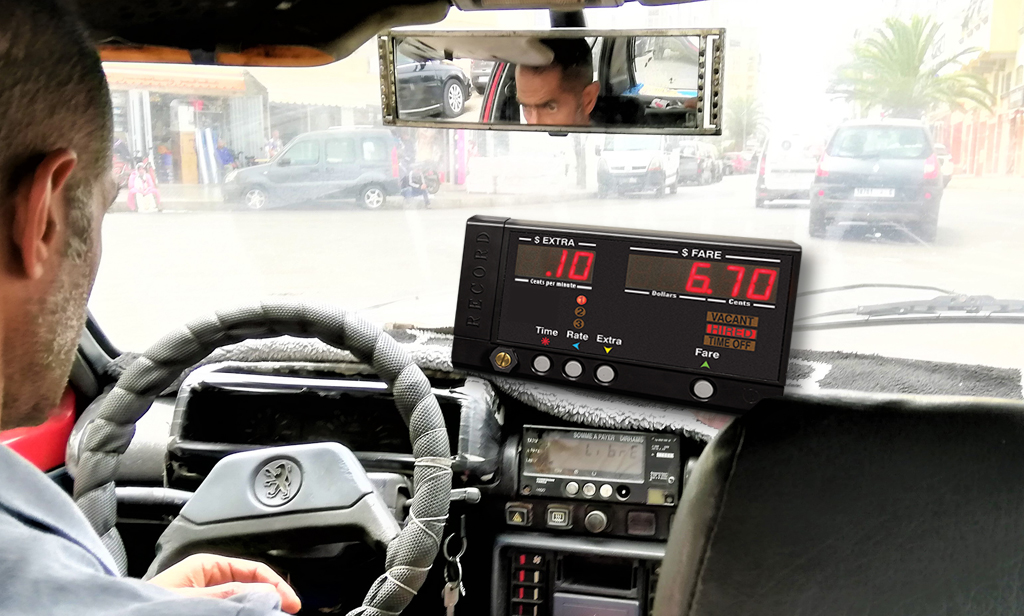
My mechanism is straightforward: get rid of the flat $0.75 taxi surcharge and the $1.50 Uber and Lyft surcharge. In their place, charge passengers a fee for each minute their trip is inside the congestion zone.
The per-minute amount would be calibrated to replicate the congestion revenues now being generated by the flat surcharges. In economists’ parlance, the swap would be revenue-neutral. The point is to keep the change from being cast as a money-grab. Plus, it has to be revenue-neutral to stay within the parameters of the Traffic Mobility Review Board (remember it?) that settled on the $0.75/$1.50 surcharges, along with the $9 peak toll for cars, in late 2024. As long as the passengers pay no more overall, the tweak in how the fee is calculated can’t be considered a toll hike.
What would those per-minute charges be? I estimate that five cents a minute for trips in yellows and 10 cents for trips in Ubers and Lyfts — charged only for time in the congestion zone — will match current revenues from the $0.75/$1.50 scheme.
This reconfiguration would improve the existing congestion relief by nearly 20 percent, my modeling shows — from an estimated 4.3 percent improvement in average traffic speeds before congestion pricing to 5.1 percent.
The boost of 0.8 percentage points may not seem like much, but it equates to an additional 4,000 hours of travelers’ time saved each day. And that means money — OK, saved time, but more or less the same thing — retained by truckers, tradespeople, bus riders and, yes, motorists, at no additional cost.
My swap makes congestion pricing fairer. That’s because shorter taxi and Uber rides will cost less while passengers taking trips in higher-congestion (i.e., slower travel) periods will make up the difference. In short, pricing by the minute in the zone will match the for-hire vehicle surcharges more closely with the amount of congestion caused by each trip.
That’s as it should be — and as congestion pricing theorist William Vickrey envisioned. Indeed, basing the congestion fee on trip time within the congestion zone is “pure” congestion pricing, a la Vickrey, since the trip fee depends on the slowness of traffic.
So why not do the same swap on cars’ congestion tolls? Because motorists would go ballistic.
What makes it possible to switch taxis and Ubers to per-minute surcharging is their mandated in-vehicle GPS that is continuously wired to the NYC Taxi & Limousine Commission’s servers. This feature, and this feature alone, enables the TLC to track the movement of every for-hire vehicle in town. Now picture requiring the same GPS in ordinary cars and trucks? Fuhgeddaboudit.
(To be sure, Vickrey would have had a way around that: make GPS voluntary for ordinary vehicles, but charge motorists without the devices more. Prof. Vickrey propounded a similar scheme for emissions pricing. See my write-up in my 1994 Pace Environmental Law Review article, Pollution Taxes for Roadway Transportation, at p. 137.)
Ready for one more wrinkle? If you’re a long-time follower of the congestion pricing saga, you know that the $0.75/$1.50 taxi/Uber surcharges were tacked onto far larger surcharges for those vehicles that were enacted in early 2018. With the 2025 increases, total surcharges for FHV trips touching the congestion zone are now $3.25 for taxis and $4.25 for Ubers and Lyfts.
Using the same modeling I deployed earlier, I calculate that a revenue-neutral replacement of those surcharges would entail charging $0.16 per minute for taxis and $0.32 for Ubers. Revenue would remain the same, by design; but the gain in average travel speeds in the zone would rise to 6.4 percent — a nearly 50-percent leap from the current estimated speed gain with congestion pricing of 4.3 percent. The corresponding boost in daily vehicle time savings from today’s levels would be a whopping 11,000 hours per day.
There is a catch. The original FHV surcharges apply to a larger area than the congestion relief zone: up to 110th Street on the west side, and 96th Street on the east. My per-minute rates would have to be recalibrated accordingly. Not only that, the 2018 legislation that authorized the surcharges would almost certainly have to be amended, potentially opening a big can of worms.
Better to start, at least, with the nickel/dime replacement of the newer $0.75/$1.50 surcharges. That will provide proof of concept. It could also pave the way for mandating per-minute (in the zone) congestion pricing for fleet vehicles — UPS, FedEx, Amazon, and the myriad parcel-delivery trucks and vans that carry packages for Amazon and other digital delivery services. Eventually, perhaps, garden-variety trucks and even private cars might follow.
The legions of advocates and activists who campaigned long and hard for congestion pricing got a well-deserved win in federal court on Tuesday. Somewhere in heaven, Prof. Vickrey is smiling … and urging us to make congestion pricing’s next iteration. Let’s get on with it.

Streetsblog has migrated to a new comment system. New commenters can register directly in the comments section of any article. Returning commenters: your previous comments and display name have been preserved, but you'll need to reclaim your account by clicking "Forgot your password?" on the sign-in form, entering your email, and following the verification link to set a new password — this is required because passwords could not be carried over during the migration. For questions, contact tips@streetsblog.org.