Council Transportation Chair Vows To Take On Drivers: ‘I Don’t Want To Just Futz Around the Edges’
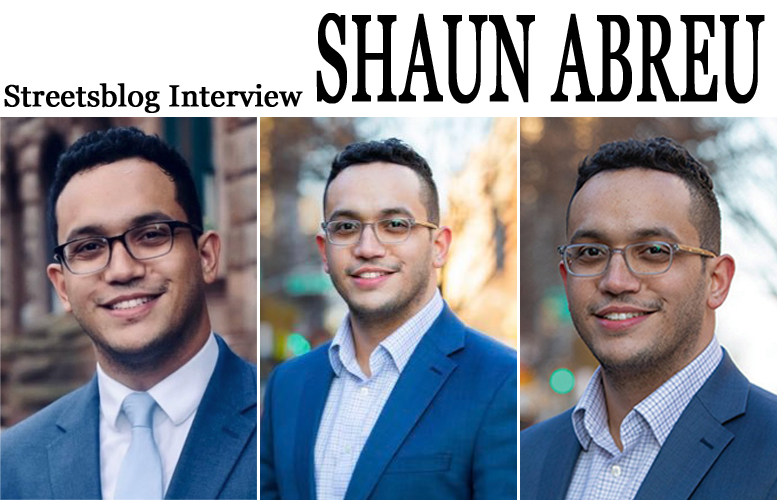
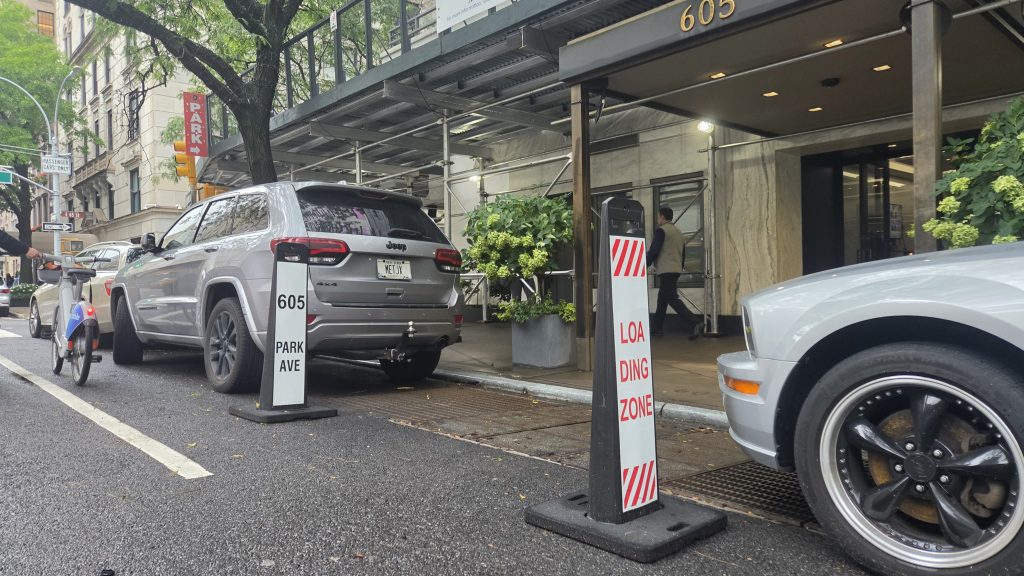
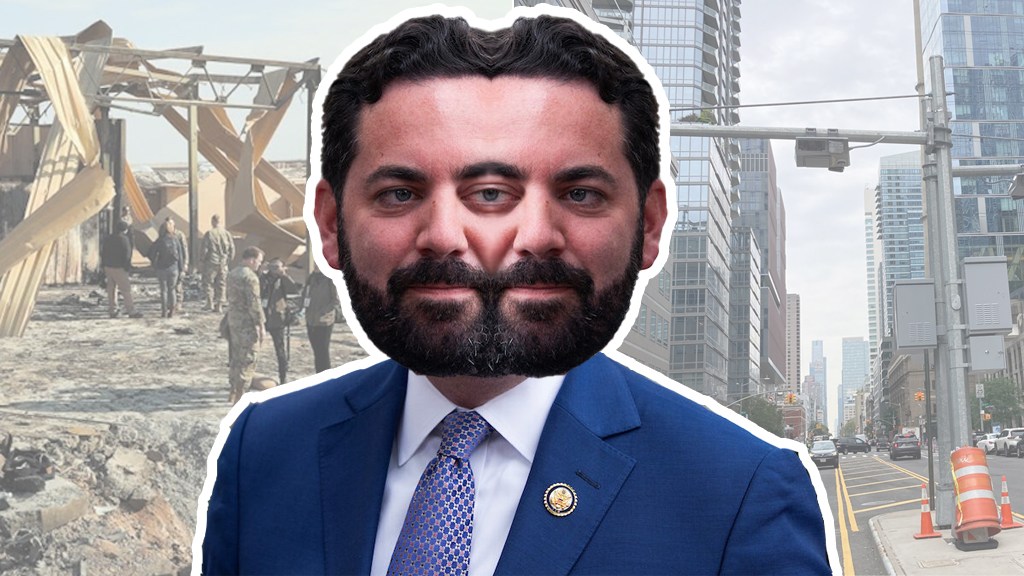
Shaun Abreu, the new chairman of the City Council’s Committee on Transportation and Infrastructure, is best known to Streetsblog readers as the West Harlem Council member who championed the implementation of then-Mayor Adams’s signature achievement: getting trash off the sidewalk and into sealed bins in the so-called parking lane.
Abreu, 35, took a lot of heat for that from car owners who want to keep storing their private property in the public right of way. But he stayed committed to the idea that pedestrians shouldn’t have to step over garbage and rats when there’s perfectly good space in the street for containers.
Now as head of the committee, Abreu has broad oversight of the public realm, which is Streetsblog territory. Streetsblog Editor-in-Chief Gersh Kuntzman and Managing Editor David Meyer sat down (albeit on Zoom) to make sure Abreu is up to the challenge.
This interview has been edited for clarity and to make it sound like we don’t stumble over our words.
Question: The recent snow has brought up so many issues. And you’re the perfect person to address some of them because you took on the entrenched car interests when you were doing the containerized trash pilot in your district. We know there was pushback from people who owned cars and thought the Empire Bins were ugly or taking up “their” parking spaces. And just today [Feb. 4], Council Speaker Julie Menin said she supports full-year outdoor dining, so maybe you’re thinking there’s momentum for taking on drivers in other ways?
Shaun Abreu: For far too long we’ve treated our streets as places to store cars, instead of places where people live their lives, right? And as transportation chair, my guiding principle is that our public space should serve the public. I was the chair of the Sanitation Committee, and I pioneered the trash containerization program in my district that removed 500 parking spots in 40 blocks. There was loud opposition at the start, largely driven by fears about parking. But once people experience cleaner sidewalks, fewer rats and a more dignified public realm, the conversation shifts.
So yes, I want to bring that same people-first mindset to the Transportation Committee. Whether someone is walking, taking the bus, biking or driving, the goal should be streets that move people efficiently and safely and not pit people against each other. And we don’t want to just futz around the edges, right? We want to really rethink about how our street space is used citywide.
I do think we have a lot of momentum. When we think about our streetscape, we think about trash, we think about public toilets, we think about bike lanes, we think about pedestrian access, we think about street redesign.
Streetsblog: A lot of people think residential parking permits are a solution, but we’re not fans because once you sell a residential parking permit, a driver thinks, “Well, now I really do own the curbside lane,” and then it’s impossible to do a bike lane or outdoor dining or etc. We don’t know if we’ve ever really heard your position on residential parking permits.
Abreu: There are more cars than there are parking spots. And as we expand trash containers, there are going to be even fewer spots for vehicles. So that’s why I don’t think residential parking permits is the way to go. I just don’t think it’s practical. But look, we have to figure out a path forward. And I’ll be speaking to my colleagues about that.
Streetsblog: Over the summer you said some things about regulating existing legal electric bikes, including your support for Intro 606, which would register all electric bikes, including Citi Bikes and legal Class 1 and Class 2 e-bikes. As you know, many livable streets advocates oppose registration because it won’t improve safety — obviously cars are registered and their drivers still kill 200 people a year and injure and maim tens of thousands of people per year. So tell us what you’re thinking is on e-bike registration right now?
Abreu: First let me say I don’t support criminal summonses for people on e-bikes. We don’t treat drivers that way, so we shouldn’t treat cyclists that way. I think, ultimately, the path to safety for e-bikes is through regulating the apps and improving street redesigns.
Apps should not be encouraging dangerous travel by promising unrealistic delivery times through its algorithm or creating pay structures that prioritize speed over safety. That’s one of the reasons why I passed the bill that requires the tipping option to be at checkout rather than after the food has been delivered, because you don’t want your delivery driver to blow past red lights for a tip. If they get the tip at checkout, it can help reduce speeds.
The path is going to be through regulating the apps. I know there’s a lot of consensus among Council members and the mayor on regulating the apps.
And when you provide more infrastructure, like bike lanes, for deliveristas, there will be fewer injuries. And so that’s the best path.
Streetsblog: We just want to follow up on another thing you said about criminal summonses. Then-candidate and now mayor, Zohran Mamdani, also said he doesn’t think we should be doing the criminal summonses. Yet he has not instructed his police commissioner to stop. What do you think is going on there? Why has he not told Jessica Tisch to stop doing this summonsing — and might you, as transportation committee chair, talk to her at some point?
Abreu: I’ll make sure that my position is well known to the police commissioner and to the administration. But the NYPD is overseen by the Public Safety Committee. That being said, I’m happy to opine that criminal summonses is not the way to go, and we should be consistent in the way we treat drivers and cyclists.We want to make sure that our deliveristas can travel our city in a safe way and in a way where their rights and their liberties are protected.
Streetsblog: You’re the transportation committee chair, and, in the past, we’ve had some transportation committee chairs who have done a great job on holding city agencies accountable and we’ve had other chairs that haven’t been as broadly focused on livable streets issues. So how are you going to approach that? The committee has a lot of power and can be aggressive on street safety and livable streets, as opposed to, like, infrastructure. Frankly, you know, we’re not that interested in what happens at the airport.
Abreu: This committee is going to bring back a level of attention that’s required in the first half of the name, which is transportation. Our first hearing [later this month] is actually going to be on the lackluster work done by the previous administration on the Streets Master Plan. My focus is making sure it is actually implemented the way it was intended. We know that the previous administration did a decent job on access, pedestrian signals, transit signal priority, and also with public plazas. But with bus lanes and bike lanes, we know they have fallen short. So yes, I’m going to be very aggressive in making sure that the administration meets their targets for the next five years. The Streets Master Plan targets are not just goals, they’re mandated requirements. And this committee will treat them as mandated requirement.
Streetsblog: Yeah, we once asked then-Speaker Adrianne Adams if — [interrupted]
Abreu: She just get chosen for Hochul’s lieutenant governor.
Streetsblog: Adrianne Adams did? When?
Abreu: Literally just now as we were talking.
Streetsblog: I didn’t know, but now we know why there was so much noise coming from our newsroom a minute ago!
In any event, we had asked her whether the Council would sue the Adams administration because they missed the Streets Master Plan benchmarks, but she didn’t want to go that route. Is that something that you’d consider if Mayor Mamdani isn’t carrying out the plan?
Abreu: As a council, we should always be willing to do whatever it takes to enforce the laws that we pass. If we do not enforce the laws that we pass, then we’re passing laws with no teeth, and that’s not what we signed up for.
Streetsblog: There was a rally today about an expansion of Fair Fares. Should the city expand Fair Fares program and, along the same lines, should the city fund free buses?
Abreu: Look, on fares, affordability is a major priority. Fair Fares is within the city’s control, and I absolutely plan to expand access not only to our buses, but also our subway system. And if the mayor can secure additional support from Albany to go further, especially on the free aspect of it, I’d be thrilled.
But at the City Council right, we’re focusing on Fair Fares, which funded at around $150 million. As the chair of this committee, I’m going to push for more resources to make sure that folks who need access the most have affordable access, not only to our busses, but also to our subway system as well.
Streetsblog: Gersh, you want to ask about Sammy’s Law speed limits?
Streetsblog: Yes, I do. Thank you, David. Council member, last year, then-Mayor Adams used Sammy’s Law to reduce the bike speed limit before he even took advantage of Sammy’s Law, which was passed for the purpose of reducing the car speed limit. Then-Speaker Adrianne Adams said at the time that she thought it was up to the mayor. The mayor thought it was up to the Council to pass a law lowering the speed limit. Where are you on this?
Abreu: DOT now has the authority to act, and I want to see them use that power. I would love to see Sammy’s Law be applied to streets within at least one-quarter mile of schools and parks, places where kids and families spend most of their time. I believe this is one of the most clear, simple ways the city can prevent crashes before they happen, and there’s no reason to stop short. But I like to make very, very clear that the mayor and the DOT commissioner have the authority to enact it as of right now. They’re not applying the fullest extent of that application.

Read More:
Streetsblog has migrated to a new comment system. New commenters can register directly in the comments section of any article. Returning commenters: your previous comments and display name have been preserved, but you'll need to reclaim your account by clicking "Forgot your password?" on the sign-in form, entering your email, and following the verification link to set a new password — this is required because passwords could not be carried over during the migration. For questions, contact tips@streetsblog.org.