Opinion: Transit Watchword Should Be Synergy, Not Scarcity
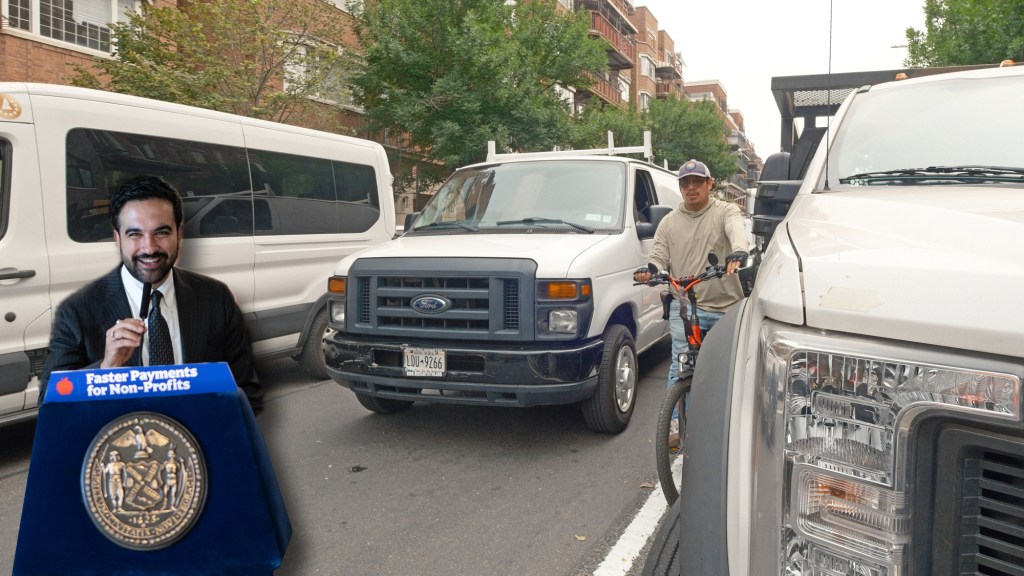
Who needs this clash?
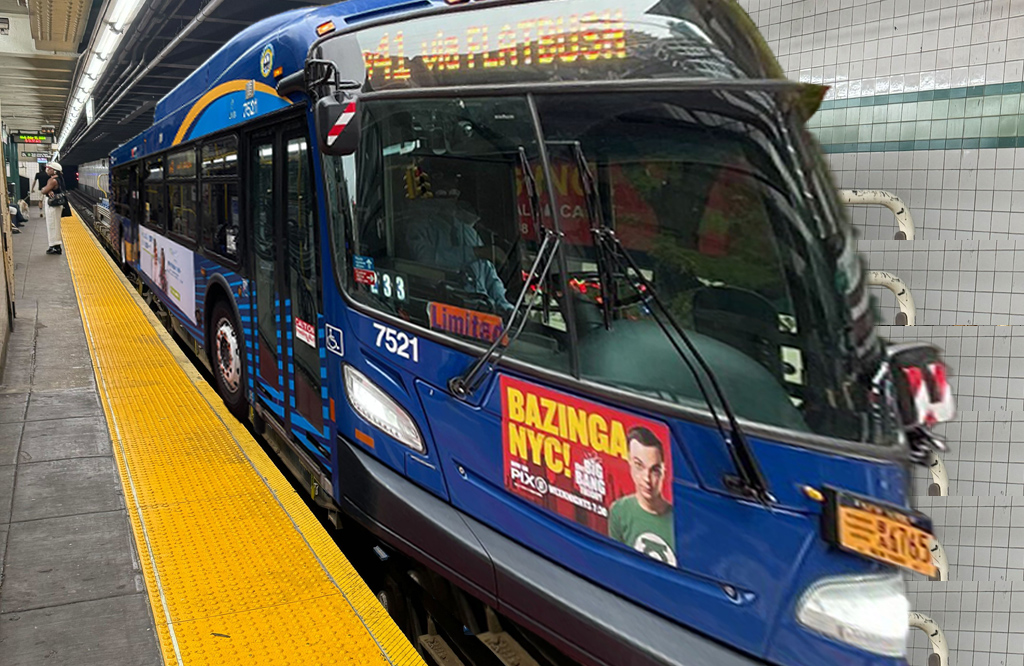
Two fantastic transit ideas — fast and free buses, and a 17-percent expansion of subway mileage — are being set up as adversaries instead of the complements they are.
The free buses idea is candidate, now mayor, Zohran Mamdani’s. The 41 miles of new tracks and 64 new stations form a new proposal from NYU’s Marron Institute, which specializes in New York City and regional transit, as Streetsblog reported on Monday.
The Marron proposal takes one’s breath away. It sketches an even dozen subway extensions or new lines in Brooklyn, Queens, Manhattan and the Bronx. From a glance, the surrounding neighborhoods are almost certainly much poorer than those around existing subways (per Urban Economics 101). Incentivized by efficient rapid transit, those areas will, over a 40-year span, host a quarter of a million new homes without needing a single rezoning, according to the Marron team.
The Marron report has a bit of a black hole: how $1 billion a year that doesn’t now exist (beyond the idea that it’s NYC Transit’s presumed savings from not having to make up for free buses) somehow materializes into $48 billion in capital to pay for three-dozen-plus miles of new subways. The report, vivid in transit maps and timelines, is murky on capital financing. But what’s more off-key in the otherwise splendid A Better Billion report is its framing: the subway plan is either-or with Fast and Free Buses.
Rather, except for the money (a major caveat, to be sure), the two plans fit like hand and glove:
- One is buses; one is subways.
- One could start in months; the other will take years to study, plan and launch and will be lucky to achieve an average start of service in the late forties (as in 2040s).
- One is largely the city’s purview; the other also depends on the governor and the MTA.
- One is single-purpose; the other could trigger a double-digit expansion (or close to it) in the city’s supply of homes.
Through any lens, the two programs aren’t competitors. As urbanist and 2026 Assembly candidate Ryder Kessler exhorted on social media over the weekend, “Let’s stop assuming scarcity and start creating more than enough of everything New Yorkers need to thrive. We should do both.”
It’s a head-scratcher, then, that the people at NYU/Marron would uncork so brilliant a plan, and so powerfully articulate its virtues — their finding that New York sustains more jobs than the Dallas/Fort Worth metroplex on one-30th as much land will knock your socks off — yet lash themselves to this “either/or” framing.
Lash they did, even titling the report A Better Billion (emphasis mine) to suggest that a subway expansion is better than free buses. The Times took the bait and titled its story, Free Buses? How About Expanding the Subway by 41 Miles Instead? Then Streetsblog, never known for subtlety, dialed it up to 11: Forget Free Buses: Mayor Mamdani Should Instead Seek ‘Audacious’ Subway Expansion, the outlet hailed.
Speaking of “instead,” can we trade zero-sum for, um, abundance? Yes, the two ideas sometimes seem to be competing for the same dollars, and, to an extent, they are. But with that caveat, making buses free (hence faster) need not detract from longer ambition to make our transit deserts bloom.
I confess that I, too, used to be either/or, swaddling my ambition in cold, clinical trade-offs. But as I’ve gotten older, I’ve learned to see more synergies in the world. (Hat-tip: bicycling and cycle advocacy.)
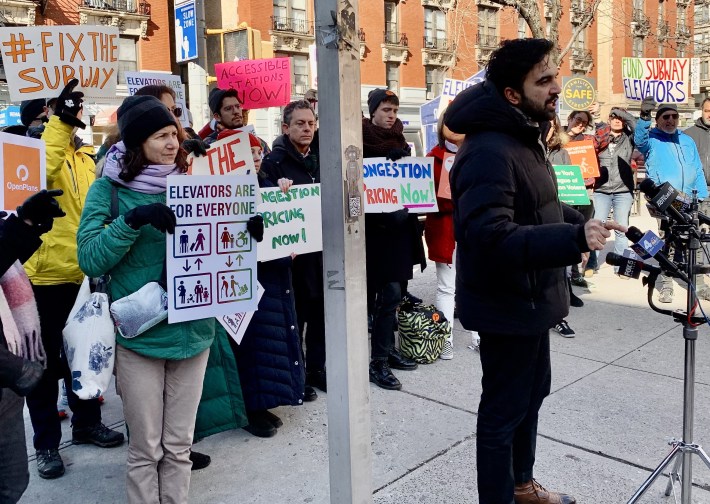
Our new mayor already arrived on that expansive shore, making no small part of the charisma and positivity that captured voters’ imaginations last year. I saw that charisma firsthand exactly three years ago, at a Riders Alliance rally in support of congestion pricing on Feb. 2, 2023.
Something clicked when I heard the Astoria Assembly member orate about the central business district toll. He was both resolute and joyous. He called congestion pricing a way in which New Yorkers could believe again in government as a vehicle for the common good. Congestion pricing, like politics itself, was a means as well as an end.
Now Mamdani is mayor. Transit advocates should be expanding possibilities, not pitting them against each other.
We did congestion pricing. We’re taking big swings at housing. We chose a socialist and authentic populist for mayor. My fellow Trans Alt O.G. Jon Orcutt reminded the Times that the Marron report shouldn’t get in the way of Mamdani’s free bus promise.
“You’ve got to give him a shot at this,” he said.

Read More:
Streetsblog has migrated to a new comment system. New commenters can register directly in the comments section of any article. Returning commenters: your previous comments and display name have been preserved, but you'll need to reclaim your account by clicking "Forgot your password?" on the sign-in form, entering your email, and following the verification link to set a new password — this is required because passwords could not be carried over during the migration. For questions, contact tips@streetsblog.org.