Frank Arroyo, Lower East Side Bike Shop Legend, Has Died
There are bike shop owners and there are saints among men. Frank was both.
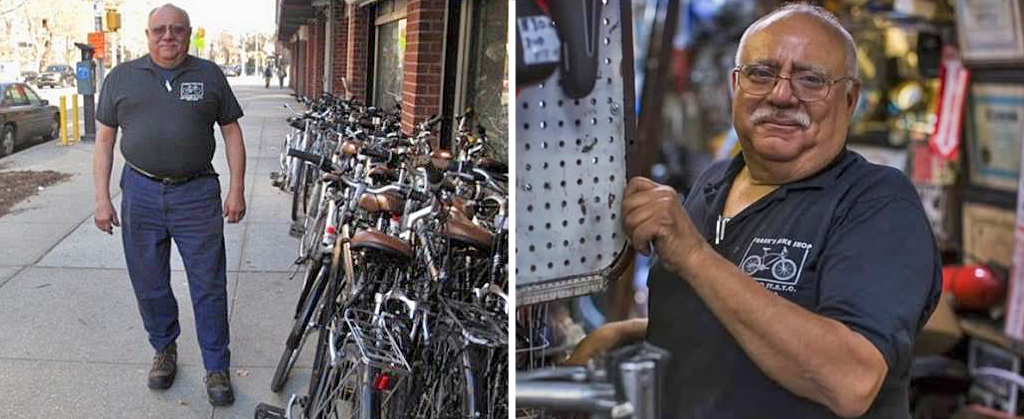
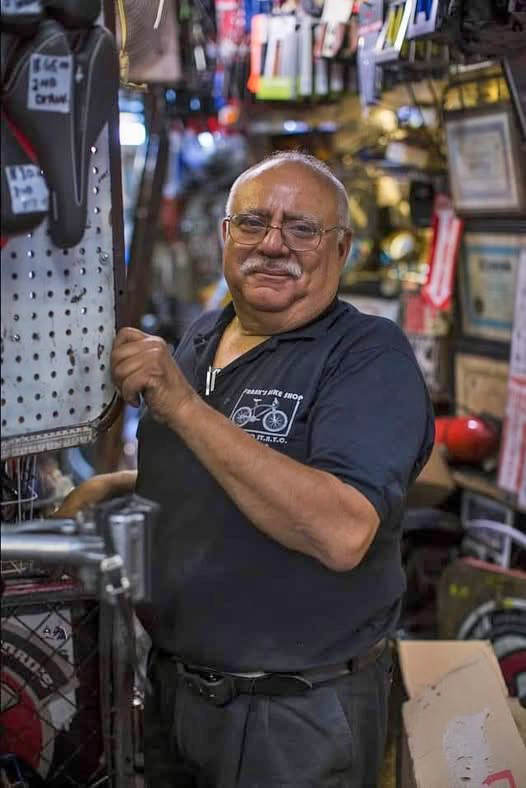
Frank Arroyo, of Frank’s Bike Shop, died in mid-December at 81, after a nearly 50-year run on the Lower East Side.
The death of a beloved small business owner is always cause for mourning in the neighborhood. But Frank, who opened his shop on the far eastern end of Grand Street in 1976, evokes more than mere grief.
His death and the potential closing of the shop is an irrevocable loss. It is one thing to recall how Frank and his mechanics would fix a flat for peanuts — in Manhattan! — but the shop was a place where bikers who could fix their own flats would come up with other repair jobs just so they could hang out with Frank and his crew.
Put it another way: You know how some people delight in how they score seats at Rao’s? Well, some of us fought to sit at one of the two or three seats in front of Frank’s Bike Shop so we could watch the Lower East Side parade by with him.
Frank’s was not just a bike shop, but as much a Nuyorican cultural institution as Miguel Algarin’s Nuyorican Poet’s Café on the other side of Delancey.
The Lo-Down broke the news of Frank’s death, and told how one of his favorite memories was seeing kids peering through his shop window after he had set up his annual Christmas display.
One of Frank’s earliest commercial accounts was with the bike manufacturer Schwinn, so it was natural that his shop became one of the home bases of the city’s flourishing Puerto Rican Schwinn Club, which comprises bike enthusiasts who trick out their rides with pennants, sound systems and Puerto Rican flags and ride slowly around the neighborhood and nearby East River Park.
Frank also had a sideline in supplying vintage bikes for film and commercial shoots, which might have been the part of the business that subsidized the inexpensive prices he charged.
Frank once told me he grew up in Upper Manhattan, but moved to the Lower East Side when he was 11. It wasn’t easy; he told me he had to navigate competing gangs. In the early 1970s, he hoped to become a firefighter (the 1975 “Ford to City: Drop Dead” financial crisis put the kibosh on that).
He went from one noble profession to another, opening his self-named bike shop the next year. There was some overlap; he managed to imbue running a bike shop with a quieter version of the heroism that might otherwise have seen him pulling people out of burning buildings.
I discovered the shop in 1991, shortly after I moved to the city. But he had many more loyal, more longstanding customers, many of whom are posting all over social media about how much they miss him.
“When I first moved to the neighborhood, I brought my bike in for repairs,” one mourner posted on Instagram. “A few months later, I asked my boyfriend to bring it in for me to get something fixed, and Frank said to him, ‘That’s not your bike. Whose bike is that?’ And made him prove he knew me and hadn’t stolen my bike. I felt so cared for!”
Another neighborhood resident, Bill Stokes, said he bought his daughter her first bike at Frank’s and that when she outgrew it, Frank offered him a trade-in credit for her next bike saying that he would give away the “starter” bike to some kid in the neighborhood. Multiply that by X number of kids over all those decades and you begin to get a sense of what he accomplished.
One person posted on Facebook that he would never forget how as a child of 6 or 7, Frank showed him how to inflate his tires, and this mentorship continued for years.
I used to tell Frank that when he closed the shop either voluntarily or if he got forced out by rent increases that that would be the last straw for me staying in town. But it doesn’t matter whether my next bike shop is in Tuscany or Schenectady or if the owner is a Mother Theresa: It won’t match what Frank accomplished.
I’m grateful to have been one of his customers. And I’ll never forget the values he embodied — not the least of which was to respect everyone who crossed his path, whether neighbor, customer, citizen or immigrant.
We need more Franks.
Read More:
Streetsblog has migrated to a new comment system. New commenters can register directly in the comments section of any article. Returning commenters: your previous comments and display name have been preserved, but you'll need to reclaim your account by clicking "Forgot your password?" on the sign-in form, entering your email, and following the verification link to set a new password — this is required because passwords could not be carried over during the migration. For questions, contact tips@streetsblog.org.