Letter to Mamdani From Maryland: Free Buses Are Working Great
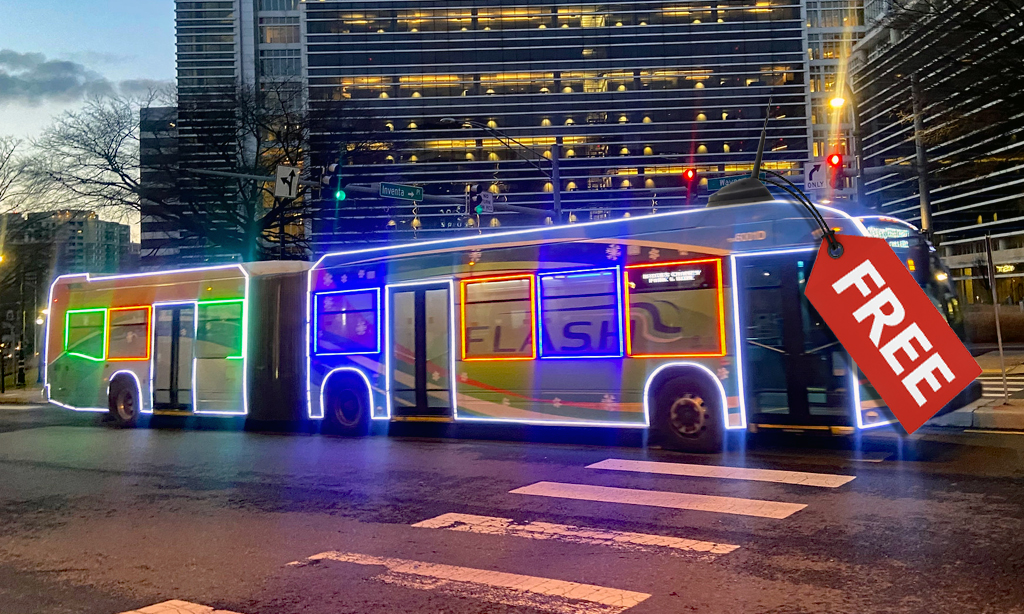

BETHESDA, Md. — A Maryland County’s decision to make its buses free is already showing positive results with little of the downsides that critics cite as Mayor Mamdani seeks a similar plan for New York.
Montgomery County — a suburb of Washington, D.C. with more than one million residents — has had fare-free public buses since the end of June 2025, though the change was not purely a function of politics, but practicality. The county’s 385 RideOn buses — which carry 18 million trips per year — were slated for a $19-million farebox modernization. But post-pandemic fare collection is so sparse that it would take almost 12 years to pay back.
But whatever the motivation, the elimination of fares is working: There has been a slight increase in ridership, no increase in undomiciled people using the buses for shelter, and a minimal effect on the county budget.
“Free buses are popular and working here in Montgomery County,” said At-Large Council Member Evan Glass.
Advocates in the county government had been pushing for free buses since at least 2018, when Glass called it an issue of basic fairness. Young constituents, for instance, would tell Glass that “their parents worked multiple jobs, they didn’t have a car, and they relied on our bus system, which was cost-prohibitive.”
First, Glass got Montgomery County to launch the Kids Ride Free program in 2019, providing free buses for riders under 18. The program was a major success, with student ridership increasing by 57 percent in less than a year.
During the COVID-19 pandemic, Montgomery County, like many municipalities, temporarily eliminated fares altogether. When the fares returned, Glass and other lawmakers persuaded County Executive Marc Elrich to reduce them from $2 to $1.
But the county, again, like other transit operators, quickly found difficulty restoring fares, even at a discounted price, after two and a half years of fare-free buses.
“A lot of people, that first year, weren’t accustomed to putting money in the fare box or tapping their card,” said Phil McLaughlin, Montgomery County Department of Transportation’s General Manager for the Division of Transit Services. Despite increased ridership, fare evasion caused revenue from fares to plummet from pre-pandemic levels. In fiscal year 2019, the county made more than $20 million in revenue from RideOn fare collection, but the first year after the reinstatement of fares, revenue was just $4 million.
By fiscal year 2025, it had declined to $1.6 million.
So when the Washington Metropolitan Area Transit Authority announced the need for the farebox upgrade to allow debit or credit card fare collection, the Montgomery County DOT, with the help of the Council and County Executive Marc Elrich, made RideOn fare-free rather than upgrade its collection system.
Not all county officials were initially enthusiastic about zero-fare buses.
“When something is deemed to be free, it’s perceived to have no value or lower value, and people treat it accordingly,” said McLaughlin, a staunch opponent of free buses. But the looming farebox modernization eventually motivated him to get on board.
Six months into the program, ridership has increased about 5.5 percent (though McLaughlin attributes only a 1- to 2-percent ridership rise to the free fare).
Ridership gains so far aren’t massive, but advocates see the program as a success because it has made buses more accessible for low-income people, who are the most frequent bus riders.
“The average household income in Montgomery County is about $115,000, but the average household income for a bus rider is $35,000,” Glass said. “We [as a society] help people with health insurance and with food assistance and rental assistance, but sometimes we need to meet people where they are at, which, quite literally, is at the bus stop.”
Anita, who rides RideOn buses almost every day, said the elimination of fares has made it “easier to ride [the buses].” When asked if she had noticed more riders, she added, “Yeah. Well on these RideOn buses it’s not too crowded, but a lot of people do ride them.” (She declined to provide a last name.)
Another rider, who gave the name Tiffany, said that free fares did not affect her daily commute “because it’s my main form of transportation,” but added that she uses the bus a lot more on weekends.
“If I’m considering going downtown, knowing that the bus is free is one less thing I have to worry about,” she said.
Critics of fare elimination had worried that unhoused people might occupy buses and refuse to leave, but this hasn’t been an issue. Even the opponent McLaughlin said the county has experienced very few vagrancy incidents since fares were eliminated.
“One thing that has worked well on our system … is that we ask our customers to get off the bus at the end of the line for every single trip,” McLaughlin explained.
People also often worry that eliminating fares will force a municipality to cut services, but both McLaughlin and Glass said that other services have been untouched. The county’s budget is $7.6 billion, so the $1.6 million in lost fares comprise just 0.02 percent of the county budget.
Unlike in New York City, increasing the speed of buses wasn’t a major motivation for eliminating fares. So far, there’s no evidence that the zero fare policy has sped up (or slowed down) RideOn buses. Riders can now enter from the front or the back door, but there hasn’t been a major effect on efficiency due to the high rate of fare evasion before the change.
Going forward, the county expects to continue the program all while continuing to provide high-quality service.
“People ride public transportation when it is safe and efficient, and we need to maintain those high standards as we maintain this policy of fare-free buses,” Glass said.

Read More:
Streetsblog has migrated to a new comment system. New commenters can register directly in the comments section of any article. Returning commenters: your previous comments and display name have been preserved, but you'll need to reclaim your account by clicking "Forgot your password?" on the sign-in form, entering your email, and following the verification link to set a new password — this is required because passwords could not be carried over during the migration. For questions, contact tips@streetsblog.org.