OPINION: To Move Past the ‘Agony and Terror’ of the Adams Years, DOT Must Lean Into Research

Former Mayor Eric Adams spent four long years mismanaging, sabotaging, and understaffing the Department of Transportation. Miraculously, DOT staffers still delivered a slate of transformative projects, including 31st Avenue in Astoria, Court Street in Cobble Hill, Berry Street in Williamsburg and Third Avenue on Manhattan’s East Side.
During his reign of agony and terror, Adams sandbagged one of DOT’s most important capacities: the enthusiasm to explain why it pursued those projects in the first place, and the ability to inform New Yorkers, in clear and honest terms, about what exactly happens on the city’s streets. DOT lost its own voice.
When I served as DOT’s policy director, under former Mayor Michael Bloomberg, the department published a number of reports that tried to explain what DOT did and why. These include World Class Streets, about the city’s underdeveloped public realm; the Pedestrian Safety Study & Action Plan, a detailed examination of crash reports; the annual Sustainable Streets Index, which reported travel mode trends; the self-explanatory Economic Benefits of Sustainable Streets; and quite a few more studies and reports.
These efforts went AWOL under Adams. His DOT mostly refrained from analyzing problems that affect New Yorkers or offering new information about the department’s successes. Instead, Adams-era reports focused on sober summaries of department activity. The one exception, The Economic Benefits of Open Streets, covered a program the City Council imposed on de Blasio’s DOT that wilted under Adams. The main contribution from former DOT commissioner Ydanis Rodríguez, Equity and Street Safety, parsed existing data but omitted any discussion of enduring problems or what methods might address them.
To be fair: De Blasio’s DOT wasn’t much better. Despite his embrace of Vision Zero — which should have inspired a tectonic shift in shaping the public realm — de Blasio’s DOT produced sparse analyses of street safety problems. Annual Vision Zero reports merely listed DOT activities without any analysis of how to take safety even further. The city discontinued the Sustainable Street Index the same year de Blasio took office, in 2014. A few years later, the former mayor even terminated DOT’s practice of tracking and publishing volumes of bridge traffic — an important proxy for measuring traffic and congestion in the city.
But all of that is bad and old news. The good news is that the new DOT Commissioner, Michael Flynn, contributed to most of the aforementioned reports. He is personally familiar with the value and purpose of a public agency’s intellectual contributions to the larger world, and the story it tells about itself to the city it serves.
What kind of work would I like to see from Mamdani’s DOT? I have some ideas:
A thorough account of congestion pricing from the city’s point of view.
It’s great to see data on tolled traffic from the MTA. But DOT should also produce a detailed report that looks at how congestion pricing has affected each crossing — including outbound traffic — and whether different parts of the congestion relief zone experienced more pronounced changes. Those results could point to new possibilities, such as a second bike lane on the Brooklyn Bridge or a greenway on Park Avenue. A detailed safety analysis is warranted, too.
A substantial report on the Citi Bike situation.
Neither DOT nor Lyft is forthcoming about granular Citi Bike data, such as who uses it and where. Celebratory press releases about ridership records won’t tell you that rides-per-bike peaked in the late 2010s and declined 25 percent since. People with access to the relevant data have told me that ridership remains heavily clustered in Manhattan. Clear information about who is riding where, and how often, would help the city overcome barriers to higher ridership, inform future expansion plans, and assist policymakers in containing costs to riders.
This is important for two reasons: Citi Bike’s skyrocketing prices pose direct challenge to Mayor Mamdani’s affordability agenda, and Citi Bike’s contract expires in 2029. The latter gives the public and DOT an opportunity to consider what is working well, and what could be much better, within the western world’s premiere bike-share system.
Real talk about street safety.
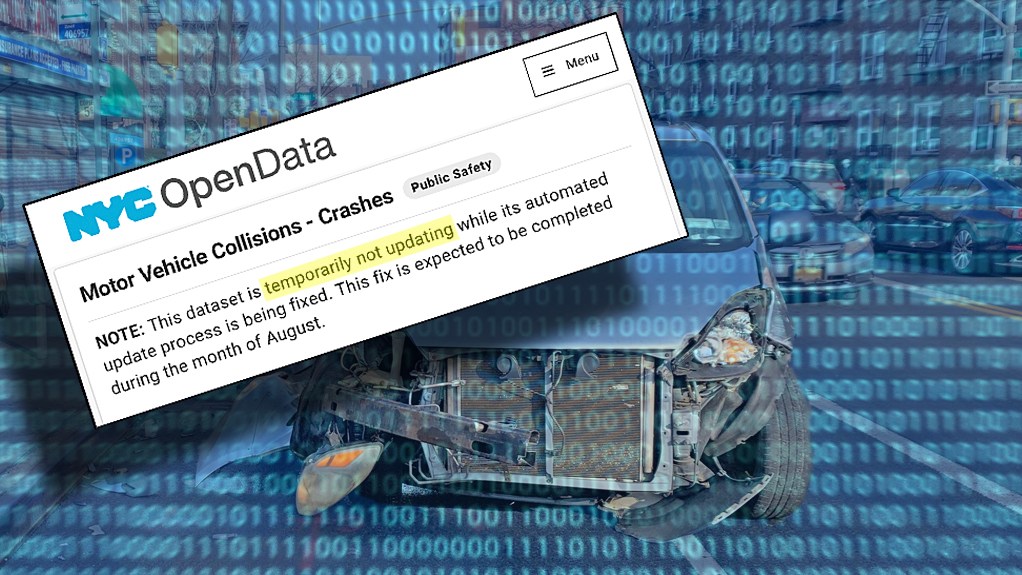
Under Adams, DOT developed an unfortunate but common tendency to insist that Vision Zero is successful when announcing good news while blaming national trends when admitting bad news. For example: traffic fatalities were way down last year, but the combined number of fatalities and severe injuries dropped by only a few percentage points. Was the drop in deaths a random outlier, or is something else going on? DOT should revisit its 2010 analysis of crash reports, devise a system to regularly update it and link street projects to injury and fatality patterns. It should take a hard look at much safer peer cities like Paris and London, too.
Clear information and strong analyses of the city’s transportation trends are win-win propositions. If Mamdani succeeds in making New York’s streets safer, he must celebrate that victory and double down even further. If death and injury, pollution, slow buses, traffic growth and other problems abide, it’s cause to work even harder for safe and sustainable streets. That requires a DOT willing and brave enough to ask big questions — including when things don’t go as planned — and act on the answers.

Read More:
Streetsblog has migrated to a new comment system. New commenters can register directly in the comments section of any article. Returning commenters: your previous comments and display name have been preserved, but you'll need to reclaim your account by clicking "Forgot your password?" on the sign-in form, entering your email, and following the verification link to set a new password — this is required because passwords could not be carried over during the migration. For questions, contact tips@streetsblog.org.