Grab a Shovel: Mayor Mamdani Begins Fix of Williamsburg Bridge Shitshow
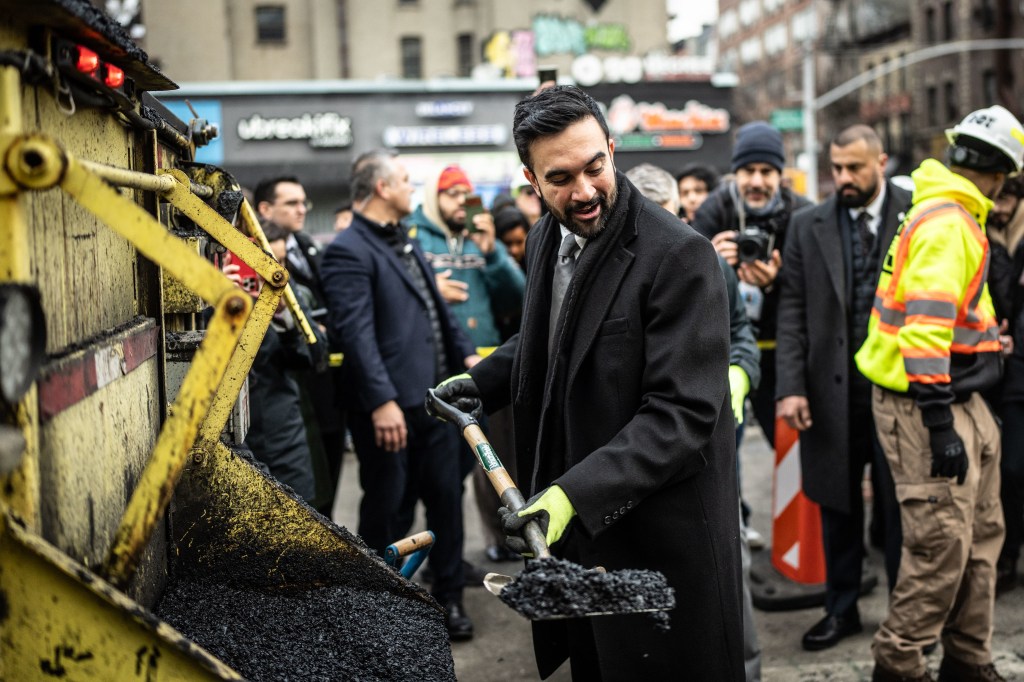
He talks the talk, but he also shovels the blacktop.

Mayor Mamdani donned a pair of work gloves and joined a Department of Transportation crew to level the Williamsburg Bridge “bump,” the notorious narrow, but steep ramp at the Manhattan end of the city’s most-popular bridge bike path, the first step in a $70-million full redesign of the dangerous area that will begin this fall — prioritizing a project that seemed forever unchecked on his predecessor’s to-do list.
Mamdani told reporters that, as mayor, he will make big changes to city infrastructure, but also isn’t hesitant to make small, quick fixes that immediately improve life for cyclists — reminding reporters that he’s one of them.
“I’ve experienced this myself,” he said of the dropoff, which he called “a veritable gauntlet of cycling punishment.”
He didn’t know if he’d seen Streetsblog’s seminal video from the summer about the bump, only that he has “seen many, many videos, tweets, and also heard from many New Yorkers as well. I love biking across the city and I also know that we make it more difficult than it has to be,” Mamdani said.
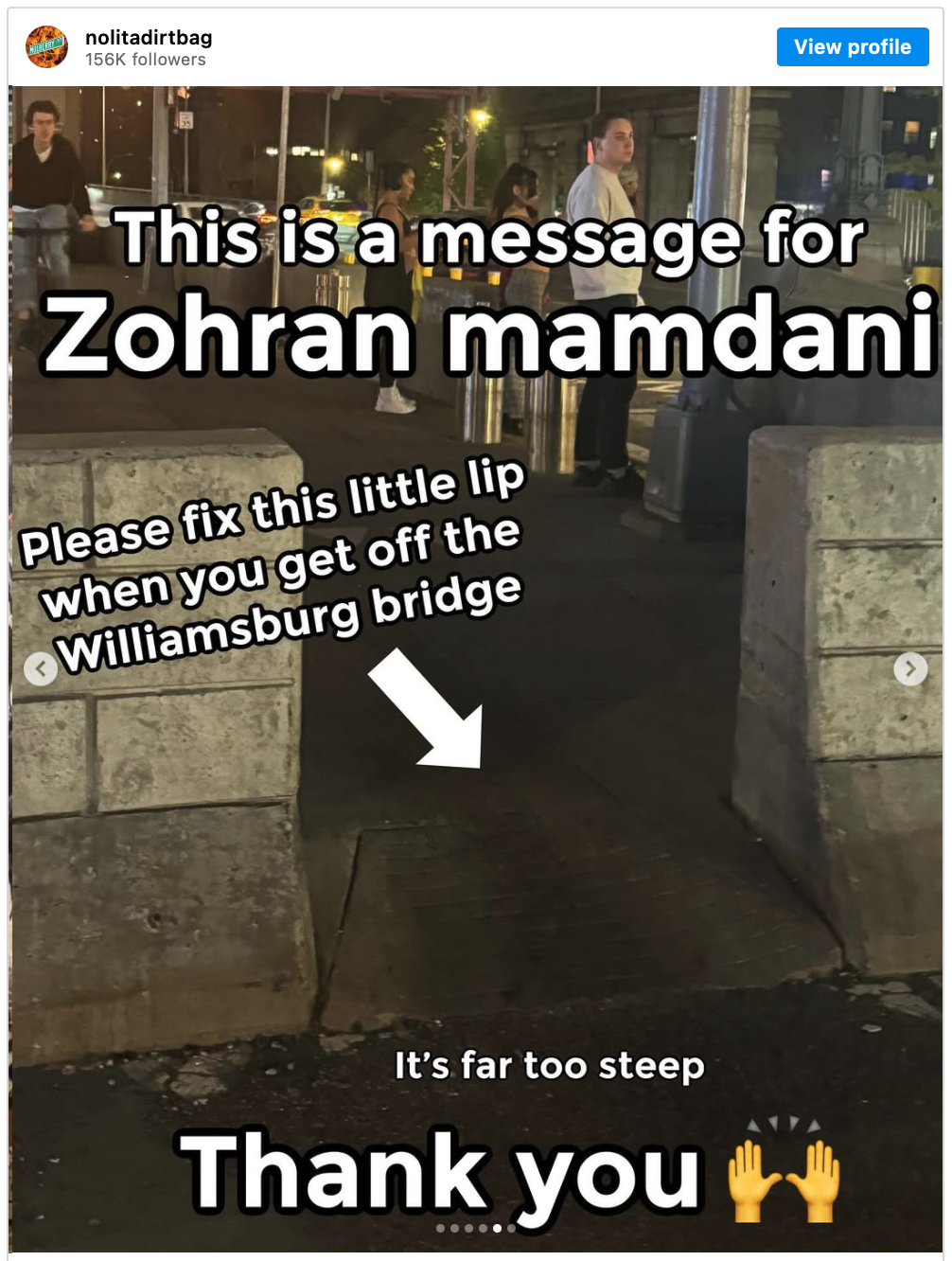
One popular meme account, nolitadirtbag, posted a direct plea to the then-candidate Mamdani, who swiftly commented, “When I’m mayor,” with a cheeky salute emoji.
And it has begun.
“This is not going to be the extent of the work that we do, but when we were having conversations about what the first few days of the administration could look like, we realized that this is something that need not wait, even for us to have the additional conversations about larger streetscape changes,” he said. “This is something we can do immediately, so that’s what we’ve done.”
The minor asphalt fix is the latest improvement made or announced by the mayor. He has already pledged to finish the McGuinness Boulevard redesign and he’s vowed to daylight intersections. But the Williamsburg ramp is a particularly powerful message, given how many cyclists are inconvenienced or injured by it.
“The on/off ramp is pretty challenging, it’s both unclear and kind of unsafe,” said Zoe Lillian, a Citi Bike rider who uses the Williamsburg Bridge daily to get between Manhattan and Brooklyn. “There’s this very sharp downhill bump, it’s dangerous in terms of the physical impact and people are going at a relatively fast speed.”
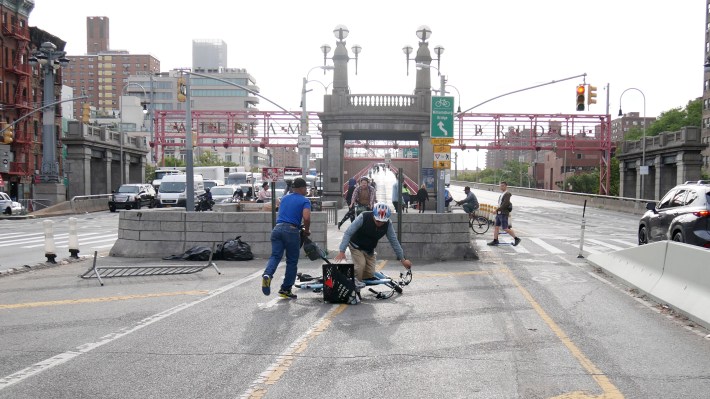
The grade of the cycling off-ramp is far from the only issue with this design. Cyclists heading to Brooklyn from the Delancey Street two-way protected bike path, are forced to stop and take a 90-degree left turn, maneuver between narrow bollards and many pedestrians, lose all momentum before being able to continue up the steep arc of the span. At the same time, other cyclists exiting the 1903 bridge are coming down the same ramp at higher speed.
“It’s not clearly marked that you have to go around so people often get on the bridge by taking that up ramp. You also have to go through a pedestrian walkway and it’s very unclear to pedestrians that they are on a cycle path,” said Lillian.
Cyclists often collide.
That’s where the $70-million project comes in. Advocates have been pushing for a redesign of this area for years, and it was first promised by the city in February 2023, when the Adams Administration announced over $18 million in federal funding through the “Safe Streets And Roads For All” program to redesign the Delancey Street median, bike lane and the bridge’s entrance and exit point.
The proposed design presented Community Board 3 in June of 2023 improves the current clusterfuck by adding another cut through the concrete barrier that surrounds the bridge entrance. It would also raise the bike lane and create a raised pedestrian path all the way down Delancey Street to the Bowery, similar to the center-running Allen Street elevated plaza.
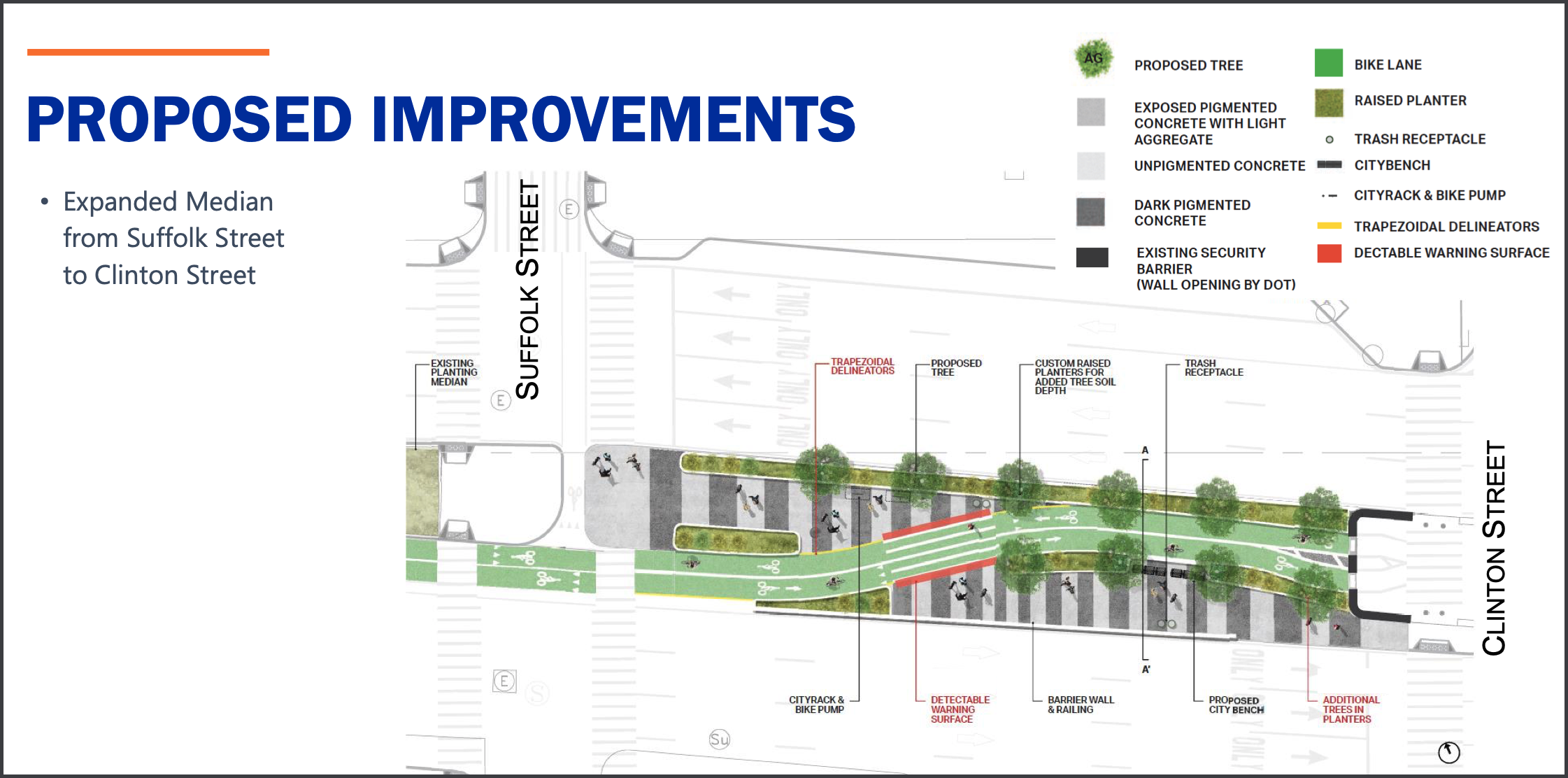
But it is unclear exactly why the city is opting to maintain the awkward concrete barrier and the narrow entrance and exit points. The DOT told Streetsblog that the decision has to do with public safety, but would not elaborate further. Some advocates aren’t buying the excuse, considering other bridges have bike lanes as wide as a car travel lane.
“It’s cool that the mayor came out and acknowledged there are issues there. But [it’s] more problematic than the little drop, and the dimensions of all of it are terrible,” said Jon Orcutt, a former DOT policy chief in the Bloomberg and de Blasio administrations, who now is the director of advocacy at Bike New York. “If you are going to set it in stone for decades, all the public asks is that you make it work.”
Mamdani told Streetsblog that looking into the width of the openings would be “part of the conversation” moving forward. Construction will begin the fall.

Read More:
Streetsblog has migrated to a new comment system. New commenters can register directly in the comments section of any article. Returning commenters: your previous comments and display name have been preserved, but you'll need to reclaim your account by clicking "Forgot your password?" on the sign-in form, entering your email, and following the verification link to set a new password — this is required because passwords could not be carried over during the migration. For questions, contact tips@streetsblog.org.