Streetsblog provides high-quality journalism and analysis for free — which is something to be celebrated in an era of paywalls. Once a year, we ask for your tax-deductible donations to support our reporters and editors as they advance the movement to end car dependency in our communities.
If you already support our work, thank you! If not, can we ask for your help?This year’s fundraiser includes a special gift for our biggest supporters. Don’t miss out.
Together, we can create a more livable, walkable, bikeable, equitable and enjoyable city for all. Happy holidays from the Streetsblog team!
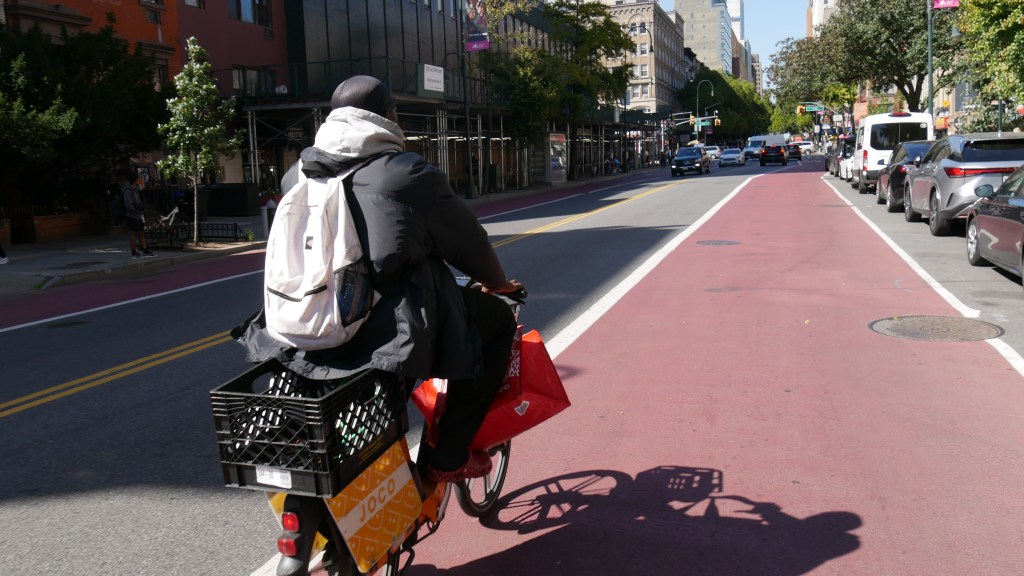
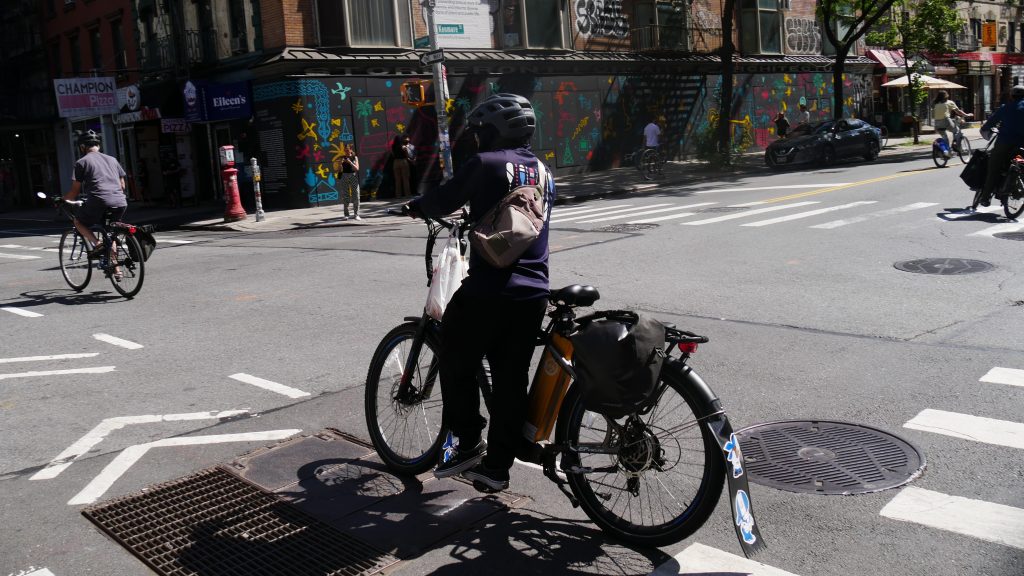
E-bikes comprise around two-thirds of vehicles in New York City’s protected bike lanes — far more than the Department of Transportation is counting, a new study found.
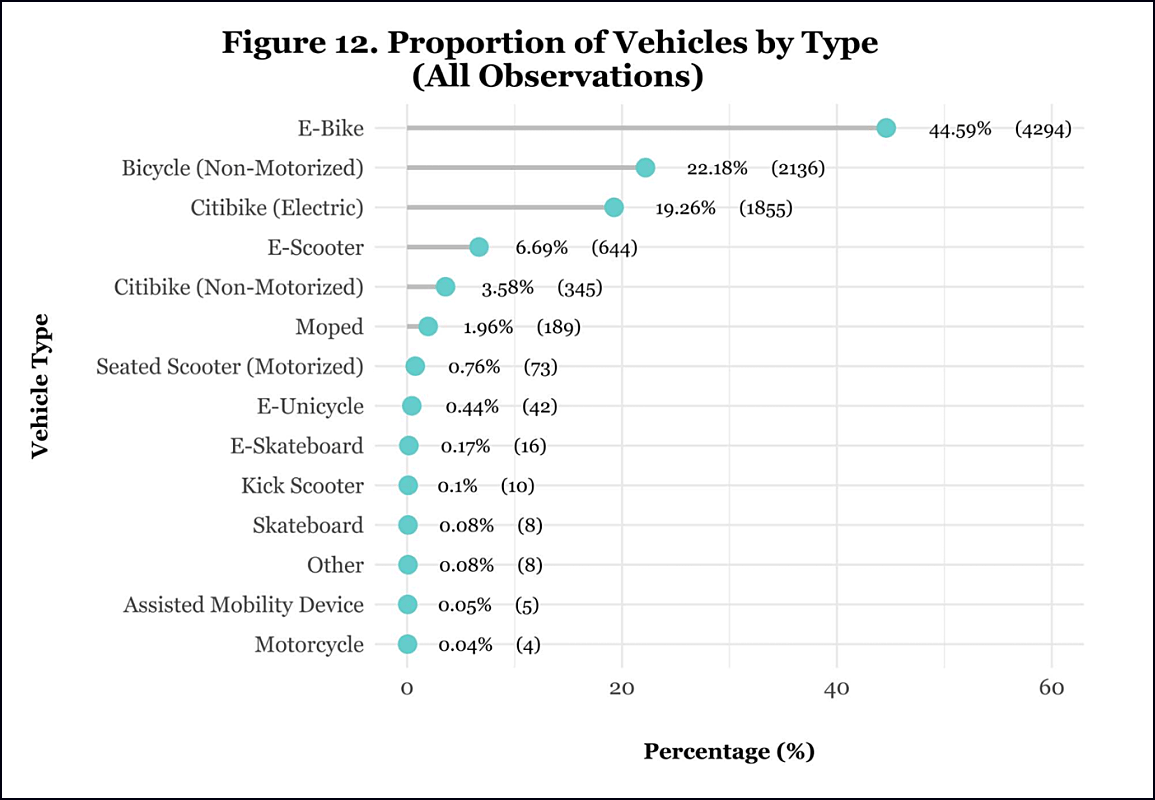
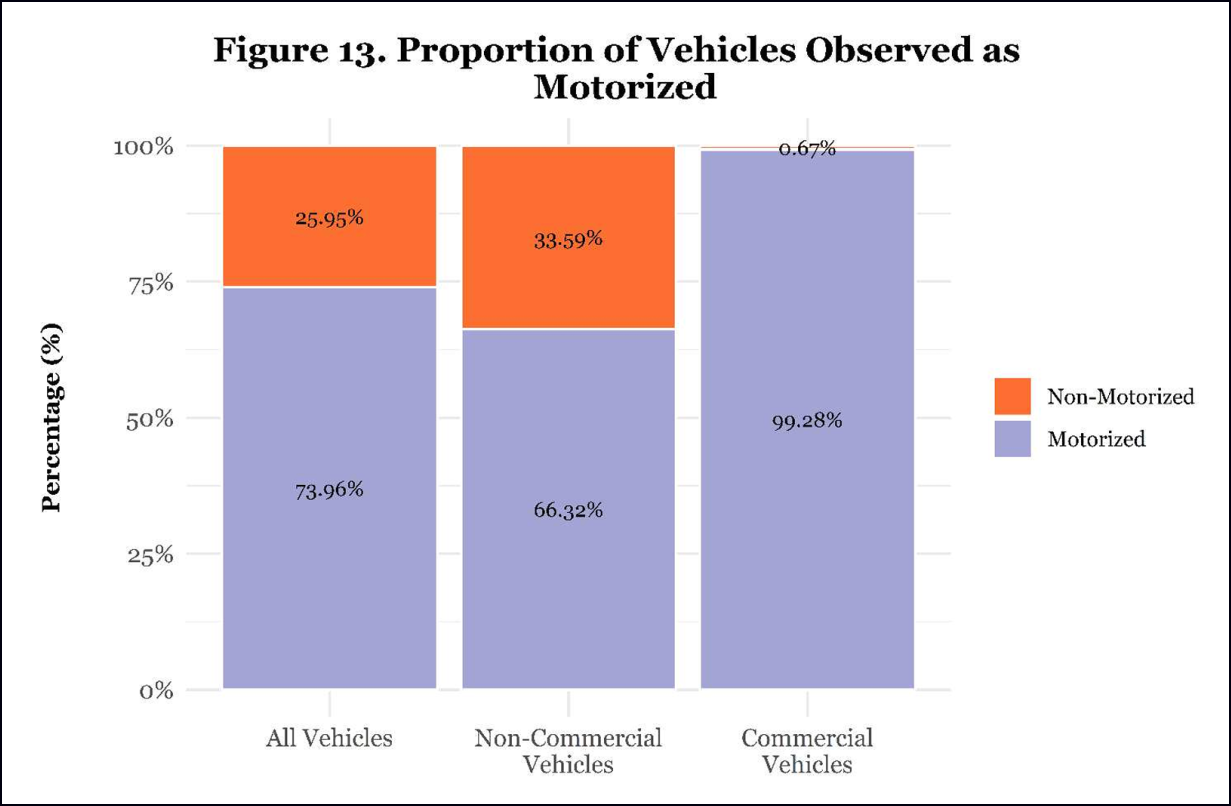
The findings of the study, Understanding Micromobility in New York City, reveal that all “motorized micromobility vehicles” — basically anything with a motor – comprise 74 percent of the vehicles observed in protected bike lanes at five sample locations. And around 64 percent of the vehicles were electric bikes — far and away the largest category of vehicles in the city’s protected lanes.
Beyond showing that e-bikes are the dominant mode in city bike lanes, the study also showed a better way to record how many and what type of cyclists are out on the streets. On average the study recorded 25 percent more vehicles — bikes, e-bikers and other motorized two-wheelers — in the bike lane than were counted by DOT in the same five locations.
Jake Boeri, the Massachusetts Institute of Technology urban planning masters graduate who authored the study, said he was motived to analyze mode share because city data does not record the types of vehicles in the bike lanes — and it is difficult to get government to act on something that isn’t being tracked.
“What gets measured, gets done, and it’s [important to be] able to advocate for increased use,” said Boeri. “But if the DOT is just systemically, undercounting the vehicle use, it really takes away from that argument for more bike lanes.”
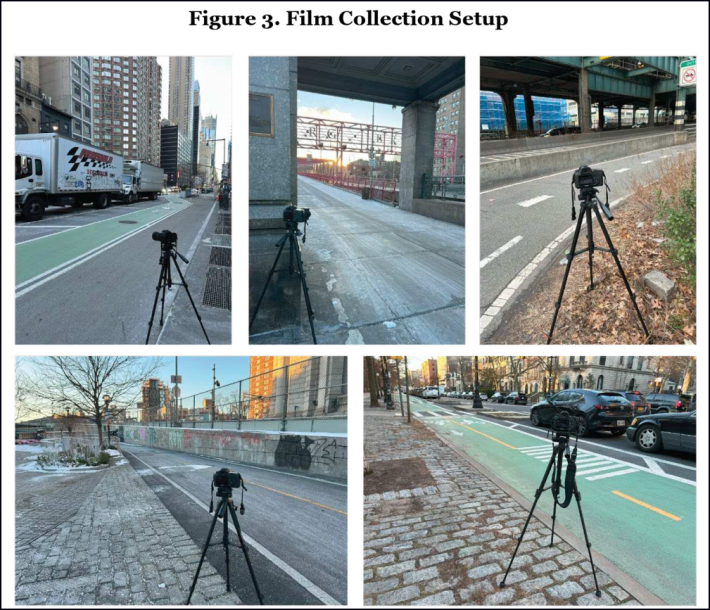
The study looked at five sites where there are already Department of Transportation bike count sensors – 50th Street and Eighth Avenue, Prospect Park West, and the Queensboro, Williamsburg and Manhattan bridges – over the course of a week during 2-3 hour spans sorted into 10-minute chunks in the morning and at mid-day.
E-bikes are the most popular vehicles in NYC bike lanes, a new MIT study finds.Graphic: Jake Boeri, MIT
In order to classify each bike, Boeri uploaded 50 hours of footage into software that is frequently used for wildlife observations to separate out the different modes roaming the bike lanes.
There’s one caveat to Boeri’s observation of high levels of e-bikes: he recorded the locations in January, when cold weather means that a higher portion of cyclists on the roads are delivery workers, who can’t just sit out the winter. The study is also limited by the five locations chosen, which are mostly bridge crossings with high elevations that encourage e-bike use.
Boeri set up cameras at five locations where DOT also collects data (clockwise from top left 50th Street at Eighth Avenue, the Williamsburg Bridge, the Queensboro Bridge, Prospect Park West and the Manhattan Bridge).Graphic: Jake Boeri, MIT
Still, the the diversity of bikes inside the bike lane ecosystem suggests that the Transportation Department is inadequately planning. To Boeri, the prolific use of e-bikes and e-scooters should inform how the city is designing the streets.
“When the bike network really started to be built out in the early 2000s, there was, and has been, a focus on a pedal bicycle. And so there is this overarching question [about the findings]: Is this idea out of date?” said Boeri. “Three-quarters of the vehicles [in the bike lane] are motorized and have different masses, different speeds, how does that influence [the city’s] decisions around, not only policy, but also the design structure that DOT is putting in?”
All about the apps
Another revelation that came out of Boeri’s work is the picture it gives of the app delivery industry’s dominance of the city’s bike infrastructure. There are an estimated 80,000 delivery workers in New York City, and commercial cycling has increased over the past five years.
Boeri’s findings show that around one-quarter of the people using the bike lanes in January are delivery workers. (He calculated this by noting other equipment that riders were using, such as delivery backpacks, insulating bags or visible branding of a delivery company.)
“Out of a total 9,629 observations, 2,234 vehicles, or 23.2 percent, were recorded as being used for commercial purposes,” the study reads.
In other words, the vast majority of cyclists, even in January, are not commercial riders.
And even when electric Citi Bikes are removed from the count, non-rented e-bikes still comprise of plurality of vehicles in the bike lanes — a suggestion that a lot of New Yorkers have purchased e-bikes and, therefore, the DOT should plan for that new cohort of road users.
The DOT told Streetsblog it would review the study. An agency spokesperson said some level of undercounting is expected due to cyclists missing the bike-count sensor.
Streetsblog has migrated to a new comment system. New commenters can register directly in the comments section of any article. Returning commenters: your previous comments and display name have been preserved, but you'll need to reclaim your account by clicking "Forgot your password?" on the sign-in form, entering your email, and following the verification link to set a new password — this is required because passwords could not be carried over during the migration. For questions, contact tips@streetsblog.org.
The city's delivery worker minimum wage law has been successful in delivering higher wages, but didn't solve poor working conditions and deactivations that keep workers unsafe and unstable, a new city report reveals.