Anatomy of a Manhunt: How NYPD Quickly Caught a Hit-and-Run Killer on the Lower East Side
Cops used laser-fast technology, old-style gumshoe detective work and a little help from the hapless suspect to make an arrest in last week's hit-and-run.
Streetsblog provides high-quality journalism and analysis for free — which is something to be celebrated in an era of paywalls. Once a year, we ask for your tax-deductible donations to support our reporters and editors as they advance the movement to end car dependency in our communities.
If you already support our work, thank you! If not, can we ask for your help?This year’s fundraiser includes a special gift for our biggest supporters. Don’t miss out.
Together, we can create a more livable, walkable, bikeable, equitable and enjoyable city for all. Happy holidays from the Streetsblog team!
Cops have collared the man they say struck and killed a pedestrian on the Lower East Side last week — and did so thanks to laser-fast technology, old-school gumshoe detective work and a little help from the hapless suspect.
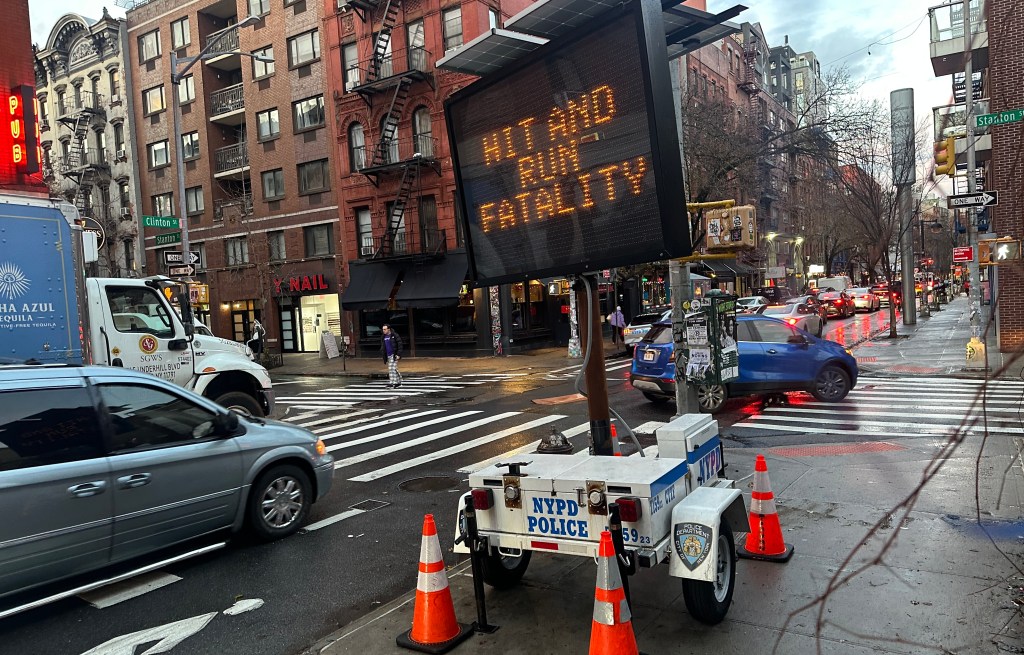
On Saturday, the NYPD arrested Julio Cachago, 54, less than two days after cops say he slammed his New Jersey-plated 2010 Ford Edge SUV into a pedestrian at the corner of Clinton and Stanton streets and kept driving while the victim exhaled for the last time.
Manhattan District Attorney Alvin Bragg charged Cachago with a top count of criminally negligent homicide — a rarity in a fatal crash — plus minor charges for leaving the scene and failing to yield. But Bragg was merely following up on the solid work by Det. Keith Solomon and Sgt. Michael Maksimchak of various NYPD highway units.
The criminal complaint against Cachago offers a rich trove of information about how Maksimchak and Solomon quickly built a case against Cachago — and how many more such cases are possible if the NYPD would expand its relatively small collision investigation squad and installed more cameras to track killer drivers.
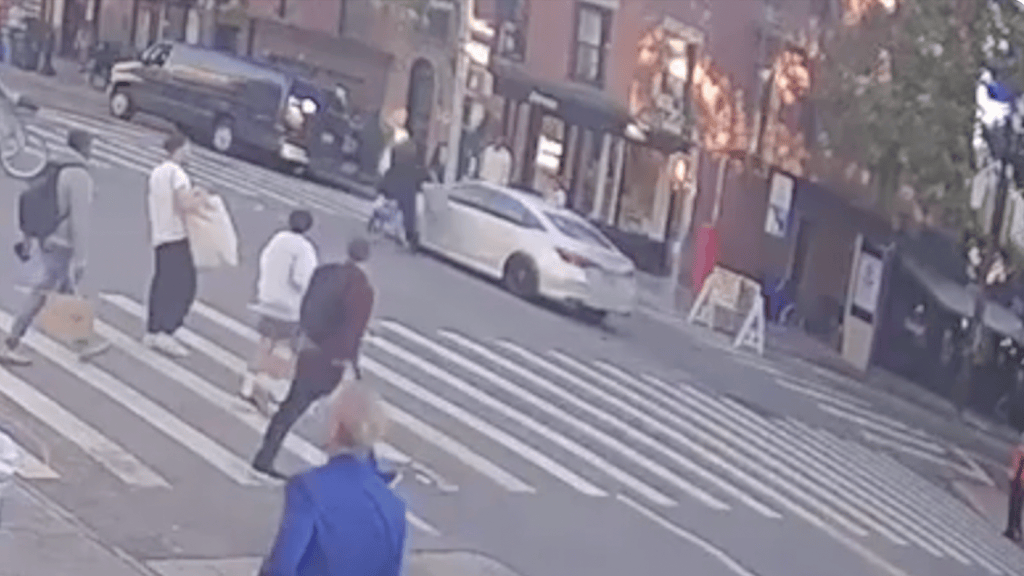
The case benefitted from several conveniently located cameras. According to the complaint, Maksimchak obtained surveillance video of the crash — likely from Donnybrook, a nearby bar, which Streetsblog confirmed had given its footage to cops. The video showed a black SUV with Jersey plates traveling northbound on Clinton Street and then turning onto Stanton Street and striking a pedestrian in the crosswalk with the walk sign. The same video showed the driver fleeing.
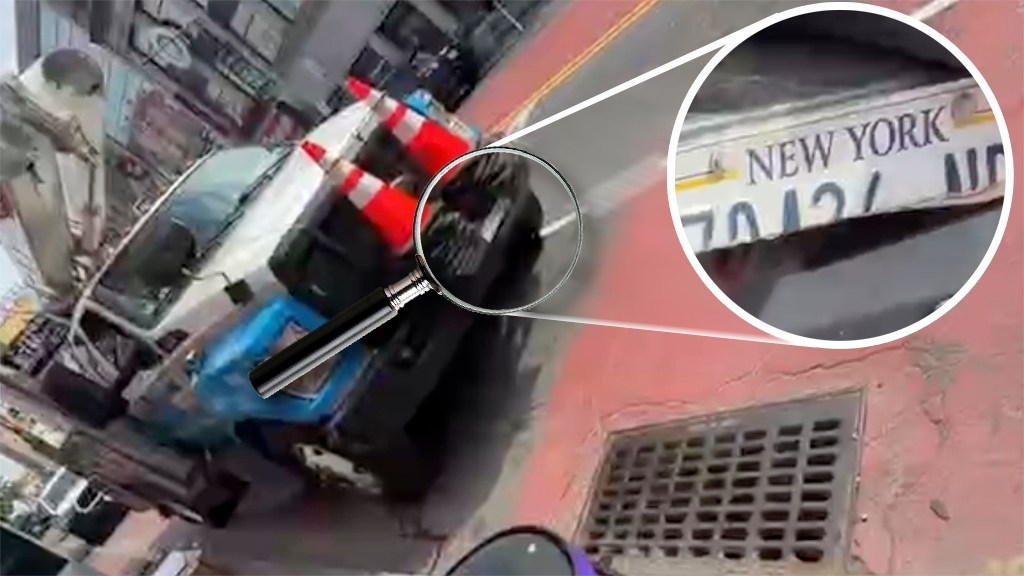
Finding a black Ford SUV, even one with a New Jersey plate, is needle-and-haystack time — except that Maksimchak had access to images from a license plate reader in the vicinity and time of the crash site. He soon spotted the same black Ford SUV crossing into Manhattan over the Williamsburg Bridge at around 6:43 p.m., about 13 minutes before the crash.
“This timing is generally consistent with a vehicle traveling to the area and location of the collision,” according to the criminal complaint.
Maksimchak tracked the same SUV on other license plate readers, including one at Trinity Place and Cedar Street that snapped a picture of the plate around 7:18 p.m., just 22 minutes after the crash. Later, Maksimchak acquired more surveillance video from that area and watched the suspect pull over to the side of the road.
“I further observed a male figure exit the vehicle and appear to inspect the front of the car, near the front right quarter panel, bumper, and undercarriage,” he wrote in the criminal complaint. Two more license plate readers captured the SUV on FDR Drive, heading north, at around 7:29 p.m., and at the Willis Avenue Bridge, entering the Bronx, at 7:46 p.m.
Maksimchak headed to the Bronx, and around 1 a.m. on Dec. 19, he spotted with his own eyes the SUV with the New Jersey plate near East 168th Street and Franklin Avenue. The cop “observed damage to the front of the vehicle, including in the same general area that the male figure was inspecting on the video surveillance from Liberty Street and Cedar Street.” He called in a tow truck, which took the vehicle to the NYPD’s Seventh Precinct stationhouse on the Lower East Side.
The story gets murky here. On Dec. 20, Cachago went to the Seventh Precinct house to retrieve his vehicle. Solomon said he spoke with Cachago, who admitted that he struck “an object” in roadway, but “believed it was trash, not a person.” (NYPD has not released the victim’s name.)
Cachago’s alibi was not enough to shield him from a charge of criminally negligent homicide, a felony that prosecutors can file when a driver causes a death because they acted in a manner that was reckless, inattentive, or careless. In addition, fleeing the scene of a crash opens a driver up to a charge of criminally negligent homicide because it shows they recklessly failed to prevent someone’s death.
According to the NYPD, only five drivers (including Cachago) have been charged with criminally negligent homicide in 2025. New York City drivers have killed more than 200 people so far this year.
Tabloid legend Gersh Kuntzman has been with New York newspapers since 1989, including stints at the New York Daily News, the Post, the Brooklyn Paper and even a cup of coffee with the Times. He's also the writer and producer of "Murder at the Food Coop," which was a hit at the NYC Fringe Festival in 2016, and “SUV: The Musical” in 2007. He also writes the Cycle of Rage column, which is archived here.
Streetsblog has migrated to a new comment system. New commenters can register directly in the comments section of any article. Returning commenters: your previous comments and display name have been preserved, but you'll need to reclaim your account by clicking "Forgot your password?" on the sign-in form, entering your email, and following the verification link to set a new password — this is required because passwords could not be carried over during the migration. For questions, contact tips@streetsblog.org.