AGENDA 2026: Mamdani Must Reduce, Digitize Parking Placards
Mayor-elect Zohran Mamdani must rein in placard abuse, which is the linchpin to combatting the city’s illegal parking scourge that has devolved into a “bad joke” under under Mayor Adams, advocates and experts said.
Little has changed under any mayor since Mike Bloomberg slightly cut the number of placards distributed to city employees. His successor, Bill de Blasio, restored those cuts and added tens of thousands more. And the current mayor has been a notorious placard apologist, which he was even before he moved to Gracie Mansion.
Even after a scathing investigation last year proved that placards remain out of control, City Hall and law enforcement have done little to clamp down on the proliferation of the parking perk, which undercuts street safety efforts and eroded trust in government.
“Parking in general is one of the areas where New York City is a bad joke,” said Jon Orcutt, a former planning official at the Department of Transportation during the Bloomberg administration, who now directs advocacy at Bike New York. “De Blasio didn’t have the heart to do anything about it and Adams embodied the bad joke, so the question is what’s the new boss going to do.”
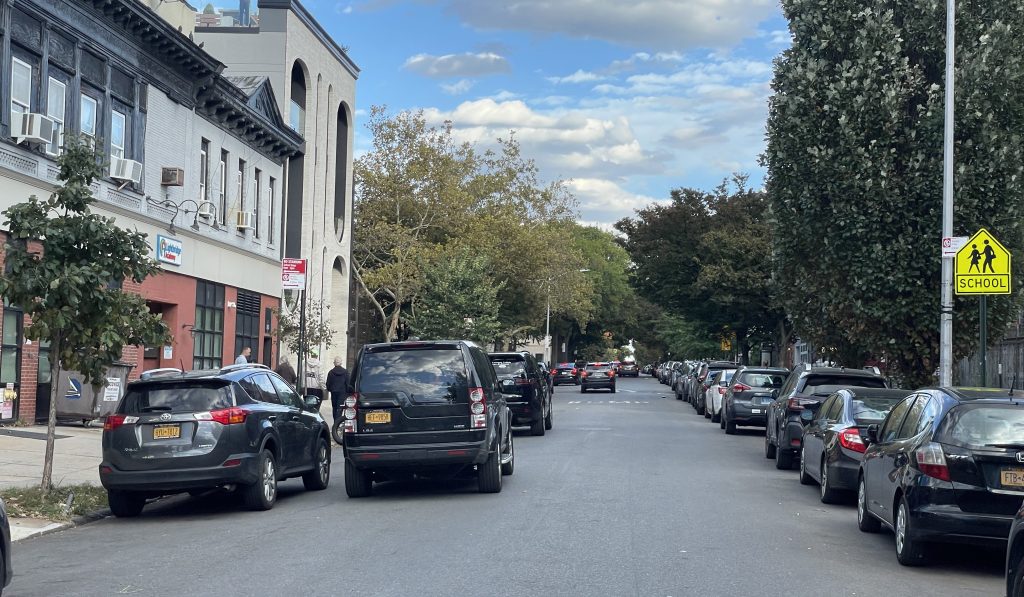
Placards encourage driving in the sole American city where most people don’t own a car, and their abundance has inspired motorists to chance their luck by leaving a smorgasbord of paraphernalia in their dashes, such as hi-viz vests, police handbooks, bibles, logbooks, or even handwritten notes admitting guilt but offering some vague cop-friendly excuse.
It’s not just about driving, either. The very existence of “free-parking” passes for a small segment of the government elite is “a form of corruption that erodes the public trust in municipal government,” the city Department of Investigation said in that 2024 report.
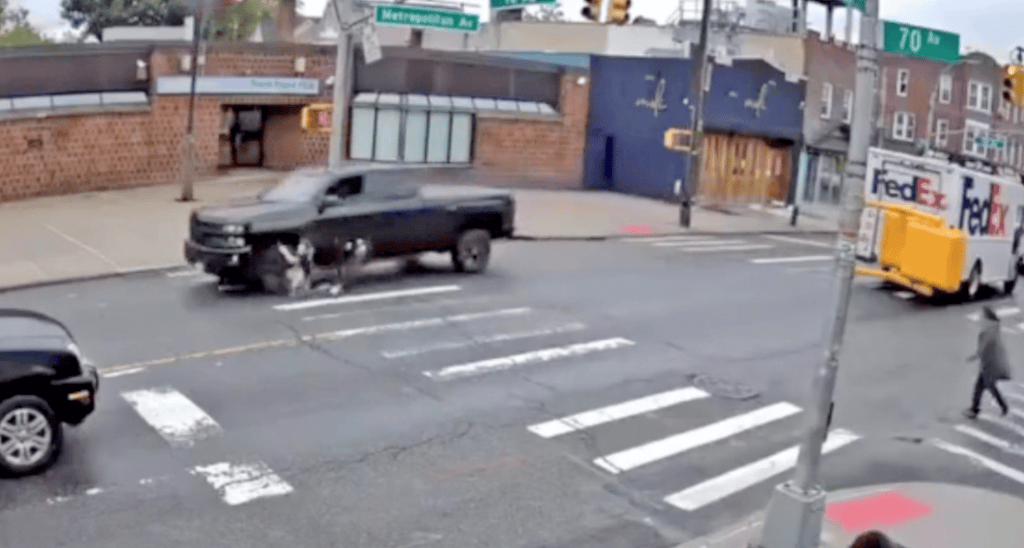
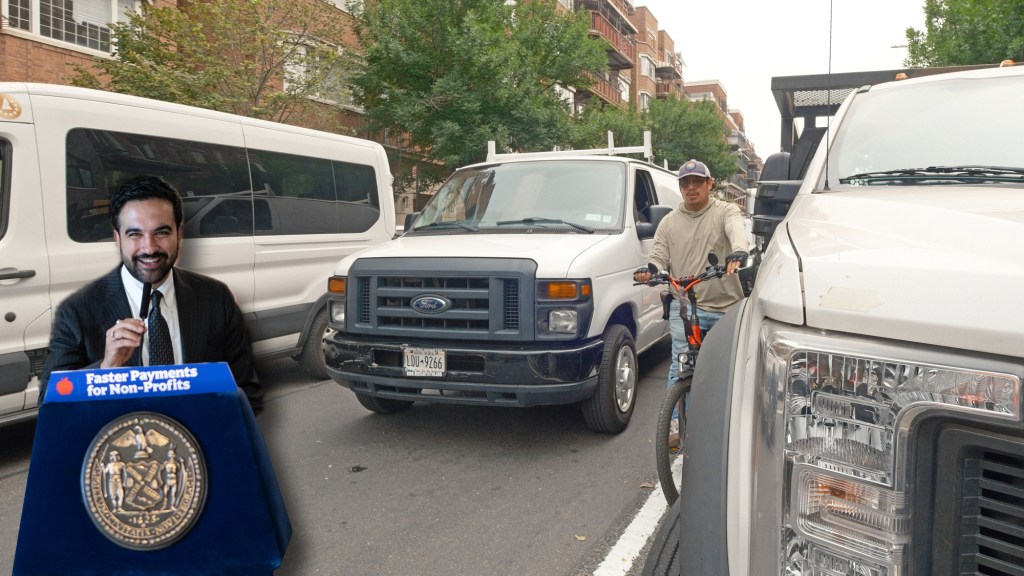
The official permits only allow limited parking privileges, but drivers routinely go above and beyond by blocking bike and bus lanes with near impunity, or taking over curbside zones reserved for commercial loading, wheelchair-accessible transportation, and emergency services.
“It’s absolute lawlessness out there,” said Sam Schwartz, a former city traffic commissioner during the 1980s famous for coining the term “gridlock,” who is now the founder and chair of the Transportation Research program at Hunter College.
Placards numbers have surged around five-fold since Schwartz’s time in government, and the city under incoming Mayor Zohran Mamdani must completely reorganize the parking giveaway and enforce against scofflaws, he and other transportation veterans said.
What is a placard?
Here’s a look at how placards are supposed to work and what the actual rules and regulations are for their holders.
Three agencies can issue them: the NYPD, the Department of Transportation, and the Department of Education.
The departments give placards to tens of thousand staff, while DOT also provides more of the laminated free-parking passes to other departments, plus to non-profits, clergy members or non-government organizations that provide various services. The police also gives placards more than 25,000 NYPD employees as well as to tens of thousands of state and federal law enforcement officers and staffers, plus court officers at all levels of government.
And that doesn’t even include the fakes.
The DOI report found there were a whopping 100,814 placards in circulation from the three agencies in 2022, including 39,220 from the NYPD, 35,338 from the DOE, and 26,256 from Transportation Department. That number was slightly down from an overall of 112,209 in 2019.
The NYPD’s permits were down to 36,429 in 2025, according to annual reporting each agency is required to do under a 2020 City Council law. DOT currently has just under 37,000 active permits, agency spokesperson Scott Gastel said.
The DOE did not provide its latest numbers despite repeated requests by Streetsblog, but the agency is estimated to have roughly 50,000 placards out there.
According to city rules, placards generally allow drivers to leave their cars at the following spots where others can’t:
- Zones for truck loading
- Metered areas without having to pay
- Specifically authorized and signed agency spots
- “No Parking” zones
They do not allow drivers to park in:
- “No Standing” and “No Stopping” zones
- Within 15 feet of fire hydrants
- Driveways
- Bridges or highways
- Carshare spaces
- Bike or bus lanes
- Crosswalks
- Taxi stands
- Ambulance parking
- Double park
The city supposedly has a three-strikes policy for misusing a permit, but a Department of Investigation found that “NYPD’s enforcement of parking permit misuse at the street level has been uneven and inadequate.”
The NYPD press office declined to provide its latest numbers for placard abuse enforcement. The agency, and key personnel, have been queried by Streetsblog repeatedly over the past two weeks on this one question. No response.
Placard explosion
The latest numbers are well above those of past decades, according to former city officials.
In 1987, city officials estimated the number at around half that, or 50,000 permits, and regulators aimed to cut that number even further down to around 13,500.
They managed to get to around 20,000 in the late 1980s, according to Shauna Denkensohn, who led DOT’s Authorized Parking and Permits office during the Koch administration.
Officials at the time revoked agency powers to issue permits citywide, limiting them to designated parking spaces, Denkensohn said via email. They then called in every department to go over each type of employee that might need a citywide permit to do their job, and see if they could reduce the need for driving as part of their work, e.g. by bulking elevator inspections together in the same area.
De Blasio restored some 50,000 more parking permits for school staff in 2017 by undoing a Bloomberg-era reduction, despite there being only about 10,000 designated spots at schools at the time, as part of union negotiations.
Education Department permits used to be far more restricted to only around 200, and they were reserved for special education teachers who needed to travel between schools, Schwartz said.
“De Blasio just gave it to every freaking teacher in the City of New York,” he said. “Disgraceful and it’s just sacrificing the safety of the students.”
Schwartz studied street safety outside schools in 1978 and found that 100 kids got hit by drivers a year, an issue that has persisted to this day, as roads near education facilities tend to be more deadly.
Research has also shown that government employees are more than twice as likely to commute into Manhattan’s central business district by car compared to other workers, and guaranteeing parking spots unsurprisingly incentivizes more driving.
In fact, the small slice of Lower Manhattan that houses police headquarters and courthouses has by far the largest rate of people commuting by personal vehicle in the most transit-dense area of the country, according to an environmental assessment the Metropolitan Transportation Authority conducted ahead of its congestion relief program.
The city could survive with around 10,000 placards total, Schwartz said.
He said every application should once again be vetted by a city oversight panel, made up of DOT, the mayor’s office and the police. Traffic agents should “write first, adjudicate later,” when it comes to ticketing, he added.
The traffic enforcement agents should also go from the NYPD – which suffers from its own culture of placard abuse – back under DOT, since that agency is tasked with managing the streetscape, Schwartz said.
Schwartz has long pushed for reversing the traffic enforcement shift to NYPD that dates back to Mayor Rudy Giuliani.
“It’s not going to happen if enforcement remains in the Police Department. Police should be fighting crime,” Schwartz said.
“If DOT is the enforcement agency and the police commissioner supports the DOT commissioner, this can be done,” he told Streetsblog. “It’s easier done than said. It’s one of those things that I was surprised how easy it was.”
Let’s get digital
Mayor-elect Mamdani needs to get a handle on placards by digitizing them and tying the permits to specific license plates or registrations.
There should also be a more rigorous process for drivers applying for the document, so only those get them who really need them for official business, rather than just making it easier to commute by private vehicle.
There have been a some failed attempts to do so.
In 2019, de Blasio promised to roll out such a scheme via digital placards, and he promised to phase out the laminated paper versions by 2021.
The goal was to enable the NYPD’s traffic enforcement agents to quickly scan a barcode and see if a car was legally parked with a city permit – and if not, give it a ticket, as opposed to the pervasive laissez-faire policy.
Some barcode decals began showing up on DOT vehicles outside the agency’s headquarters in Lower Manhattan that year. But the then-mayor dismantled his dedicated units the next year after officials just yanked five placards from city employees under the supposedly harsher regime, and his DOT quietly backed off the initiative in 2021.
That sent the message that the city didn’t have the guts – or didn’t care – to stop illegal parking, especially if government employees did it.
“It just says there’s no real rules here, anybody can do anything, and there’s even an inner set of rules for city government workers,” said Orcutt. “It makes people think city government works mainly for the workforce and not for the people of this city and that’s a terrible message.”
Under a more transparent administration, enforcement data could go back to agencies and their inspectors general, along with the Department of Investigation.
“We have no idea if the number of parking agentos matches the problem, or if there’s some other way to get a handle on it,” Orcutt said.
The people behind the prolific social media watchdog Placard Corruption were skeptical that the barcodes actually made a dent, since cops continued to let people with decals park illegally even after they expired.
Digitization would make it harder for people to pass around placards among vehicles, but the linchpin still lies in actual enforcement, the keepers of the account said.
“The core issue is the NYPD allowing anything that suggests placard class affiliation to get away with illegal parking, and the windshield decals served that purpose perfectly well,” they wrote in an email.

Read More:
Streetsblog has migrated to a new comment system. New commenters can register directly in the comments section of any article. Returning commenters: your previous comments and display name have been preserved, but you'll need to reclaim your account by clicking "Forgot your password?" on the sign-in form, entering your email, and following the verification link to set a new password — this is required because passwords could not be carried over during the migration. For questions, contact tips@streetsblog.org.