The L Train Shutdown Isn’t Up for Debate
With 75 public meetings on the L train shutdown already in the books, Transportation Commissioner Polly Trottenberg and MTA chief Andy Byford were in the West Village last night for a public question and answer session, one of two they’re hosting this month.
By and large, the hearing was nothing more than an anti-bike gripe fest, with people questioning the agencies’ ability to handle the shutdown or refusing to accept that it’s necessary.
The tone of the evening was set by the first speaker, who wanted to know how the city would prevent “these inexperienced cyclists” from getting him killed. Attendees demanded Trottenberg’s assurance that bike lanes installed to help absorb the hundreds of thousands of people who ride the L would not be permanent. Speakers claimed, without evidence, that the agencies are fudging data to make the case for their plan. The deniers didn’t want to hear that robust public transit is the only viable solution to their concerns about congestion and traffic overflow. One man called it “the second coming of Bridgegate.”
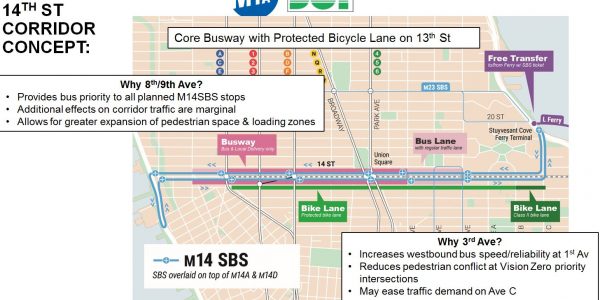
The only way to avoid total gridlock on 14th Street and the surrounding area is to provide L train riders effective bus and bike alternatives. That’s what the agencies have proposed: shuttle buses connecting North Brooklyn and Lower Manhattan over the Williamsburg Bridge, a dedicated busway on 14th Street between Third and Eighth avenues, and new protected bike lane connections, including a two-way protected bike lane on 13th Street.
For the most part, Trottenberg and Byford stuck to their guns. Asked where all the single-occupancy vehicles that currently cross the Williamsburg Bridge would go, Trottenberg explained that many would opt not to drive. “The goal of the HOV lane on the bridge is to encourage people to get out of their cars,” she said.
Over and over, Trottenberg hammered the need to provide safe routes for cycling during the shutdown. While the agency is open to splitting the 13th Street protected lane into two one-way pairs on 13th Street and 12th Street, eliminating the bike lanes is not an option.
“Bicycles are going to be part of the solution here. A lane can carry a lot more people on bikes than it can carry on [motor] vehicles,” she said. “Cyclists are like people walking. I can’t divert them 10 blocks out of where they want to go. The reason we picked 13th Street is there are a lot of key destinations on 14th Street that they’re going to want to go to.”
There are still important details missing from the plan — namely, when the bus lanes, busways, and HOV3 restrictions on the Williamsburg Bridge will be in effect. Current L train ridership is high at all hours of the day, and transit advocates have urged the city to make the bus lanes 24/7.
Trottenberg remained coy last night about the specific times, saying she would take what she heard from attendees back to Mayor de Blasio. The mayor, who has final say in any decisions regarding city streets, holds the key to the shutdown plan’s effectiveness. Last week he told reporters he hopes to “minimize the disruption on 14th Street to the maximum extent possible.”
When L train service goes dark in 11 months, the mayor will have one responsibility: to keep riders moving, or else inflict the city with traffic armageddon. The DOT’s and MTA’s role at this point should be to show the public they’re taking the necessary steps to do that. By now, the listening tours should be over.
Trottenberg and Byford will take the show to Williamsburg next Wednesday. The event starts at 6:30 p.m. at Progress High School, 850 Grand Street.

Read More:
Streetsblog has migrated to a new comment system. New commenters can register directly in the comments section of any article. Returning commenters: your previous comments and display name have been preserved, but you'll need to reclaim your account by clicking "Forgot your password?" on the sign-in form, entering your email, and following the verification link to set a new password — this is required because passwords could not be carried over during the migration. For questions, contact tips@streetsblog.org.