Krugman: Costs of Driving Deserve Way More Attention

Two of the nation’s leading lefty commentators weighed in on transportation incentives last Friday, when both economist Paul Krugman at the New York Times and Matt Yglesias at Slate went on a congestion pricing kick.
Krugman kicked things off by remarking that the surest way to reduce the costs imposed on society by drivers is to “get the incentives right, and charge large fees for driving in congestion.”
Yglesias took it one step further, pointing out how a variable fee on roads could lead to a virtuous cycle of better transit service and higher ridership:
Congestion fees are a kind of force multiplier for transit. After all, in some big American cities the peak congestion charge would have to get quite hefty at some times of the day. Some folks will respond to that by paying the fee, some by time-shifting their driving to a less-crowded hour, and some by riding transit. A bus, after all, is a great mechanism for spreading the cost of road access across a large number of people. And while with highways the quality of the service provided declines with the number of users (traffic jams), with well-designed transit it goes the other way. The more people who want to travel on a particular transit route, the more financially viable it is to provide high-frequency service. And high-frequency service is the key to real-world transit useability.
As Krugman noted, congestion pricing is an important mechanism to account for the cost imposed by drivers on society in the form of lost time. Anything that brings the actual price of our transportation decisions in line with the cost to society will be a boon for transit, biking, and walking relative to the status quo.
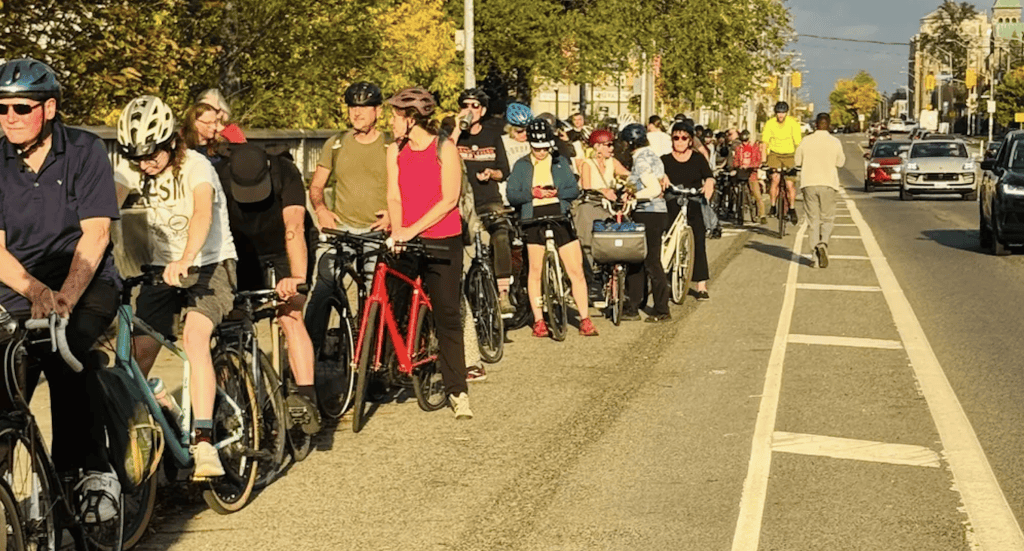
The flipside of congestion pricing would be to account for the social benefits of non-automotive modes by subsidizing them. The European Cyclists Federation currently has an interesting proposal on this front. With the European Union examining the “internalisation of external costs for all modes of transport, the ECF is advocating for a policy that would function as a kind of carrot, rewarding cyclists through tax rebates and incentives. Meanwhile, in America, we actually have a “symbolic” bike tax gaining traction in Washington state.

Read More:
Streetsblog has migrated to a new comment system. New commenters can register directly in the comments section of any article. Returning commenters: your previous comments and display name have been preserved, but you'll need to reclaim your account by clicking "Forgot your password?" on the sign-in form, entering your email, and following the verification link to set a new password — this is required because passwords could not be carried over during the migration. For questions, contact tips@streetsblog.org.