Opinion: Two Deaths At One Central Park Crossing, Yet Safety Plan Sits On The Shelf
Pedestrian Richie O’Brien and cyclist Douglas Adams were killed in separate crashes in as many weeks inside Central Park earlier this fall, raising renewed calls for study, analysis, restrictions and bans.
But we don’t need another round of review to make Central Park safe. The city just has to take its existing plan out of the bottom drawer.
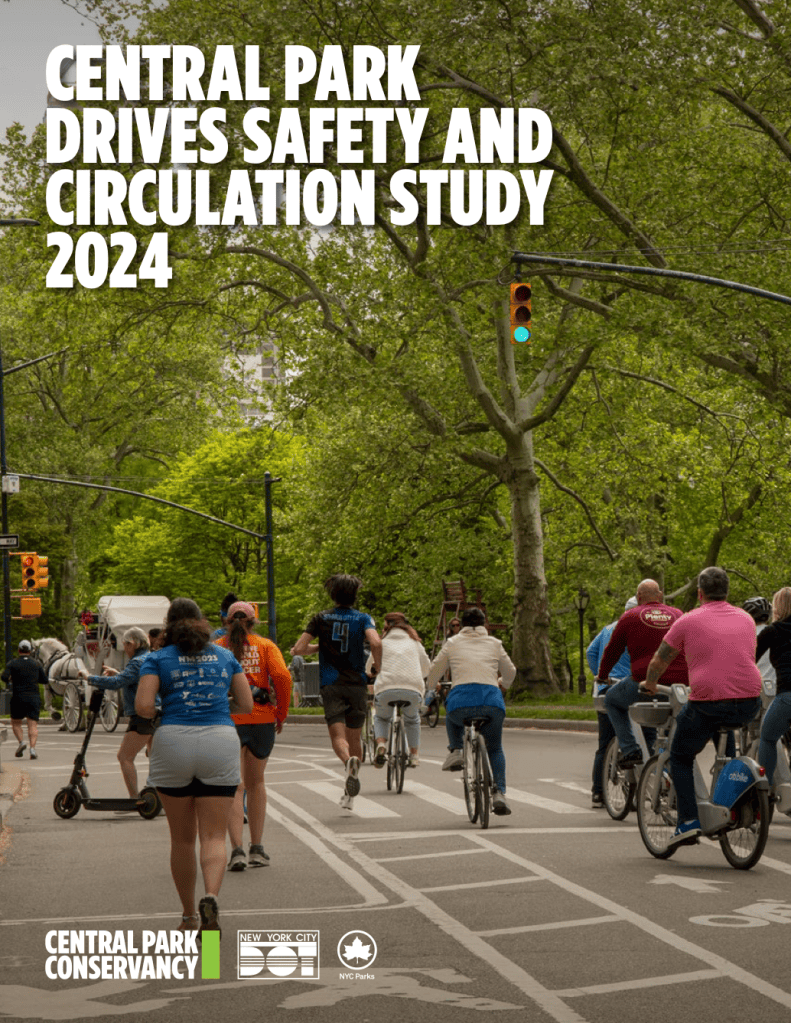
In November 2024, the Central Park Conservancy and the city departments of Transportation and Parks released the Central Park Drives Safety and Circulation Study. It offered 14 bold recommendations: six near-term, six medium-term and two longer-term (see below).
But since the release of the report, officials in both the Adams and Mamdani administrations have made only minor changes. DOT has repaved and re-striped sections of the Central Park Drives and changed crossing signals. Those are (small) improvements. But paint is not protection, and new lane markings are not an adequate answer. After two deaths in less than two weeks near East 84th Street, the time has come to take action.
The action plan
Since the release of the 2024, there hasn’t been much visible progress, partly because there’s no public database of the changes.
For example, the report called for an inspection of every Central Park crosswalk. The Conservancy says that work was commissioned, but where are the location-by-location findings? Which crossings present the greatest risk? What will be done?
No one has provided those answers, not even for the crosswalk near East 84th Street, where O’Brien and Adams suffered their fatal injuries.
Such a dashboard is essential, not only revealing the gradual progress, but also the accountable agencies, milestones, costs and outcomes. It should publish counts of users and near-conflicts as well as crashes, so progress can be judged by outcomes.
Here’s my table of that and the remaining recommendations:
What should be done?
Mayor Mamdani should direct DOT, Parks and NYPD to deliver a joint safety response, with timelines. The plan should include better-designed crossings, physical separation where appropriate and the feasibility of adding pedestrian underpasses or bridges (which should be seriously evaluated instead of assuming they are too expensive or too disruptive).
Clear entrance signs, better signage direction pedestrians to existing historic arches, clear rules for bike renters and tour operators, and visible enforcement do not require years of planning. Nor should the city wait for another tragedy before testing them.
The Conservancy manages and advocates for the park, but DOT controls the design and reconstruction of the Drives, and enforcement involves NYPD and Parks. Fragmented responsibility is no excuse for fragmented action. City Hall can bring all three agencies around one table, set deadlines and release the results to the public.
Beyond that, there were so many good suggestions made at workshops conducted by the Conservancy. They didn’t make it into the report, but I want to mention them because they would also contribute to improved safety:
- Separate the park drives from pedestrian areas with fencing, to keep pedestrians and dogs out of the roadway. The Conservancy protects plantings with fencing, why not protect pedestrians, runners, and cyclists?
- Install clear signs at every entrance to the park and along the drives that indicate what kind of vehicles are and are not allowed, and the correct direction of travel, to reduce the cyclists riding against traffic. There are multiple such signs for the running track around the reservoir, surely bikes riding against more traffic are more dangerous than runners crashing into each other.
- Provide a detailed map that covers the rules of the road and highlights the locations of the historic arches / underpasses. Make them readily available, and mandate that bike rental companies that rent bikes for use in the park provide the map and instructions to all renters.
- Restrict the size of organized bike tours in the park to reduce congestion and keep these groups out of the running lanes.
- Along with the just-announced removal of horse-drawn carriages, pedicabs should be restricted to a one direction loop in the south end of the park (i.e. from Central Park south up the east side to Bethesda, across, and back down again) to minimize the turning around on the drives and wrong-way traffic.
- There will always be a small number of cars, trucks, and emergency vehicles in the park, but unauthorized vehicles must be entirely barred with effective enforcement.
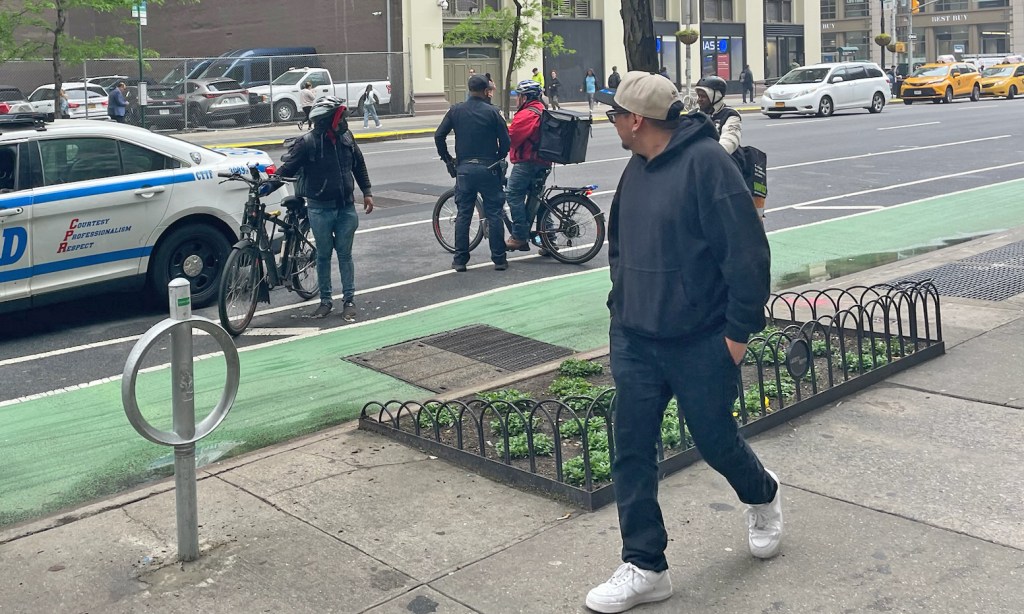
- The NYPD has said that it is too dangerous to chase down illegal e-bikes, so put NYPD officers on bikes (and e-bikes). Studies on policing have shown that officers who are part of the community, rather than patrolling through in cars, are more effective.
Frederick Law Olmsted understood a key principle long ago: different kinds of movement need safe, legible routes. We do not need to choose between a park for cyclists and a park for pedestrians. We need a park designed so all can use it without avoidable danger.
Two families have already paid a price. New Yorkers should not have to wait for a third.

Read More:
Streetsblog has migrated to a new comment system. New commenters can register directly in the comments section of any article. Returning commenters: your previous comments and display name have been preserved, but you'll need to reclaim your account by clicking "Forgot your password?" on the sign-in form, entering your email, and following the verification link to set a new password — this is required because passwords could not be carried over during the migration. For questions, contact tips@streetsblog.org.