Cyclists and Pedestrians Finally Get Their Own Paths on the George Washington Bridge
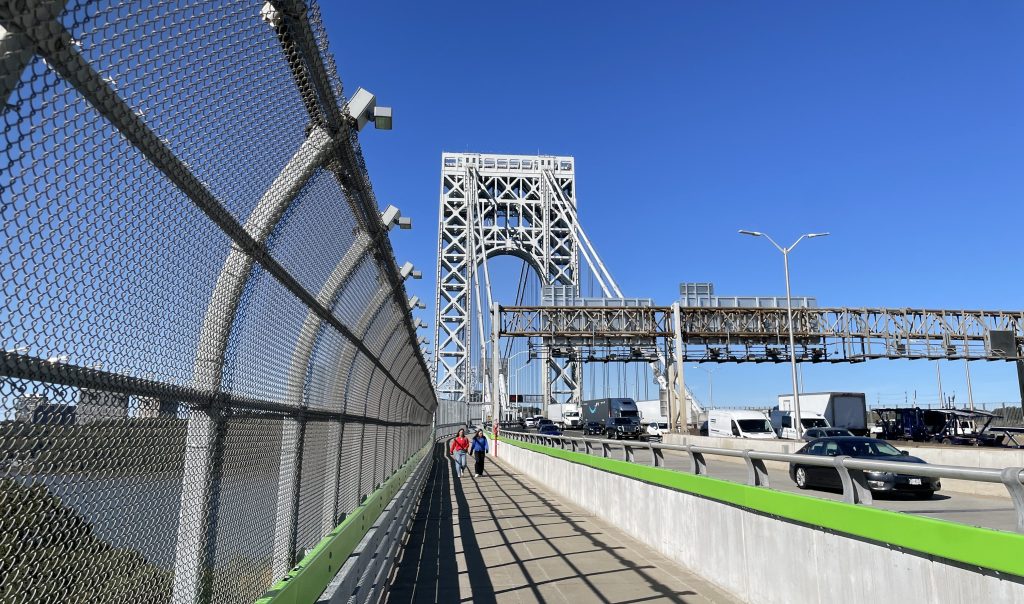
The Port Authority opened a renovated walkway on the south side of the George Washington Bridge on Thursday, giving people on foot their own dedicated lane, and cyclists the north outer path the agency revamped in 2023.
Even better — the PA will no longer shutter the bridge to anyone outside of a car after midnight, as the agency did before and until the southern shoulder’s renovation.
One outer path will still close each night, however, and cyclists and pedestrians will need to share the remaining path during that time.
The change will finally provide 24-7 access to the nearly 2,000 daily bike and walking trips between Gotham and the Garden State.
“You can see the demand that we are trying to meet,” Port Authority Executive Director Kathryn Garcia said at a ribbon-cutting ceremony on Thursday. “Pedestrians and cyclists, they do move at different speeds, and having less conflict between them means that everyone has a safer and more enjoyable experience.”
The PA will still gate off one of the two paths every night from midnight to 4:45 a.m., on an alternating basis. Garcia said the closure is necessary for daily maintenance, so cyclists and pedestrians will have to share the remaining outer lane during that time.
“Now that we have the south [path], we will always have one open, but we need to be able to do cleaning and maintenance,” Garcia told Streetsblog at the opening event.
Port Authority reps have given conflicting explanations for why they must close the shoulder paths, citing vague concerns about safety and the ongoing larger renovation of the bridge.
For years, commuters who rely on the bridge petitioned the Port for around-the-clock access without having to drive a car. After all, their counterparts in cars enjoy 14 lanes across two bridge decks. Interstate travelers have complained about getting stranded in the wrong side of the Hudson River, and about officials reopening the fence too late.
The new design mimics the divided bike and pedestrian paths of the Manhattan and Queensboro Bridges. But the city Department of Transportation, which manages those East River bridges, doesn’t shutter its bike and pedestrian paths for cleaning every night. Nor does the Metropolitan Transportation Authority, which operates several other city bridges, including the Triborough and Whitestone. Garcia declined to elaborate on why the George Washington Bridge differed from those spans beyond saying, “it needs cleaning.”
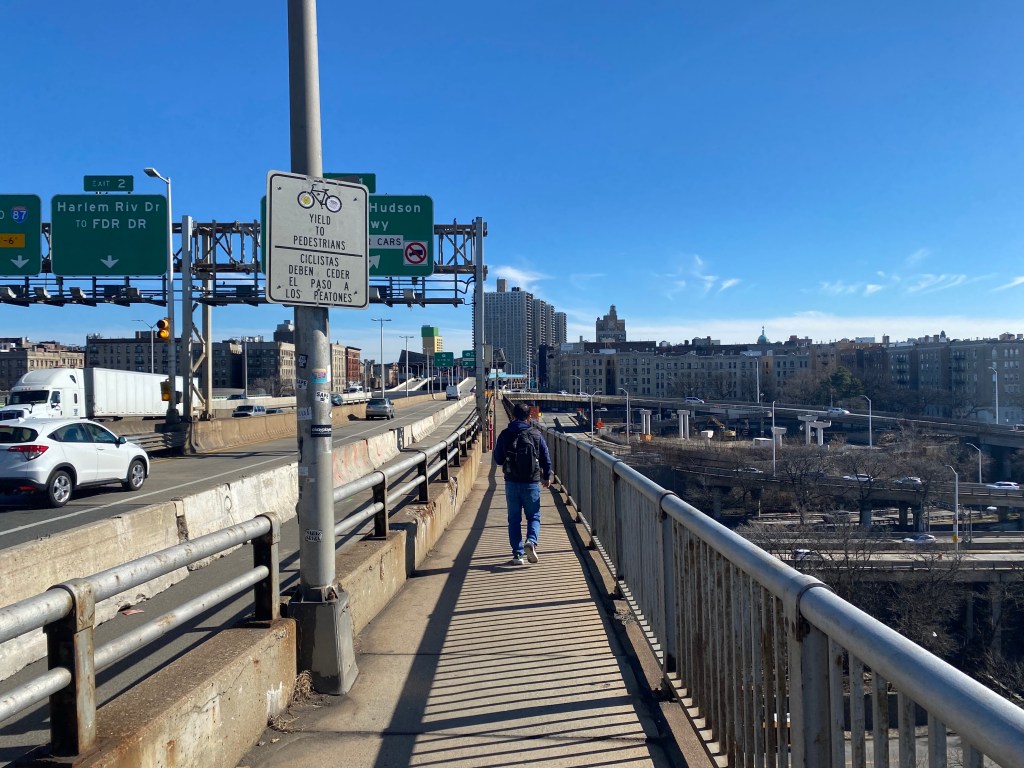
Last year, some 637,000 trips crossed George Washington Bridge’s north walk on foot or on a bike. The Authority opened that path following a renovation in early 2023, after being mostly closed since the 9/11 attacks.
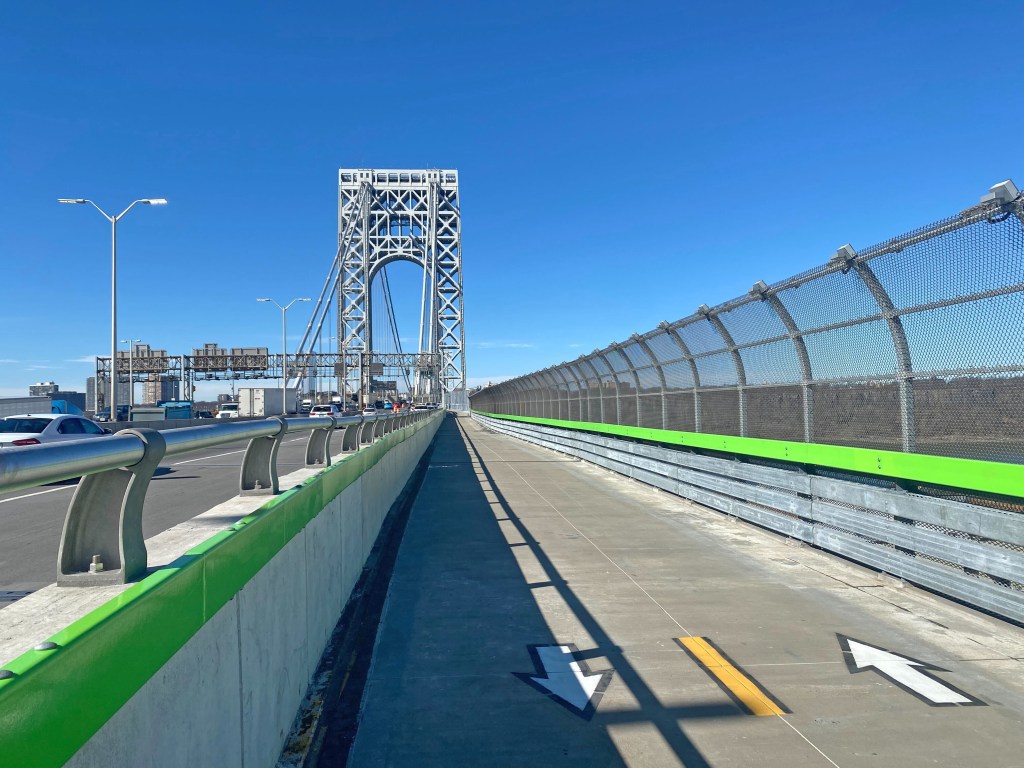
The Port Authority is rehabbing the entire 1931 span for around $2 billion, an effort that will continue until the bridge’s centenary in five years.
For the latest project, the agency added a new winding on-ramp to the southern walkway with widths of up to 14 feet. The new ramp replaced a hairpin approach and complies with the Americans with Disabilities Act.
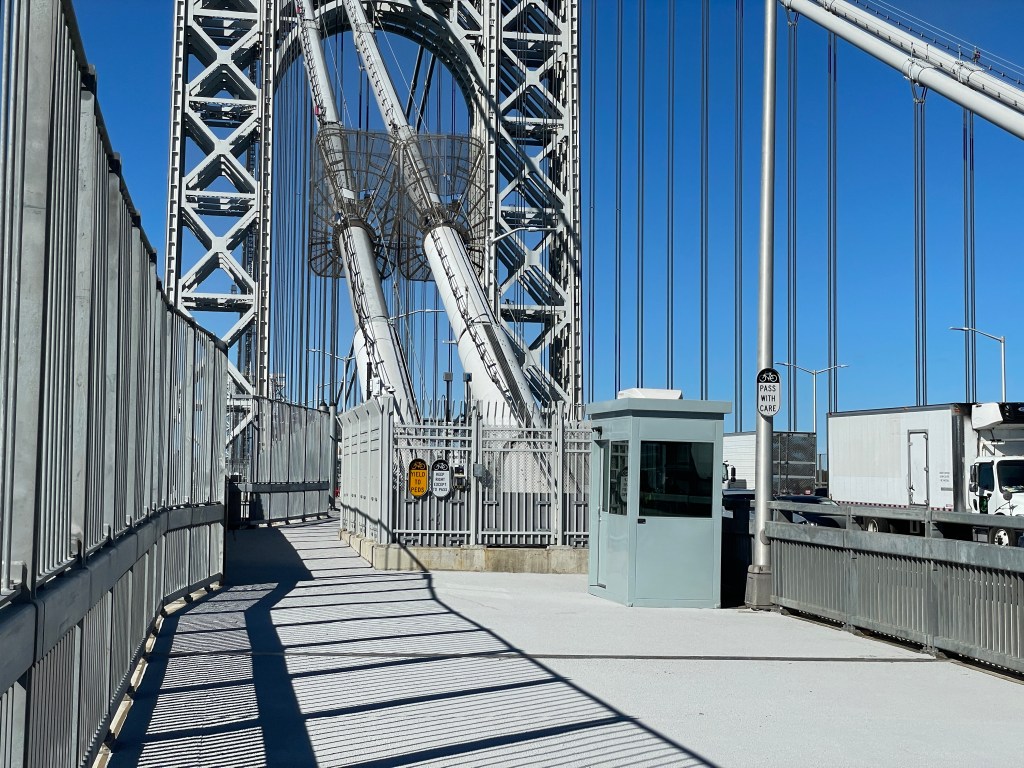
Despite the presence of taller fencing and a fresh coat of paint, most of the path remains the same size as the original one. The redesign preserves several blind corners and dangerously narrows the path around the bridge’s suspension enormous cables.
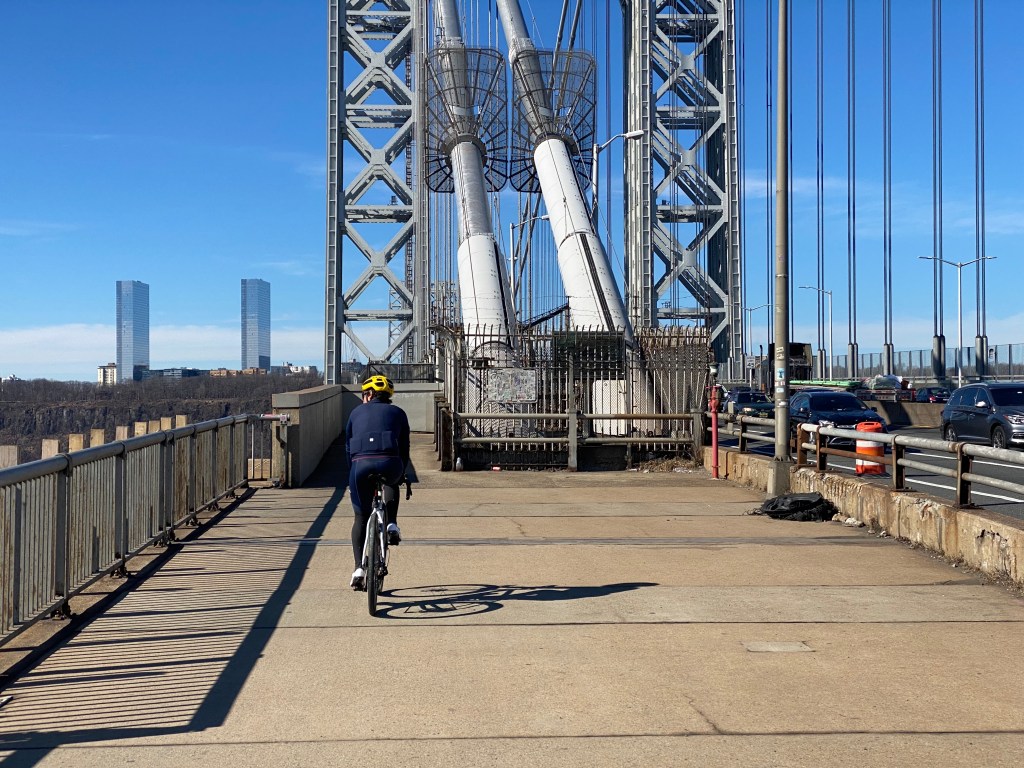
Local cycling advocates have long pushed the Port Authority to widen the paths to better accommodate the growing demand for cycling and micromobility on both sides of the Hudson River.
“This is still the only bikeable connector between 10 million residents of New York City and North Jersey, and the Port Authority should have seen this coming,” said Neile Weissman, who heads the group Complete George, which has pushed for full-size bikeways across the bridge since 2013. “The walkways are less than seven feet wide between the shielded cables,” Weissman added.
Two-way bike lanes should be at least 13 feet wide to accommodate passing, and eight feet should be the “absolute minimum width,” according to guidelines by the National Association of City Transportation Officials.
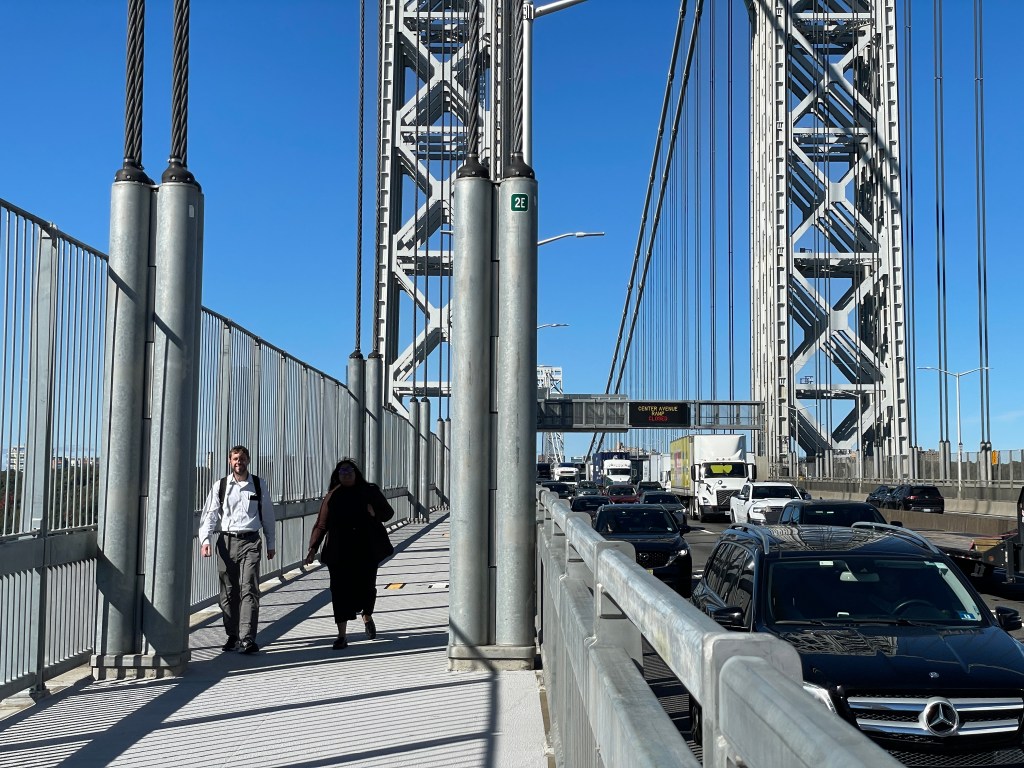
Three years ago, project managers said that expanding the north side path would have been “cost-prohibitive,” adding “hundreds and hundreds of millions of dollars” to the budget. This time, Garcia told Streetsblog the Port Authority was “driven by what the engineering allowed.”
Still, the new approaches are a significant upgrade from the perilous switchbacks that previously led up to the mile-and-a-half-long overpass, and Weissman lauded the agency for allowing 24-hour access — even if it is on a shared path.
“At least they’re recognizing that this is not a recreational facility, it’s used for transportation,” he said. “That’s an improvement for sure.”

Read More:
Streetsblog has migrated to a new comment system. New commenters can register directly in the comments section of any article. Returning commenters: your previous comments and display name have been preserved, but you'll need to reclaim your account by clicking "Forgot your password?" on the sign-in form, entering your email, and following the verification link to set a new password — this is required because passwords could not be carried over during the migration. For questions, contact tips@streetsblog.org.