NYPD Still Writes Criminal Summonses To ‘Reckless’ Cyclists After Mamdani Policy Change
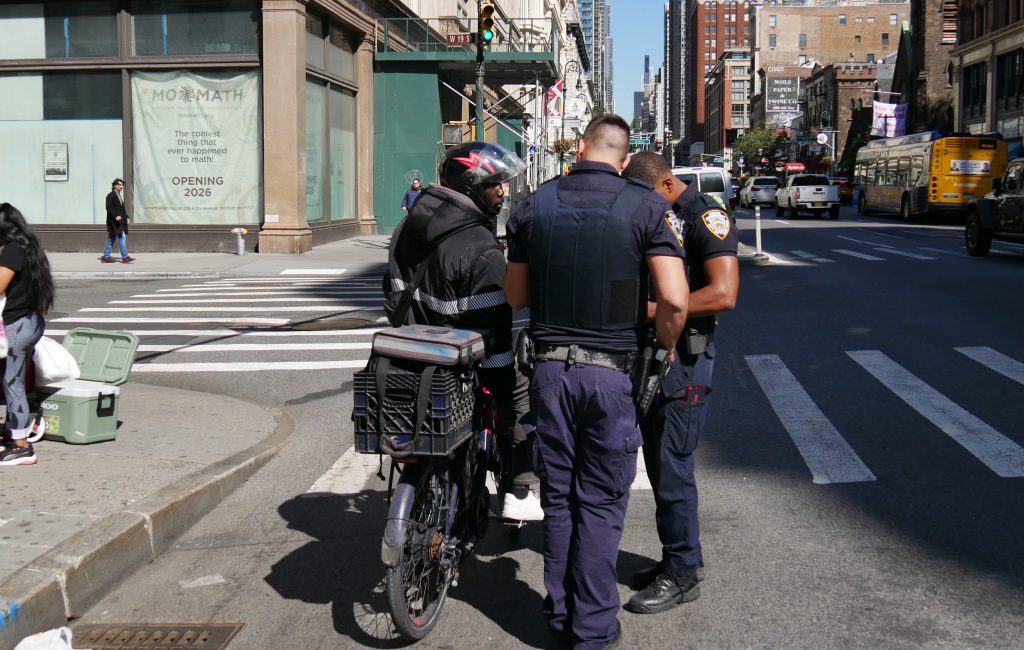
The NYPD has admitted in court that cops wrote hundreds of criminal summonses to “reckless” cyclists in the three months after Mayor Mamdani ended his predecessor’s criminal crackdown against some scofflaw e-bikers — a revelation that undermines an already specious lawsuit seeking to reinstate the Adams-era crackdown.
NYPD Deputy Chief Sylvester Ge testified in writing in a Staten Island case that NYPD officers wrote 257 criminal court summonses for “reckless” riding on “a bicycle, e-bike, or e-scooter” between March 31 and July 13.
Ge’s affidavit challenges the purpose of a lawsuit filed by city residents who argued that Mayor Mamdani’s decision to end the criminal summons blitz initiated by former Mayor Eric Adams made the city’s streets less safe for pedestrians and disabled New Yorkers.
Under Adams, NYPD Commissioner Jessica Tisch ordered cops to write criminal summonses to cyclists for infractions that previously had earned cyclists a regular ticket, such as operating under the influence, running a red light or stop sign or cycling the wrong way. As a result, cyclists, many of them immigrant delivery workers, had to appear in criminal court for violating traffic laws or risk a warrant for their arrest. Regular traffic tickets can be paid online.
During the criminal crackdown, the NYPD continued to treat drivers much more leniently, issuing standard summonses for the same traffic infractions — even though out-of-control drivers piloting multi-ton vehicles pose a far greater risk than a misbehaving cyclists. Mayor Mamdani ended Tisch’s crackdown on March 27, drawing cheers from the street safety activists and the city’s delivery workforce for no longer treating cyclists and car drivers differently for the same infractions.
Along with Ge’s testimony demonstrating that cops still write criminal summonses to cyclists, city lawyers are also arguing that Staten Island Judge Lizette Colon should dismiss the suit on the grounds that New Yorkers can’t take legal action against a discretionary policy just because they don’t like it.
“Discretion,” the city argued in its response, “is explicitly baked into the laws at issue which authorize enforcement of traffic infractions by either civil or criminal summons.”
Indeed, this discretion is precisely why Adams could impose the criminal crackdown in the first place. The city’s response clarified that the Mamdani administration did not impose a blanket prohibition on criminal summonses for cyclists; NYPD officers can still use their discretion to criminally charge reckless drivers or cyclists on a case-by-case basis, the city’s response clarifies.
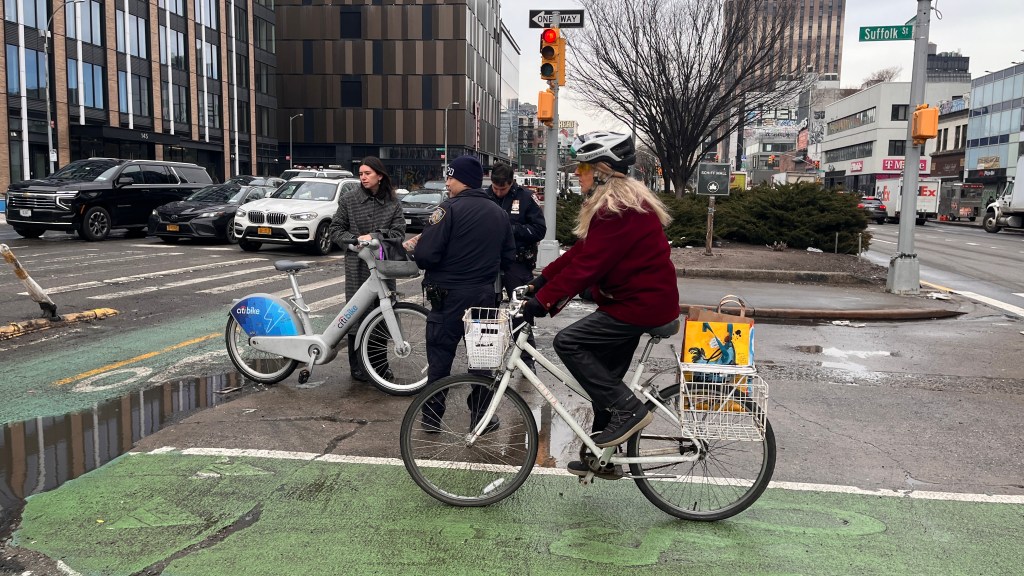
Recklessness is one of those cases, police said.
The NYPD told Streetsblog that the department has always given criminal summonses for violations of the Vehicle Traffic Law section 1212, “reckless operation,” to all road users, including drivers and cyclists.
An NYPD spokesperson said in an email that the department no longer writes criminal court summonses to cyclists for “operating under the influence, red light violations, traffic control device violations, stop sign violations, or wrong way riding” but that “reckless driving” remains subject to the criminal summons.
“Our shift in policy had no effect on this,” said the spokesperson, who declined to provide a name, as spokespeople for other agencies routinely do.
But, of course, the NYPD’s enforcement against cyclists continues, according to another fact that undermines the lawsuit: After ending the criminal crackdown in March, the NYPD launched a “focused e-bike and e-scooter enforcement initiative” that, through June, has issued 74 percent more e-bike moving violations (1,551 tickets, up from 893 over the same period last year) and 247 percent more e-scooter moving violations (132, up from 38).
And the department said it seized 816 illegal e-bikes in the first six months of this year, up from 219 in the same period last year.
Who is at risk?
The lawsuit’s main flaw is that the plaintiffs, organized by Council Member Frank Morano (R-Staten Island) and filed by lawyer, and failed mayoral candidate, Jim Walden, have failed to provide sufficient evidence that ending the criminal crackdown made the streets less safe, city’s lawyers argued.
“Petitioners fail to allege facts showing a change in the likelihood of being harmed by an e-bike following the change in the city’s enforcement strategy,” the city wrote.
The lawsuit cited a widely misreported NYU Langone study that examined trauma cases at a single emergency room. But the study’s authors only looked at crashes that involved micro-mobility devices and pedestrians, ignoring the cause of the vast majority of pedestrian injuries: car crashes.
“Patients presenting to the hospital in a five-year period as a result of a crash between a pedestrian and an e-bike/e-scooter accounted for less than 0.03 percent of all trauma admissions,” the city’s response continued. “Crashes between cyclists and pedestrians causing injury are exceedingly rare.”
Car drivers cause the vast majority of death and injury on city streets. This past weekend, car drivers mowed down and killed three pedestrians, two of whom were on the sidewalk.
“The people filing this lawsuit just want to see people they don’t like punished,” said Peter Beadle, a lawyer who represents cyclists who get both criminal and civil summonses. “They’re throwing everything at the wall and seeing what sticks. If you actually follow the logic that you should enforce laws more strictly against vehicles that cause serious injury and put disabled people at risk, there needs to be a ticket blitz on car drivers.”
And yet Beadle, who opposesd the criminal crackdown policy, is OK with the 257 criminal tickets issued since the crackdown ended because those were likely situations where recklessness actually did warrant a criminal ticket.
“It’s more likely now than before that they saw something extra happen, really putting other people at risk,” he said.
All the parties are back in court on Aug. 11.

Read More:
Streetsblog has migrated to a new comment system. New commenters can register directly in the comments section of any article. Returning commenters: your previous comments and display name have been preserved, but you'll need to reclaim your account by clicking "Forgot your password?" on the sign-in form, entering your email, and following the verification link to set a new password — this is required because passwords could not be carried over during the migration. For questions, contact tips@streetsblog.org.