‘It’s a Great Bike Lane’: King Souvlaki Abandons Astoria Lawsuit Fight
The owners of Astoria’s renowned King Souvlaki food truck took the city to court last year to stop the city from installing a protected bike lane on 31st Street — but now, they’re supporters.
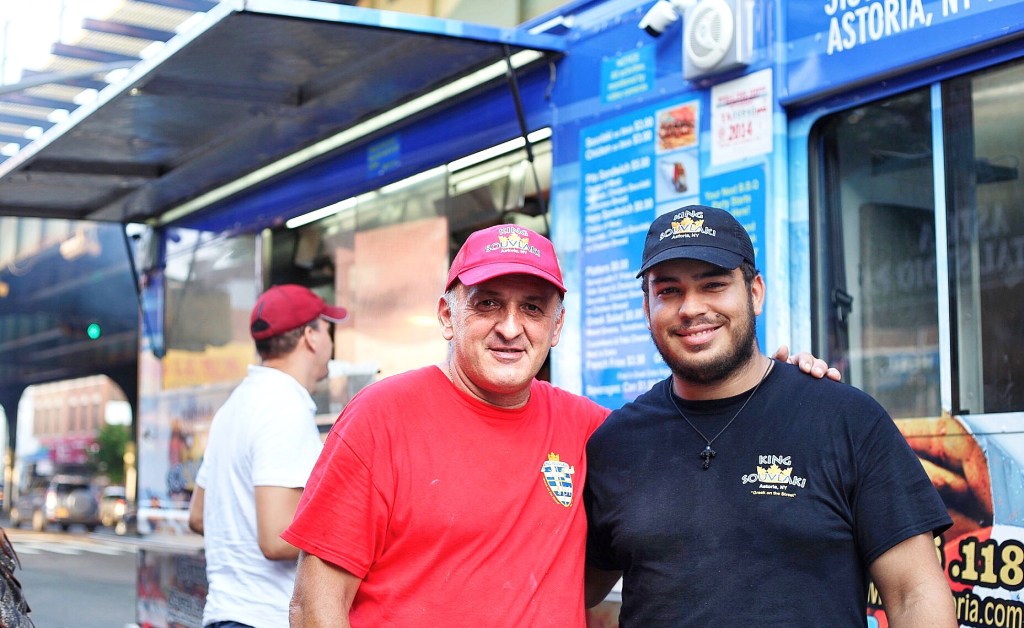
“It’s a good setup and we get to stay in the spot we’ve been at since 1979. … It’s a great bike lane, I like it,” said Lampros Tsampas, whose family-owned food truck was one of several 31st Street merchants that sued to stop the project last year.
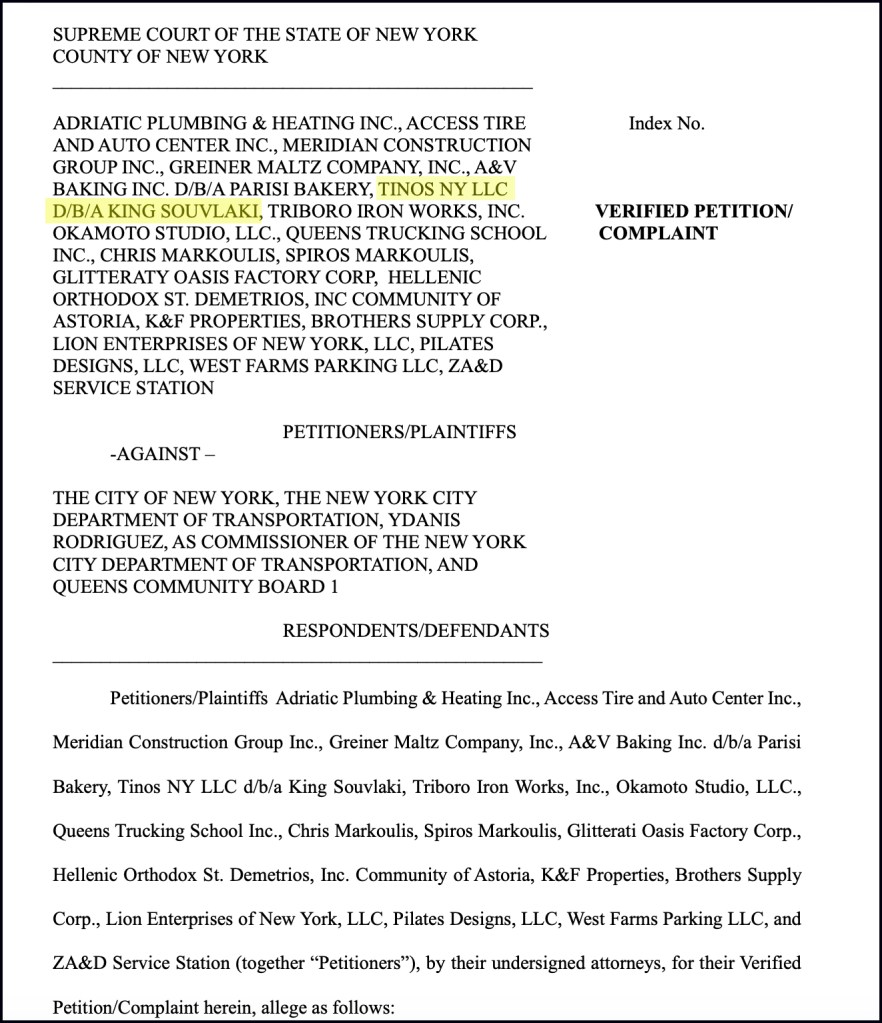
After a Queens judge ordered the city to halt work on the bike lane in December, the Mamdani administration regrouped with a “new,” and longer, version of the project that Department of Transportation contractors installed this year from Northern Boulevard to Newtown Avenue. Parking-protected bike lanes now run on both sides of the two-way roadway, cutting between King Souvlaki and the sidewalk at 31st Street and 31st Avenue.
Bike lane opponents sued the city again last week — but King Souvlaki was not on the suit, Tsampas said.
“We’re not a part of it,” Tsampas said. “We don’t want to continue making this whole big thing and keep fighting. It was just to be able to stay there, in some capacity, for our livelihood.”
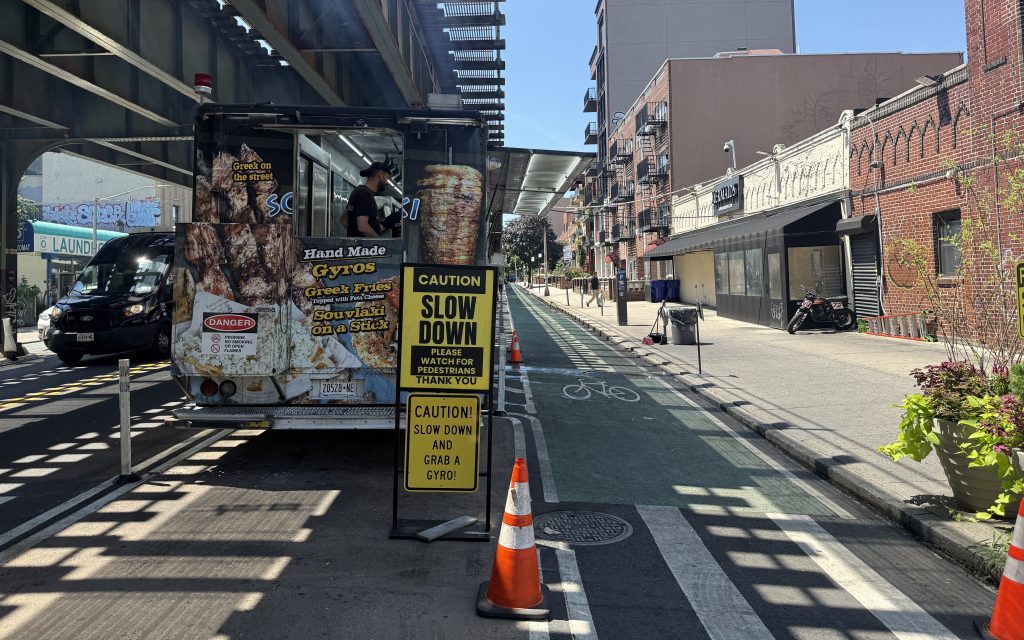
Far from fighting the new lane, in fact, King Souvlaki is advertising to cyclists with a tongue-and-cheek “caution sign” that advises passing two-wheelers, “Slow down and grab a gyro!”
Tsampas said that he and his family initially joined the initial lawsuit because they worried the bike lane would force them to move their truck from the intersection they’ve occupied since first opening nearly 50 years ago. He believed that no one at DOT or the community board was concerned about his business.
In fact, DOT and the local officials were concerned about everyone’s safety: From 2021 to 2025, there were 502 reported traffic injuries stemming from crashes on 31st Street, plus two pedestrian fatalities. DOT studies have repeatedly shown that protected bike lanes reduce severe traffic injuries and deaths by as much as 18 percent in New York City.
“We didn’t have a problem with the bike lane. The bike lane’s fine. It’s better. I get it. For safety reasons, obviously it’s better. Never opposed that,” Tsampas said. “I wanted to be sure that we would be able to operate in a spot where my father built that business for nearly 50 years. We didn’t know what was going to happen back then. We were afraid.”
The extended 31st Street protected bike lane proposed by DOT shortly after Mayor Mamdani took office will eventually extend between Northern Boulevard and 20th Avenue. DOT said in a recent court filing that it does not plan to install the northernmost stretch between Newtown Avenue and 20th Avenue until next year.
King Souvlaki did have to move after DOT installed the bike lane — but just by a few feet. The truck now sits in a metered parking lane, separated from the curb by the bike lane and a narrow painted buffer instead of flush with the curb like it was before.
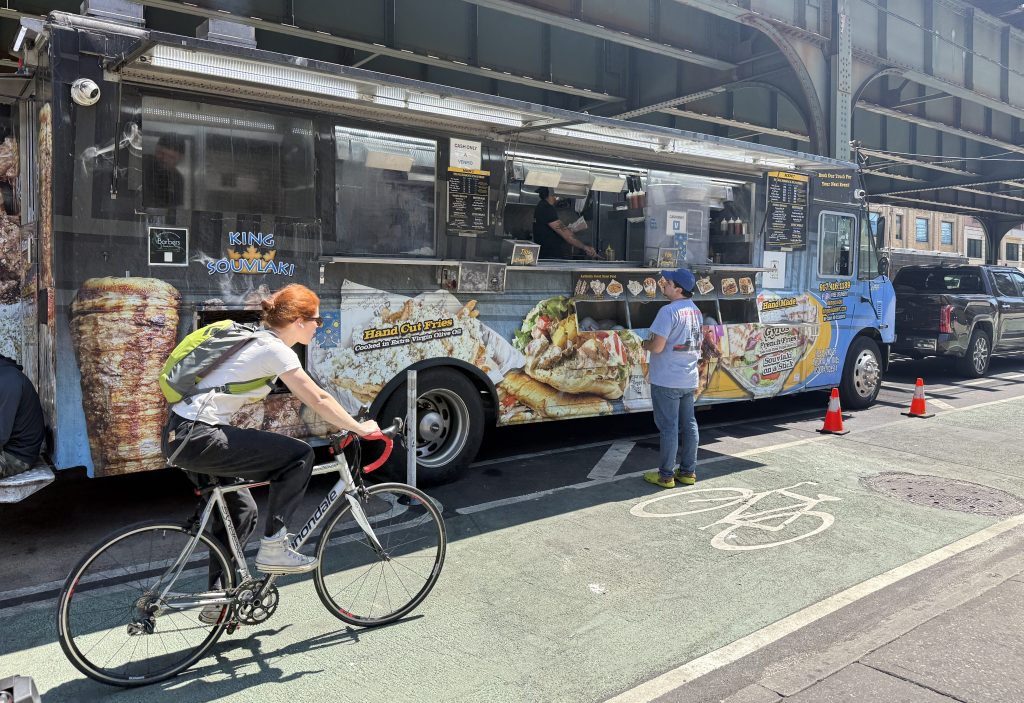
“We were fine with it and just want people to be careful,” said Tsampas.
Customers visiting the truck to get lunch on Monday agreed that there is enough space for both cyclists to enjoy the lane and for customers to enjoy their food.
“Most of the people are aware enough to not be standing in the bike lane. It’s spacious enough,” said Debbie Walter, who stopped at the truck while doing her laundry.
Despite what Tsampas insists was only a minor role in the legal drama, King Souvlaki earned the ire of bike lane supporters, some of whom organized a boycott of the truck and other businesses involved in the lawsuit. The boycott caused the truck “a lot of stress” — even if it didn’t impact business, Tsampas said.
“People thought we were the face in this. Running things. We weren’t. We were part of it. Sure. I get it. But we weren’t the face of this,” he said. “I think it was more of a misunderstanding. But, thankfully, we’re doing OK.”

Read More:
Streetsblog has migrated to a new comment system. New commenters can register directly in the comments section of any article. Returning commenters: your previous comments and display name have been preserved, but you'll need to reclaim your account by clicking "Forgot your password?" on the sign-in form, entering your email, and following the verification link to set a new password — this is required because passwords could not be carried over during the migration. For questions, contact tips@streetsblog.org.