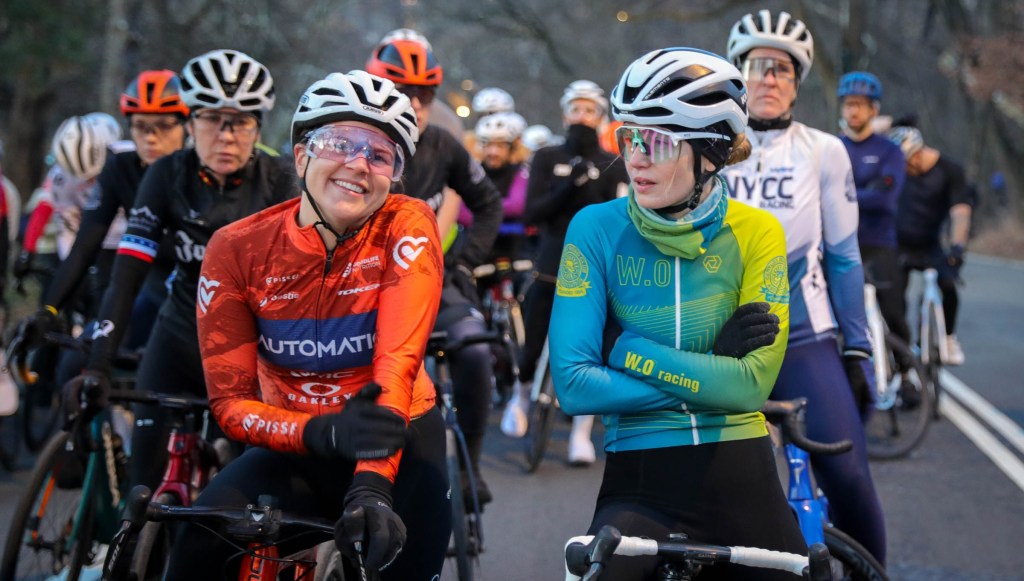
Fewer Cars On Queensboro Bridge Means It’s Time To Take A Lane For Increasing Cyclists
Take the lane!
It’s time for the city to convert one of the main roadway lanes on the Queensboro Bridge to a dedicated bike lane, now that 16,000 fewer daily drivers are taking the fabled span, advocates said.
Motor vehicle volumes on the Queensboro Bridge fell by 11.7 percent between 2024 and 2025, according to an annual study by the New York Metropolitan Transportation Council, a regional planning organization.
NYMTC’s latest quarterly traffic study, which included the city’s East River crossings, found that in the fourth quarter of 2025, there were an average of 121,629 motor vehicles per day using the Queensboro Bridge, compared to 137,768 vehicles per day in the same time period in 2024.
The stats reveal huge traffic reduction on the lanes that take drivers directly into or out of the central business district south of 60th Street — the very same territory subject to the $9 congestion pricing toll. Manhattan-bound traffic dropped by 24 percent, from 48,775 vehicles per day in 2024 to 37,067 in 2025, and Queens-bound traffic dropped by 22.7 percent, from 73,436 per day in 2024 to 56,772 in 2025.
The sole component of the bridge that recorded a traffic spike was the northbound ramp on the upper level of the bridge, which allows drivers to pull off onto 62nd or 63rd Street. That ramp surged from 15,556 drivers in 2024 to 27,790 in 2025, a strong indication that thousands of drivers are avoiding the toll by not entering the congestion zone.
At the same time, cycling traffic on the bridge has picked up dramatically. Even when Manhattan-bound and Queens-bound cyclists shared the North Outer Roadway with pedestrians, the yearly number of cyclists jumped from 1,212,391 in 2019 to 2,115,228 in 2024, marking a 74.5-percent increase over six years. More than two million cyclists took the bridge in 2025, and after a harsh winter bike traffic was higher on the bridge in April and May 2026 compared to 2025.
Experts said the bridge’s sharp drop in automobile traffic, combined with its increase in cyclists, offers a excellent opportunity for the Department of Transportation to give two-wheelers another lane.
“Anything that changes volumes to that degree warrants a look at how the infrastructure is being used and what’s an optimal way to use it,” said Jon Orcutt, a former bike planner in the Bloomberg and de Blasio administrations. “DOT is widening bike lanes across Manhattan because of the demand.”
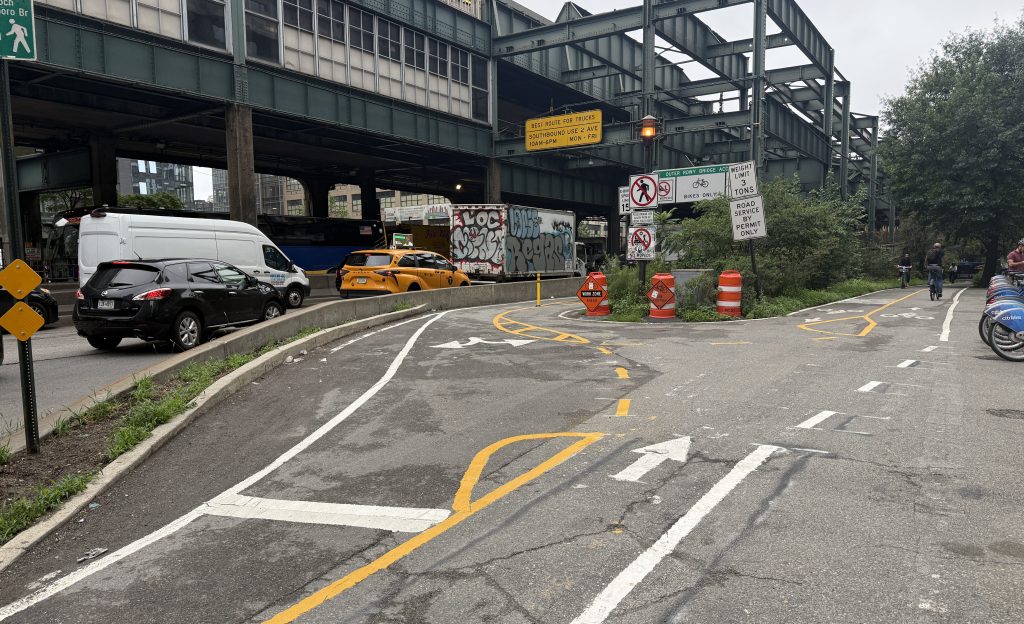
The city did, in fact, convert the North Outer Roadway to a cycling-only lane last year. But the titanic number of cyclists — on various types of bikes, traveling at different speeds — still leads to physical conflicts. Earlier this year, the existing two-way bike lane recorded a fatal crash between a cyclist and the operator of an illegal electric standup scooter. Taking a motor vehicle lane on the roadbed itself would allow the city to give cyclists two lanes on the bridge, one inbound and one outbound lane which could give everyone room to travel safely.
“The existing lane is really narrow, which makes it dangerous for passing,” said Transportation Alternatives spokesperson Alexa Sledge. “If it was twice as wide, it would be fantastic for reducing the number of conflicts.”
Sledge and Orcutt also pointed out that the Queensboro Bridge carries almost all cycling traffic between Manhattan and Queens. Brooklynites can choose the Brooklyn, Manhattan and Williamsburg Bridges to access Manhattan, but any cyclist heading through Queens really only has the Queensboro Bridge.
In a petition that calls on the city to make a safer Queensboro Bridge, Transportation Alternatives highlighted a startling contrast: With the Queens-Midtown Tunnel, the Queensboro Bridge and the Triborough Bridge, drivers enjoy 26 total lanes that connect Queens to Manhattan, while cyclists share half of a single lane: the two-way North Outer Roadway.
The number of motor vehicles using the main lanes of the bridge could fall even further in the coming years. The congestion pricing toll will rise to $12 in 2028 and $15 in 2030, which will further incentivize drivers to stop cutting through or driving into Manhattan. It also gives the city even more reason to install a separated bike lane on the roadbed itself — a solution already in place on the Brooklyn Bridge.
“We’re supposed to get a toll price hike in 2028, so there’s a chance for even more capacity freed up on these bridges after that,” said Orcutt.

Read More:
Streetsblog has migrated to a new comment system. New commenters can register directly in the comments section of any article. Returning commenters: your previous comments and display name have been preserved, but you'll need to reclaim your account by clicking "Forgot your password?" on the sign-in form, entering your email, and following the verification link to set a new password — this is required because passwords could not be carried over during the migration. For questions, contact tips@streetsblog.org.