Expand Fair Fares But Not As Much As Other People Say: Fiscal Watchdogs
Half-priced fares, full service results.
Expanding the Fair Fares program, the city’s 50-percent-off transit subsidy for low-income residents, to cover another three-quarters-of-a-million people would cost just $146 million, according to an analysis by a fiscal watchdog, the latest call for the Mamdani administration to beef up the transit discount.
Currently, Fair Fares is available only to people who earn less than 150 percent of the federal poverty level — or $31,920 for an individual or $66,000 for a household of four — but according to the Citizens Budget Commission, raising the income threshold to 250 percent of the federal poverty level (or $39,900 for an individual or $82,500 for a household) could provide half-priced transit trips to 722,000 more New Yorkers than are currently eligible.
If implemented, the pool of eligible New Yorkers would grow to almost two million people with a total cost of $232 million.
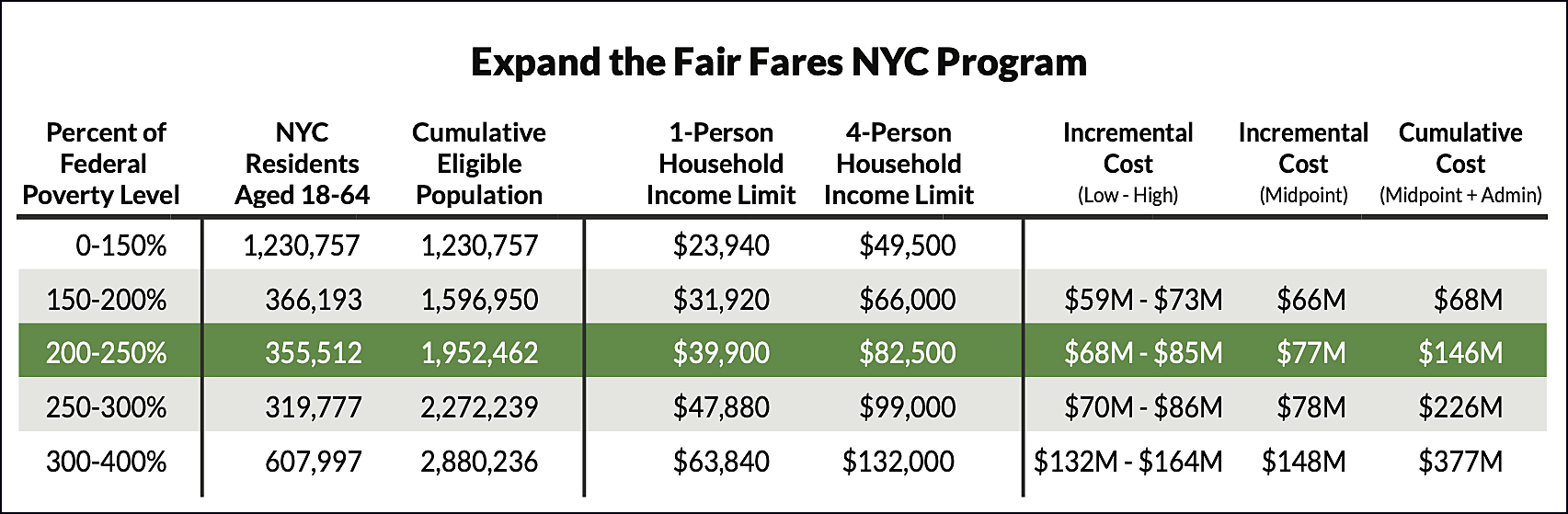
The higher income limit would extend the transit discount to people making 20 percent more than minimum wage, and cover one in four working New Yorkers.
“It’s really such a cost-effective, smart way to use precious resources,” said Citizens Budget Commission President Andrew Rein. “Suddenly you have everyday commuters saving $750 on their annual commute, that’s real progress on affordability. This is a way to smartly use this money.”
The CBC’s support for expanding Fair Fares is significant in that the group generally doesn’t dive headlong into endorsing big expansions of social programs. But in this case, the group argues that the higher threshold provides a bang for the buck that gives targeted help to working New Yorkers in the face of a multi-billion-dollar budget crunch.
“We have an eye, obviously, on affordability … and when we got deep into the data on who needed relief, who was working, what we think is within the budget envelope, we ended up at 250 percent [of the poverty line],” said Rein. “Three out of four New Yorkers earning up to 250 percent of the poverty level use transit to commute to work, use the subway. So this is really hitting that sweet spot for people who need the relief.”
Fair Fares was introduced in 2019 to cover half-priced rides for New Yorkers who were living at the federal poverty level, then just $12,490 for individuals or $25,750 for households of four. Since the pandemic, the program has cast a wider eligibility net, expanding to 120 percent of the federal poverty level in 2023, 145 percent in 2024, and 150 percent in 2025. The city reimburses the MTA for the rides that program participants take, which has made it a favorite transit program of the MTA.
The CBC report is the latest salvo in an ongoing debate over how to deliver “transit affordability” to New Yorkers (which, to be clear, is already much more affordable than car ownership, no matter how you slice it), at a time when “affordability” is as popular a concept in the city as “the New York Knicks.”
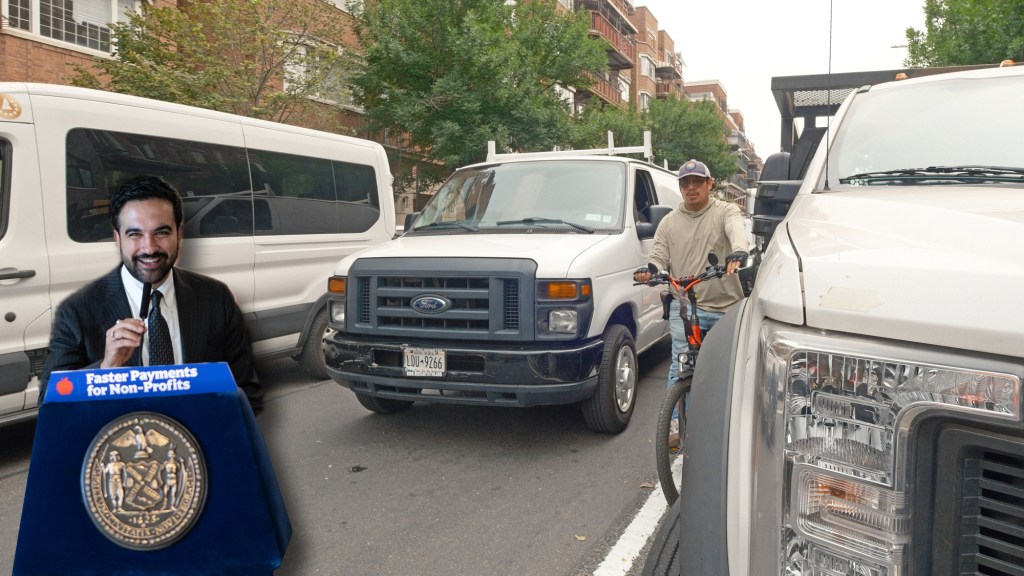
Mayor Mamdani prefers making buses free for everyone regardless of income, based on his belief in universal programs instead of means-tested ones. But Mamdani’s plan would require buy-in from Albany to cover the billion-dollar-per-year price tag, and this year’s state budget negotiations haven’t moved in that direction at all.
The Riders Alliance, the Permanent Citizens Advisory Committee to the MTA and the Community Service Society have proposed a two-prong approach with free transit for some and discounted transit for others. Under the advocates’ proposal, which has support from City Council Speaker Julie Menin (D-Upper East Side), people currently enrolled in the Fair Fares program would be able to ride the bus and subway for free, and half-priced fares would be offered to people making between 150 percent and 300 percent of the federal poverty level.
In addition, everyone eligible for the program would be automatically enrolled in it, which the advocates say would help raise utilization of the fare discounts from the current rate of about 31 percent of eligible users to closer to 60 percent of everyone eligible for it.
Rein said that it could be worthwhile for the city embrace automatic enrollment in order to juice the uptake in the program and help more people. But the CBC report stopped short of the proposal for an even more expansive Fair Fares program, since Rein said the higher income eligibility thresholds mean spending city money on more well-resourced people who already have a relative bargain in terms of transportation.
But even with a separate proposal from the other advocacy organizations, Rein noted that there is at least a broad agreement that Fair Fares could use a little more love from the city.
“What we are seeing is the convergence of transit, anti-poverty, and budget advocates agreeing that expanding eligibility for Fair Fares is an important and smart priority,” he said.
A spokesperson for the mayor said Mamdani is going over the various proposals to expand the program.
“Fair Fares is an important tool for low-income New Yorkers but does not reach enough of them,” said Mamdani spokesperson Jeremy Edwards. “The administration is reviewing the Fair Fares proposal. We will continue to encourage eligible residents to enroll in Fair Fares and work with city and state partners to make transit more affordable for all New Yorkers.”
The City Council will take up Fair Fares at an oversight hearing at 10 a.m. on Wednesday. For info, click here.

Read More:
Streetsblog has migrated to a new comment system. New commenters can register directly in the comments section of any article. Returning commenters: your previous comments and display name have been preserved, but you'll need to reclaim your account by clicking "Forgot your password?" on the sign-in form, entering your email, and following the verification link to set a new password — this is required because passwords could not be carried over during the migration. For questions, contact tips@streetsblog.org.