City’s In-House Program Proves Speed Governors Work
Speed killed.
New York City reduced speeding in its massive fleet by nearly two-thirds after officials installed technology to prevent its drivers from speeding, incontrovertible evidence that the technology works to slow down recidivist leadfoot drivers and that the Mamdani administration should get the details right as they create a program for scofflaws.
The technology was particularly effective in slowing down habitually reckless municipal drivers, and provided a model for Gov. Hochul and Albany lawmakers before they agreed, late last week, to include the so-called “Stop Super Speeders” law in the budget.
“We now can design a vehicle that won’t speed. We don’t have to depend on the driver doing the right thing,” Keith Kerman, a deputy commissioner with the Department of Citywide Administrative Services, told Streetsblog in an interview. “We’re not asking anything except to follow the law.”
The state-level bill would allow the city to require drivers to install speed governors for any car caught on speed cameras 16 or more times in a 12-month period, which would cover an estimated 15,000 New Yorkers. One of those drivers is Staten Island cop James Giovansanti, who notched 547 speed-camera and red-light violations since 2022, as Streetsblog reported.
DCAS began installing intelligent speed assistance devices, or ISA, on 50 vehicles in 2022 and has expanded the program to some 700 cars. Officials plan to grow the initiative to 1,600 vehicles and require all new vehicle purchases to include the technology, except for emergency vehicles and specialized fleet like snow plows.
That’s still a fraction of the roughly 7,000 or so non-emergency cars and trucks that could qualify for the tech, out of the city’s stable of more than 30,300 vehicles, showing that progress is moving incrementally even on a fleet of cars tightly controlled by the government.
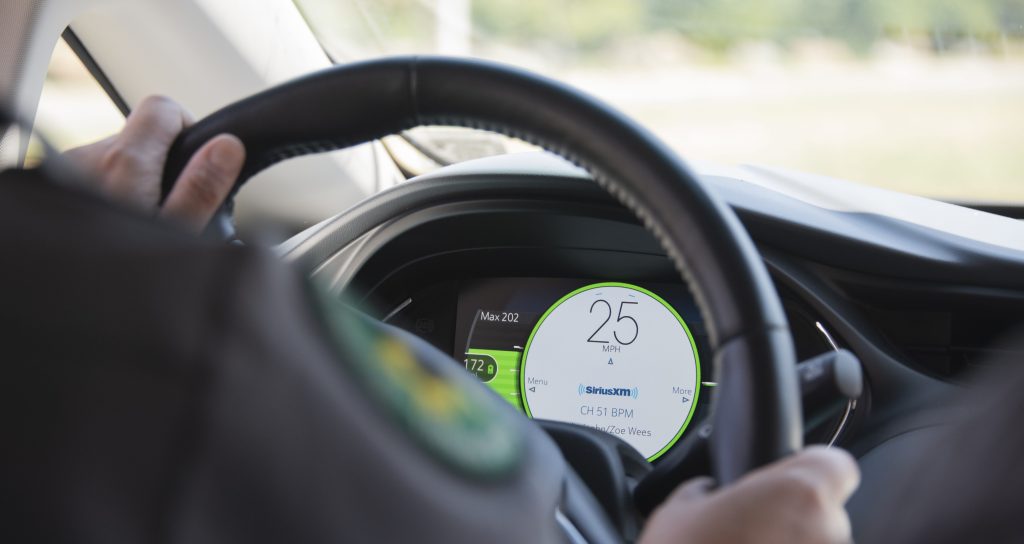
The tech doesn’t brake a car, but stops the accelerator when a driver goes above a certain threshold, which DCAS set at 11 miles per hour to match when automated camera enforcement tickets drivers.
“[ISA] isn’t forcibly stopping you, it’s just not letting you go faster than you’re supposed to,” Kerman said. (Caveat: Drivers aren’t supposed to speed at all, but the 11-mile-per-hour threshold for automated enforcement is a state law.)
As a result of the DCAS tech, city employees reduced their speeding by 64 percent in city vehicles that had ISA, according to an in-depth evaluation of the program by the U.S. Department of Transportation.
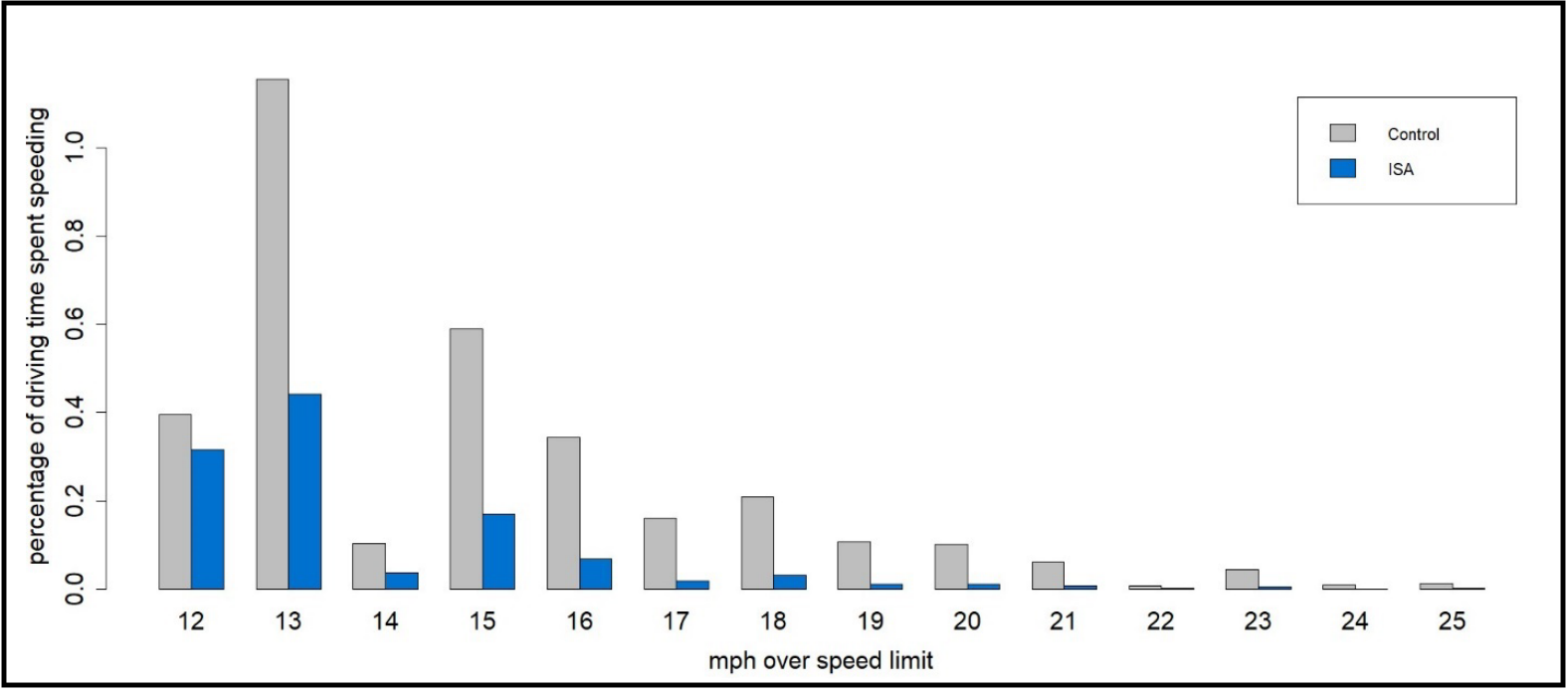
A subset of “habitual speeders” – municipal vehicles with a history of tickets or warnings from the city’s internal fleet monitoring system – also logged decreases of 49 percent.
In both cohorts, the worst drivers saw more improved driving than the best drivers.
“Even for those who were most inclined to speed and most inclined to be reckless, the ISA slowed them down,” Kerman said.
DCAS has added the speed limiting units to 24 different types of vehicles, mostly sedans but also heavier-duty trucks, and across 20 agencies. The Administration for Children’s Services is the first agency to have them on all its 104 vehicles.
Drivers could still override the limiter for 15 seconds via a button on the dash, if they needed, for example, to accelerate to merge onto a highway or if it was “unsafe for the driver to drive significantly slower than surrounding traffic,” according to the U.S. DOT report.
Kerman said drivers rarely used the temporary release button beyond trying it out in the beginning, but added that a new statewide program would have to consider whether it should or shouldn’t include the option for dangerous drivers.
City workers adapted well to the ISA devices overall, he said but the tech laid bare how most drivers on the road are going above speed limits.
“The biggest challenge is you’re going the speed limit and nobody else is,” Kerman said.
New York State should embrace the technology as well, given the benefits DCAS’s program has shown, said Kerman, adding that the agency stands ready to help Albany officials and the city’s DOT to make it happen.
“This is the absolute right way to go. This is public safety,” he said.
Speeding contributes to about 29 percent of traffic deaths in the country, and the National Transportation Safety Board and Insurance Institute for Highway Safety have
recommended implementing ISA on all vehicles for years.
Other jurisdictions have required them on a large scale. The European Union began requiring ISA in all new cars nearly two years ago, again, under the simple premise that speed limits exist for a reason. Transport for London has added ISA to its buses and fleet vehicles, and all new London buses have been required to come with the technology since 2019.

Read More:
Streetsblog has migrated to a new comment system. New commenters can register directly in the comments section of any article. Returning commenters: your previous comments and display name have been preserved, but you'll need to reclaim your account by clicking "Forgot your password?" on the sign-in form, entering your email, and following the verification link to set a new password — this is required because passwords could not be carried over during the migration. For questions, contact tips@streetsblog.org.